Developer-first security scanning won by moving vulnerability checks into the pull request, where a flagged dependency or a misconfigured container arrives with a fix attached instead of a report nobody reads. Two things make the proprietary version expensive: pricing that scales with engineering headcount rather than actual risk, and analysis that runs on a vendor's platform, so your source code leaves your environment to be scanned. The open source scanners below run the same checks, covering dependencies, code, containers, and infrastructure-as-code, inside a pipeline you control. Findings land in CI before a merge, nothing about your codebase travels to a third party, and adding engineers stops being a billing event.
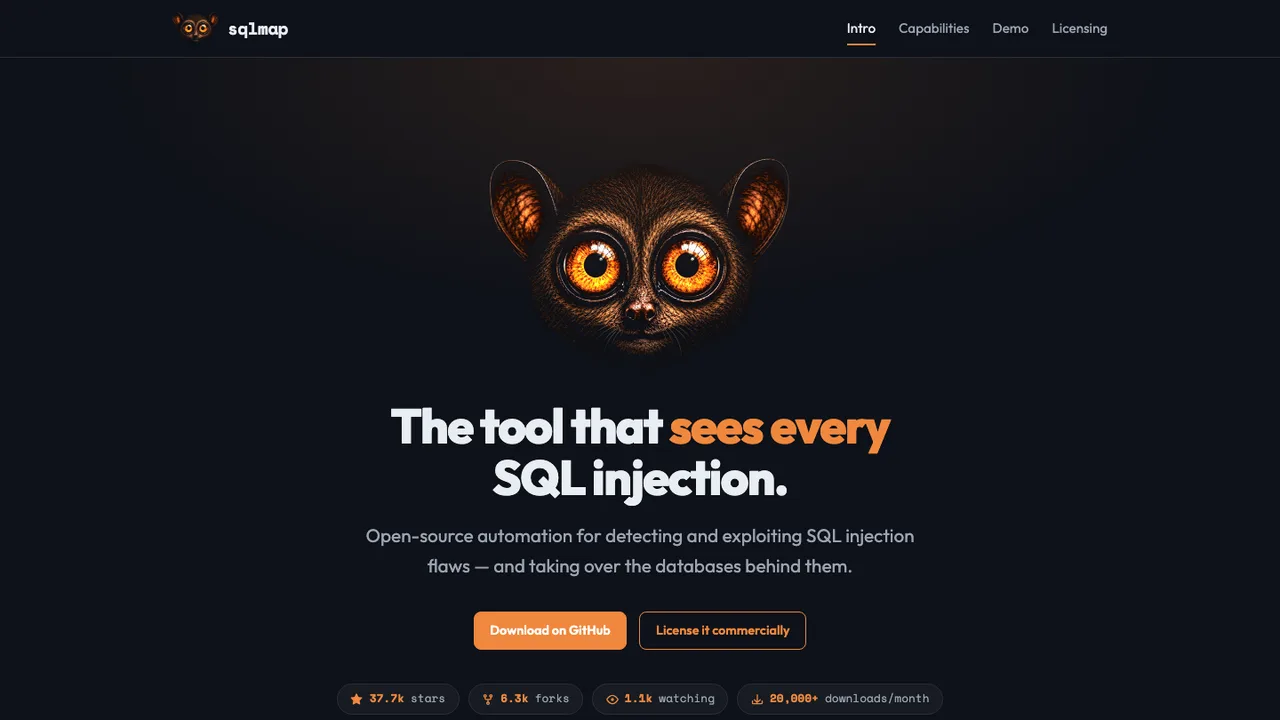
sqlmap is an open-source security testing tool that automates detecting SQL injection flaws in web applications you are authorized to test. It targets web applications and their database backends, automating assessment work that would otherwise be done by hand.
Automates detection of SQL injection flaws
Database fingerprinting and data retrieval for assessments
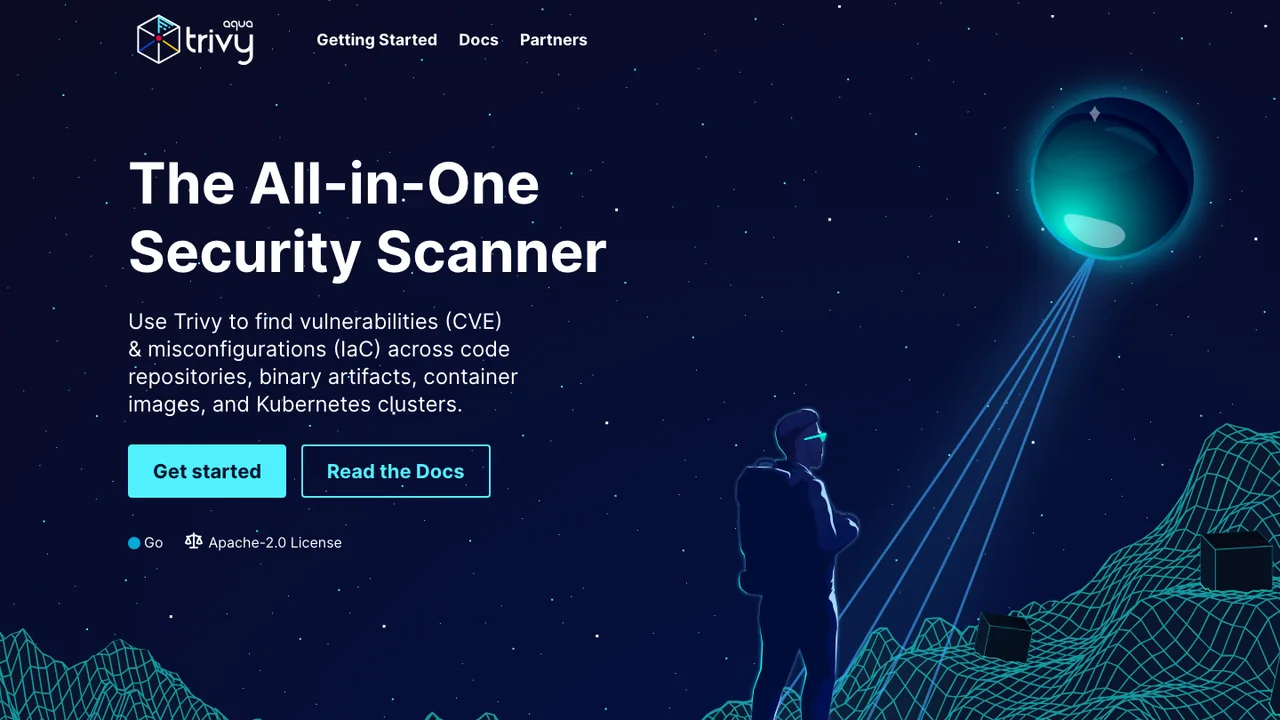
Trivy is a comprehensive security scanner organized around two ideas: targets, the things it can scan, and scanners, the kinds of issues it looks for. Targets span container images, filesystems, remote Git repositories, virtual machine images, and live Kubernetes clusters.
Scans images, filesystems, Git repos, VMs, and Kubernetes
Finds CVEs, IaC misconfigurations, secrets, and licenses
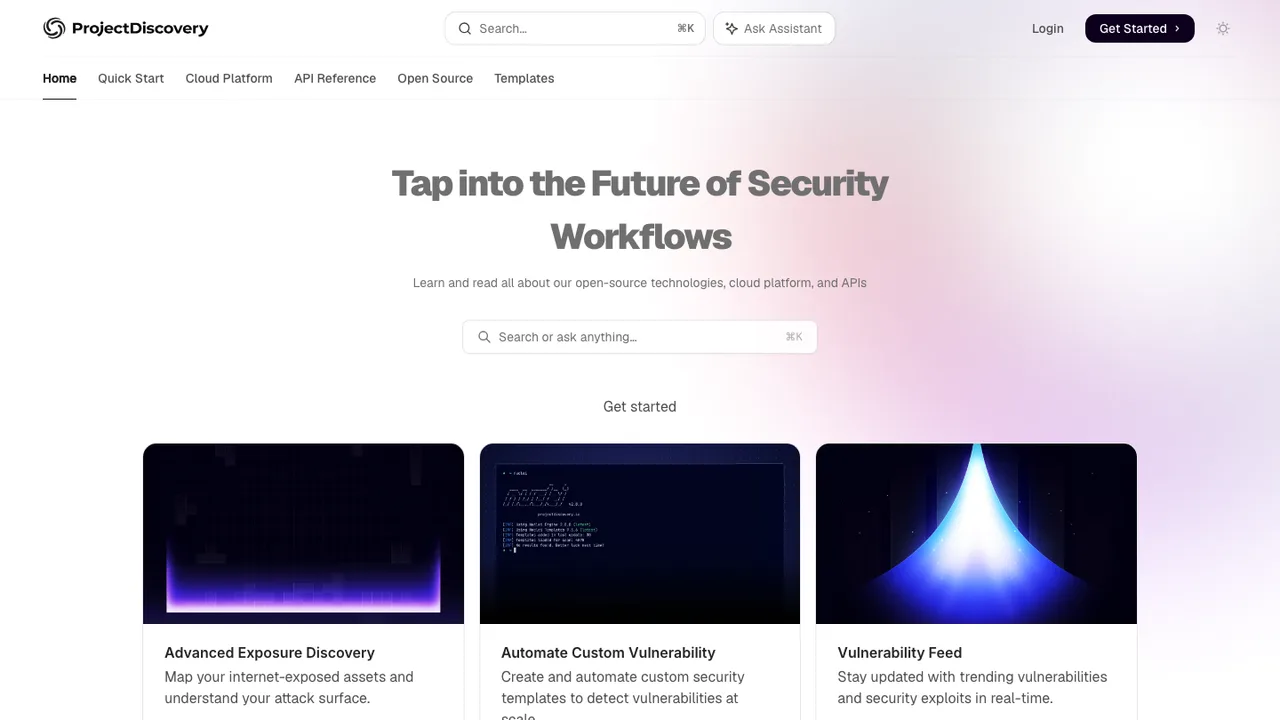
Nuclei is a high-performance vulnerability scanner that uses simple YAML templates to define detection logic. It finds issues across applications, APIs, networks, DNS, and cloud configurations, with scans you can customize for specific targets and checks.
YAML templates for custom vulnerability detection scenarios
Parallel scan processing with request clustering
Multiple protocols including TCP, DNS, HTTP, SSL, WHOIS, JavaScript, and Code
CI/CD integration for vulnerability detection and regression testing
Gitleaks is a command line tool that detects hardcoded secrets like passwords, API keys, and tokens. Its detection engine is built largely on regular expressions, and it can scan git history, a working directory, individual files, or anything piped in over stdin.
TruffleHog hunts for leaked credentials: API keys, database passwords, private encryption keys, and more. It looks in a wide range of places, from Git history and filesystems to chats, wikis, logs, object stores, and CI workflows, making it a broad discovery tool rather than just a repo scanner.
Scans Git, filesystems, chats, logs, and object stores
Classifies over 800 secret types
Verifies whether a found secret is still live
Analyzes credentials for owner, access, and permissions
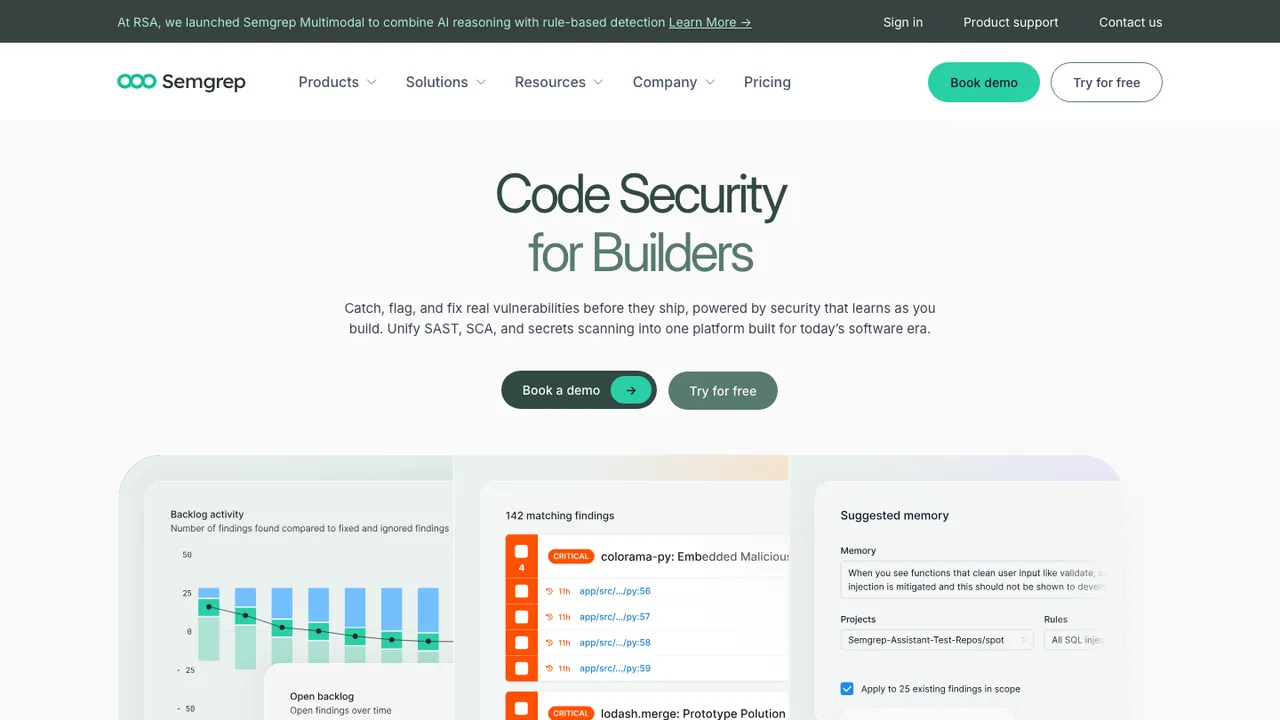
Semgrep is a fast, open source static analysis engine. Its defining idea is that rules look like the source code you already write, so a pattern such as the buggy snippet you want to ban matches without wrestling with abstract syntax trees or regex. It runs in an IDE, as a pre-commit check, or in CI/CD.
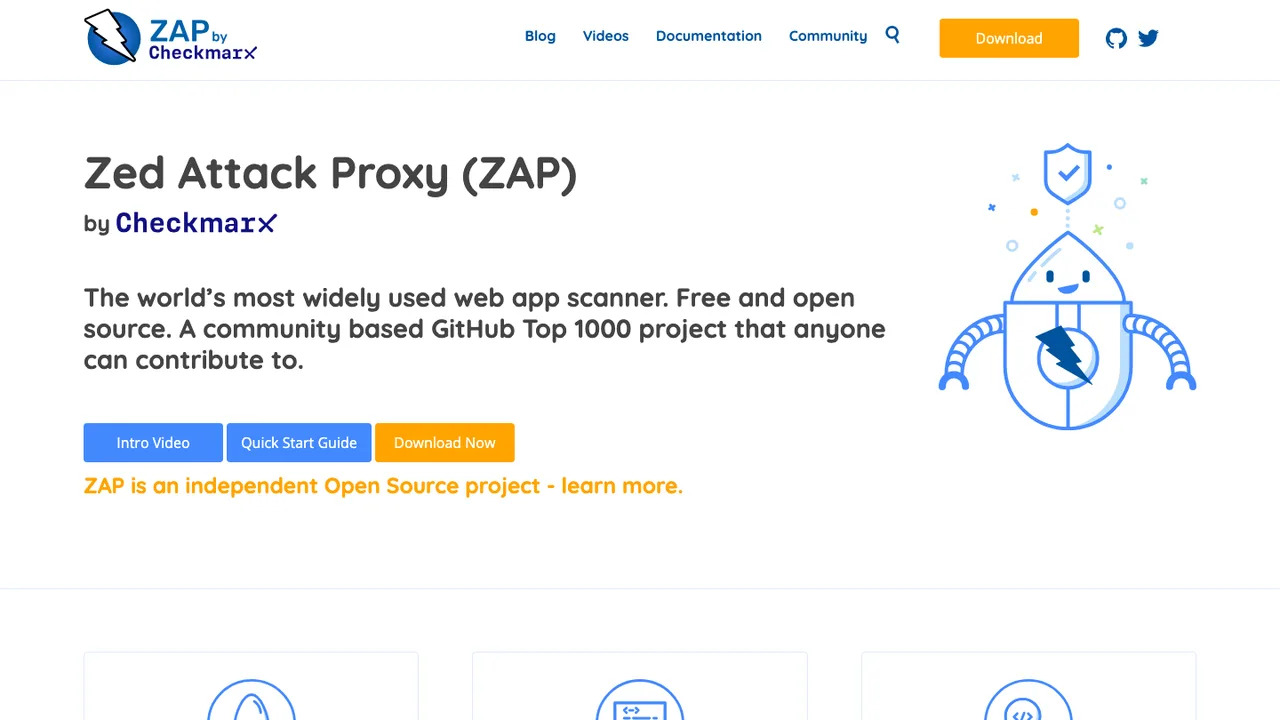
OWASP ZAP, the Zed Attack Proxy, is a web application security scanner that finds vulnerabilities in your web apps while you develop and test them. It sits between your browser and the target as an intercepting proxy, inspecting and modifying traffic along the way.
Automatic scanning of web apps for security vulnerabilities
Intercepting proxy for inspecting and modifying traffic
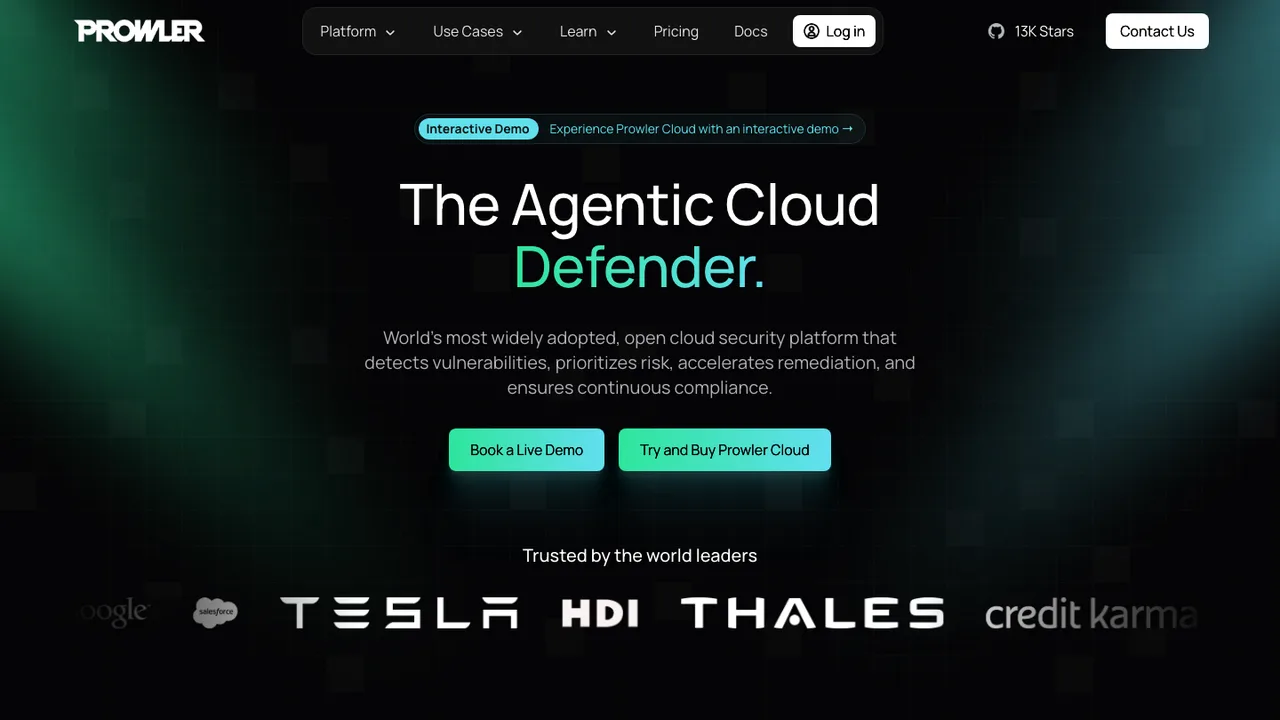
Prowler is a cloud security platform that automates security and compliance assessments across cloud environments. It runs hundreds of ready-to-use checks, generates dashboards and reports, and pairs findings with remediation guidance so teams can act on the most important risks first.
Hundreds of built-in security checks and compliance frameworks
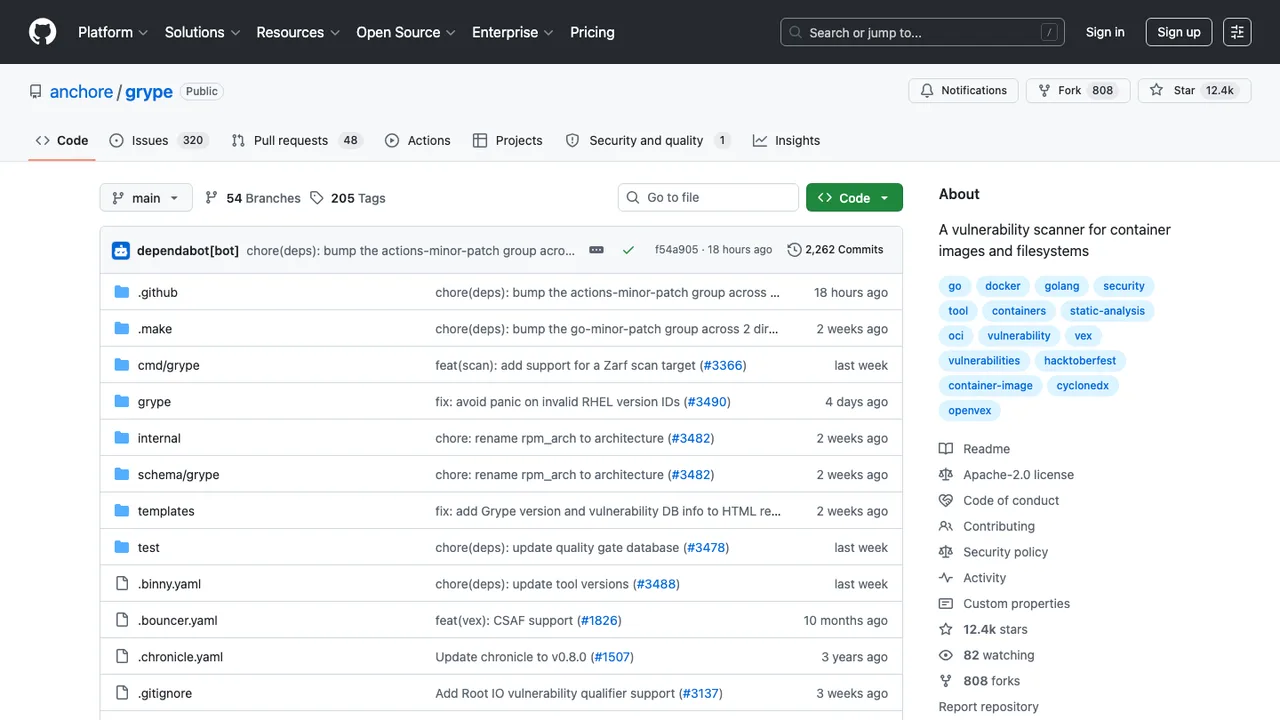
Grype is a command line vulnerability scanner for container images and filesystems. Point it at an image, a directory, or an existing SBOM and it reports the known vulnerabilities affecting the installed software, with SBOM scans running especially fast.
Scans container images, filesystems, and SBOMs
Reads Docker, OCI, and Singularity image formats
Covers OS and language-specific package ecosystems
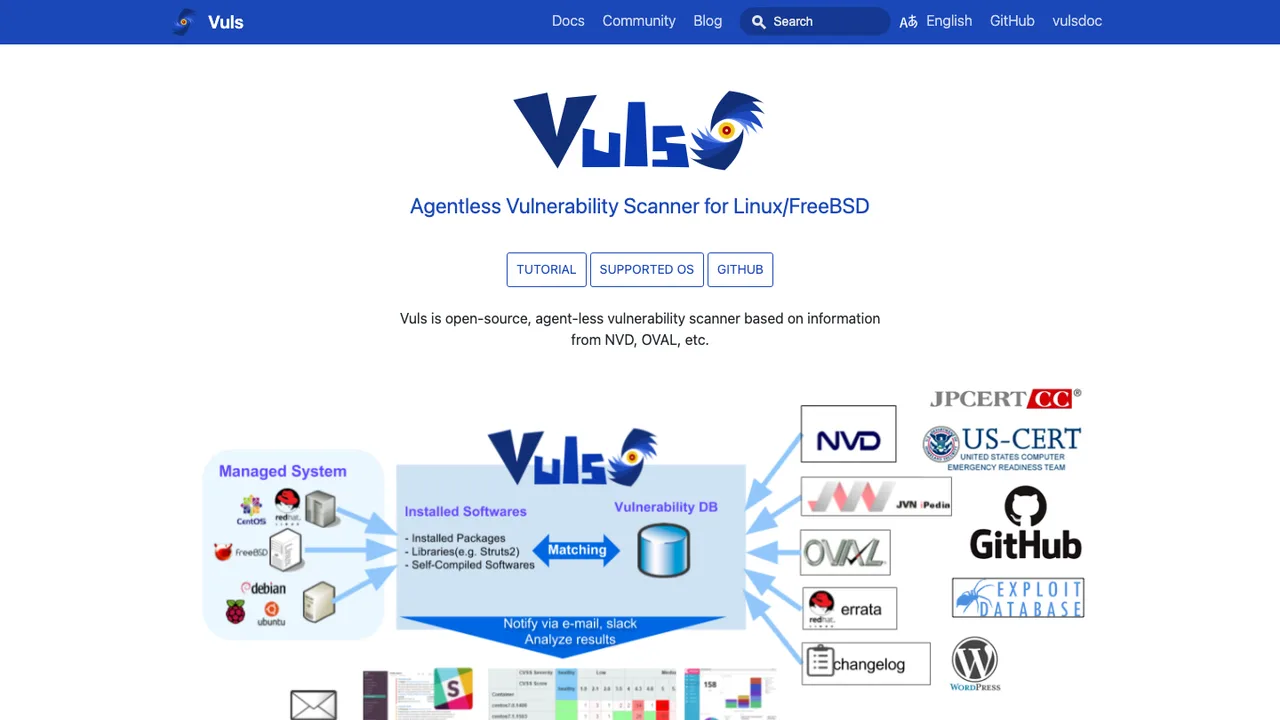
Vuls is an agentless vulnerability scanner that helps system administrators find affected servers and the vulnerabilities that touch them, without installing an agent. It removes the burden of constantly watching CVE databases and manually checking every installed package.
Agentless scans for Linux and FreeBSD
Fast scan, fast root scan, remote, local, and server modes
Scans libraries, self-compiled software, network devices, and WordPress
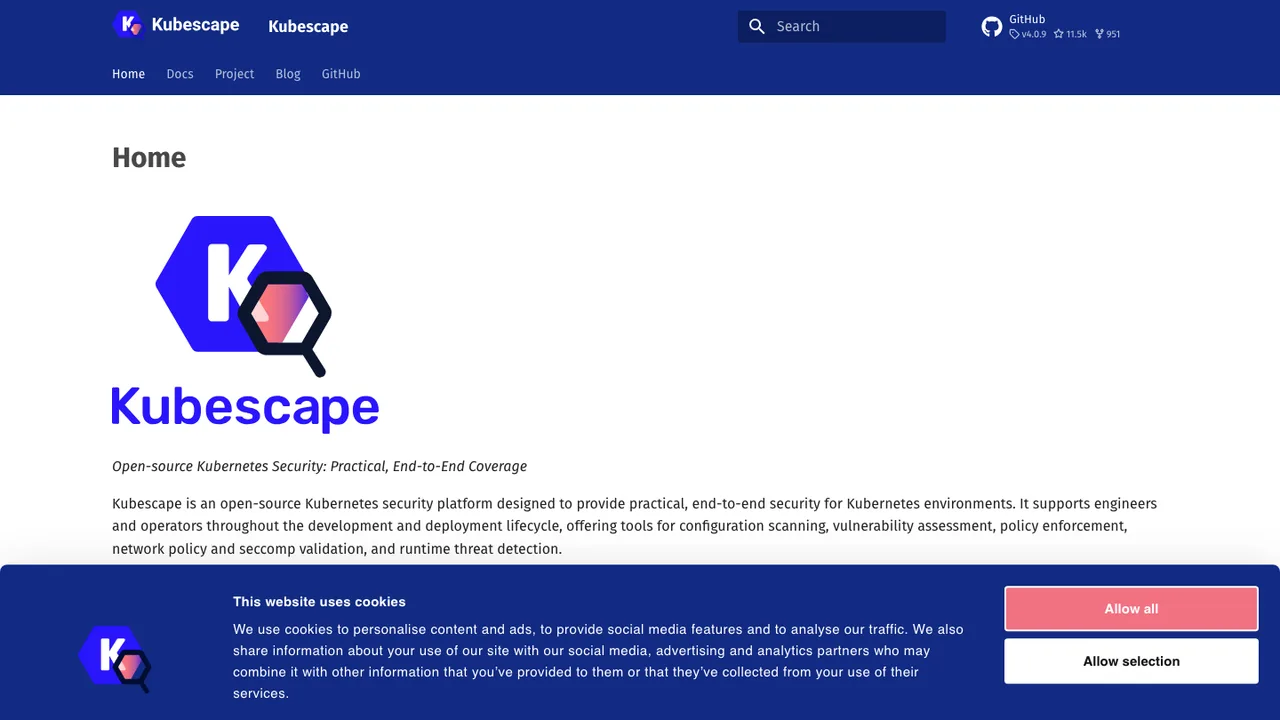
Kubescape is a Kubernetes security platform that finds security, compliance, and misconfiguration issues across the whole lifecycle, from the IDE through CI/CD to running clusters. It covers workload posture, control-plane exposure, access-control risk, and runtime security.
Scans posture, compliance, and misconfigurations
Framework scans for NSA, MITRE, and CIS controls
Grype-based image vulnerability scanning and patching
eBPF runtime threat detection via in-cluster operator
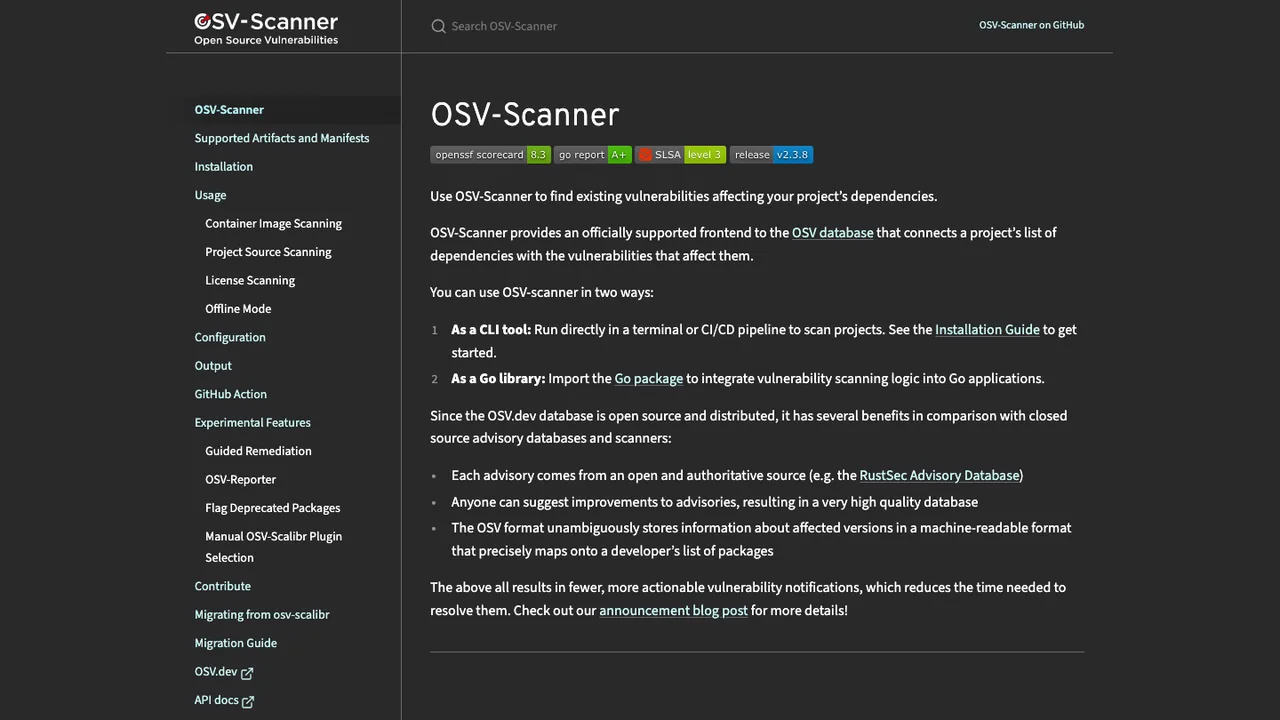
OSV-Scanner is a command line vulnerability scanner that connects a project's dependencies to the advisories that affect them. It is the official frontend to OSV.dev, an open, distributed database whose advisories come from authoritative sources like GitHub Security Advisories, RustSec, and Ubuntu security notices.
Scans source directories and lockfiles for known CVEs
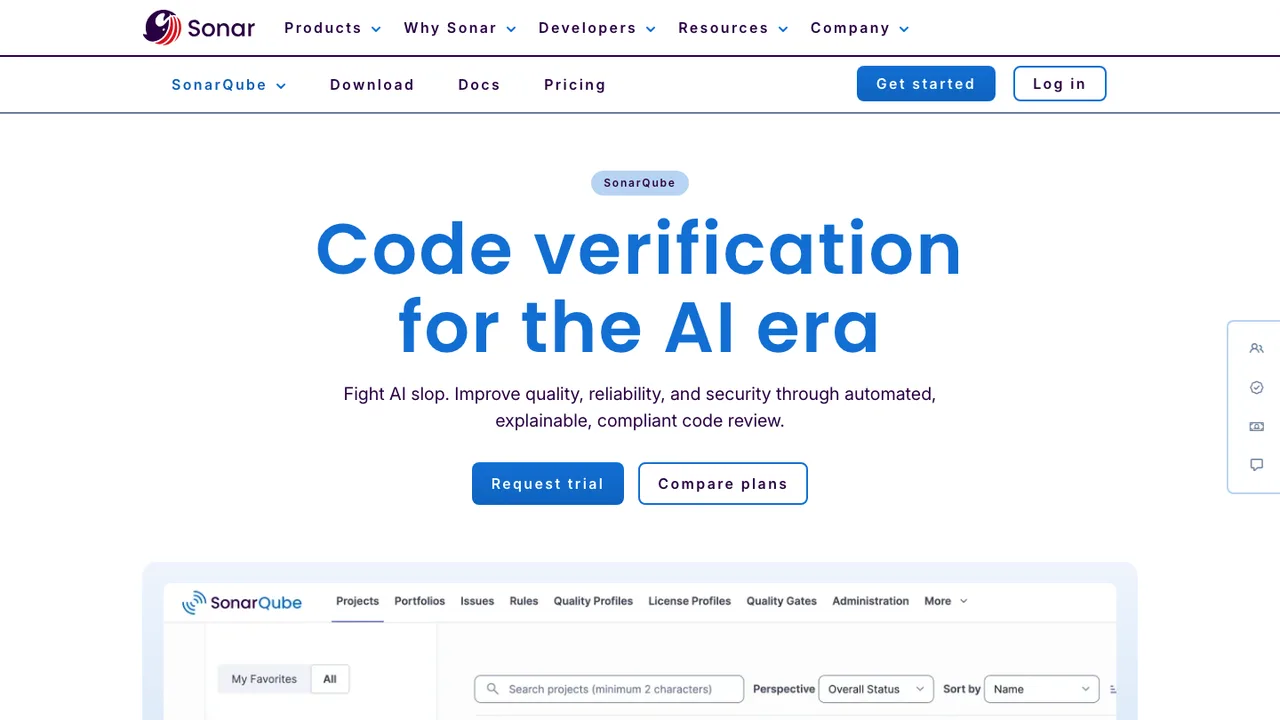
SonarQube is a self-hosted server for continuous inspection of code quality and security. Through its web dashboard it reports the overall health of a project and, crucially, separates problems newly introduced in recent changes from existing ones, so teams can hold the line on new code without drowning in legacy debt.
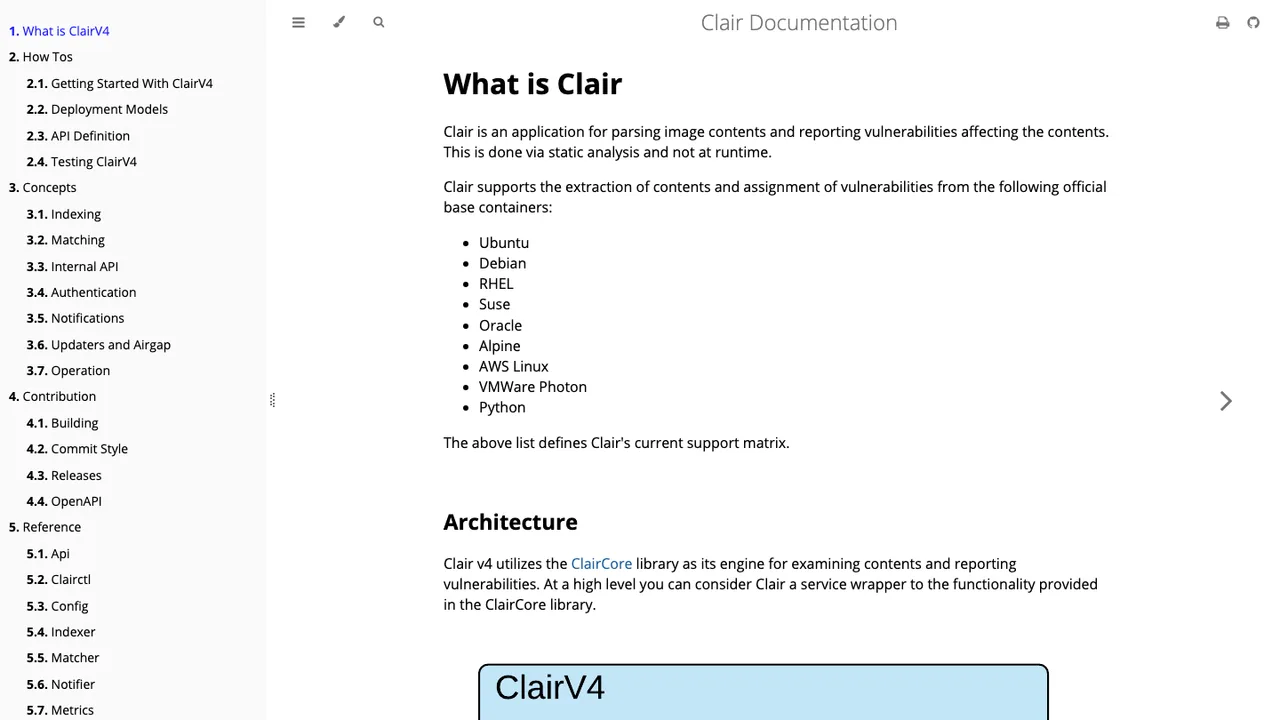
Clair performs static analysis of vulnerabilities in application containers, including OCI and Docker images. Teams can index container images and match them against known vulnerabilities before they reach production.
Static vulnerability analysis for OCI and Docker images
API to index container images and request matches
Matches indexed images against known vulnerabilities
Runs as a service for container security workflows
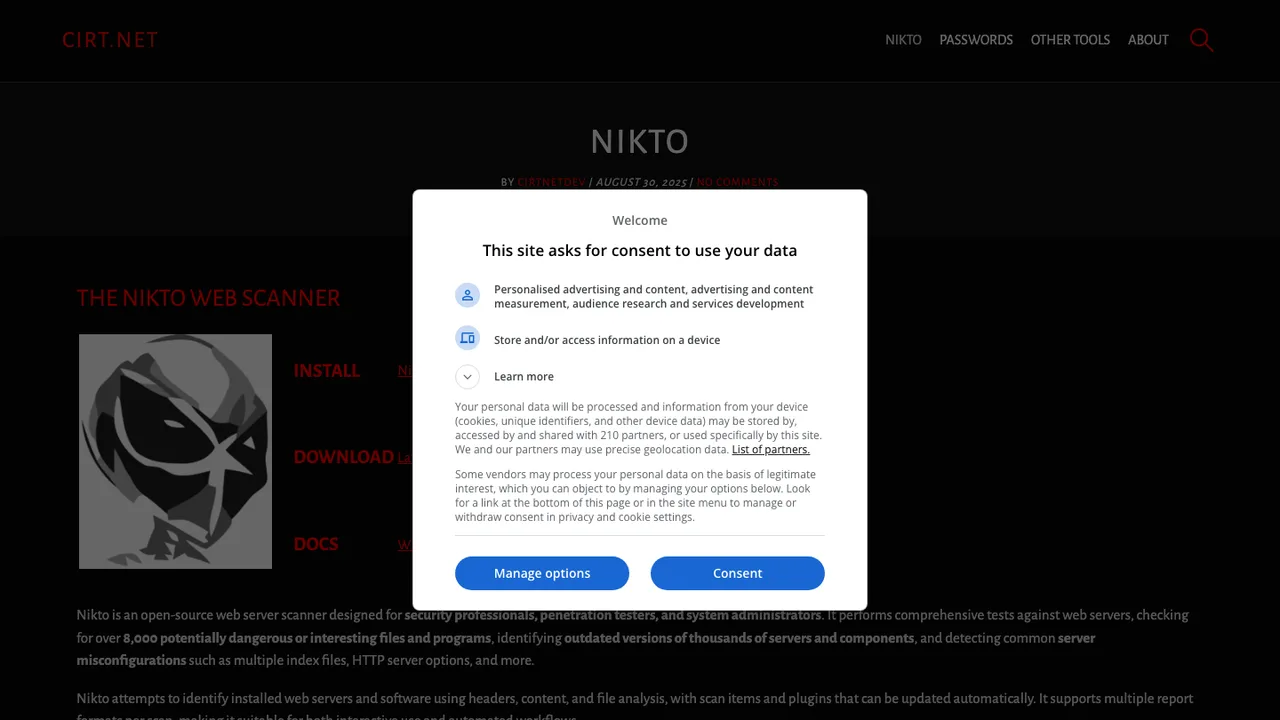
Nikto is a web server scanner for security professionals and system administrators. It checks web servers for potentially dangerous or interesting files and programs and for outdated versions of thousands of servers.
Checks web servers for thousands of dangerous or interesting files
Identifies outdated server software versions
Scan tuning to target injection, misconfiguration, and more
Tuning options to validate filter and IDS coverage
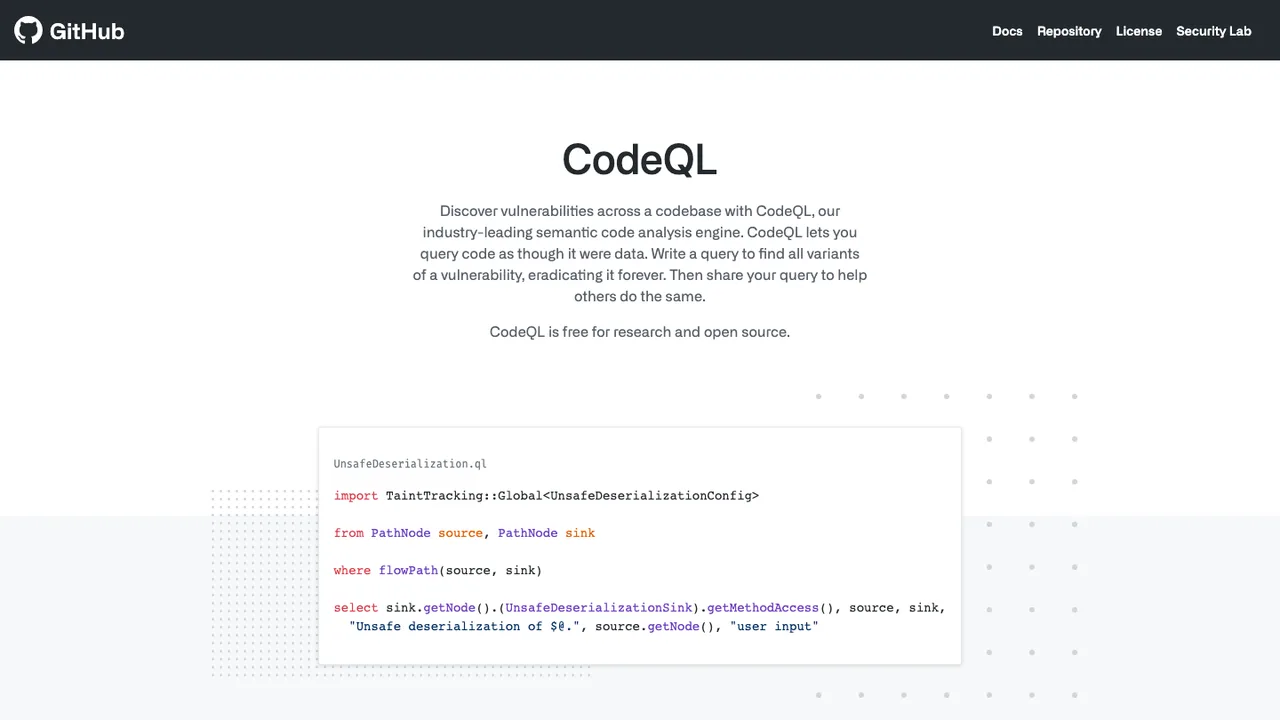
CodeQL treats code as data: you query a codebase with the QL language to find security vulnerabilities and bugs, hunting for patterns of a known flaw across an entire project at once. It is the analysis engine behind GitHub code scanning and GitHub Advanced Security.
Query code with the QL language to find vulnerabilities
Curated standard library of security queries
CodeQL CLI for running analyses
VS Code extension for authoring and testing queries
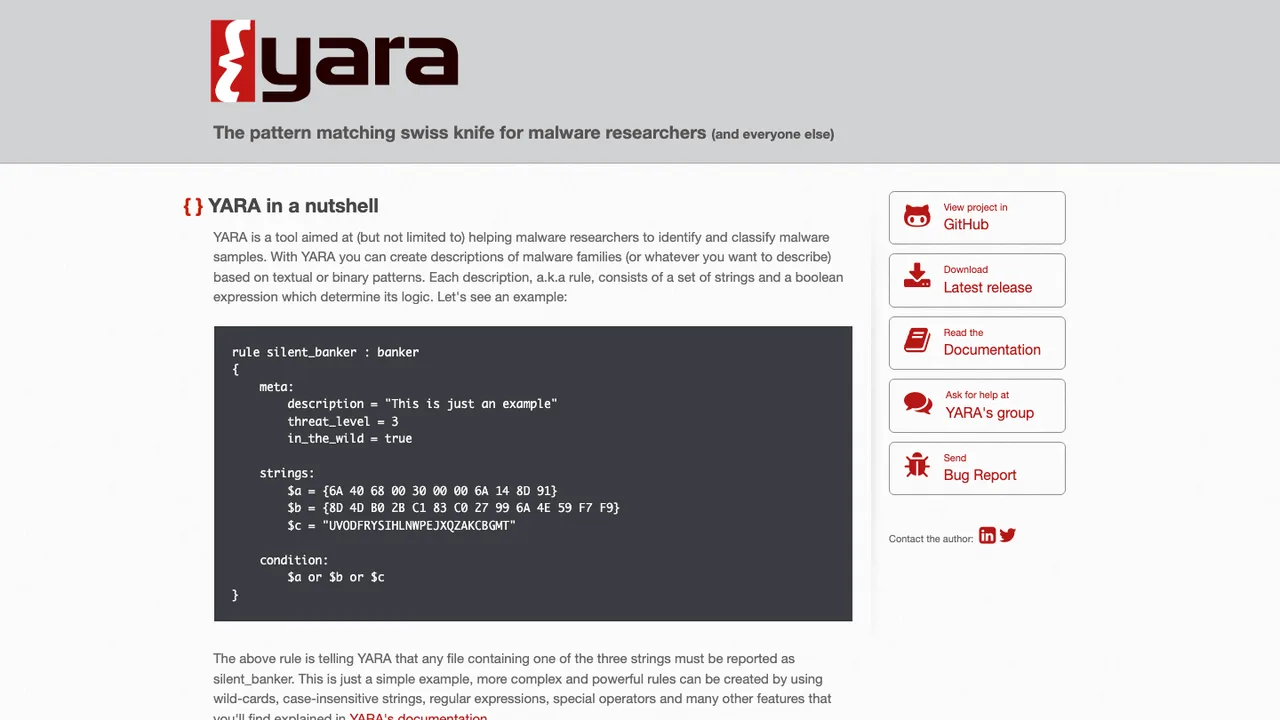
YARA is a tool that helps malware researchers identify and classify malware samples. It describes malware families, or anything else you want to describe, using rules built from a set of strings and a boolean expression that determines the matching logic.
Define malware detection rules from strings and boolean logic
Match textual and binary patterns in files
Wildcards, regular expressions, and case-insensitive strings
Command-line scanning and Python scripting via yara-python
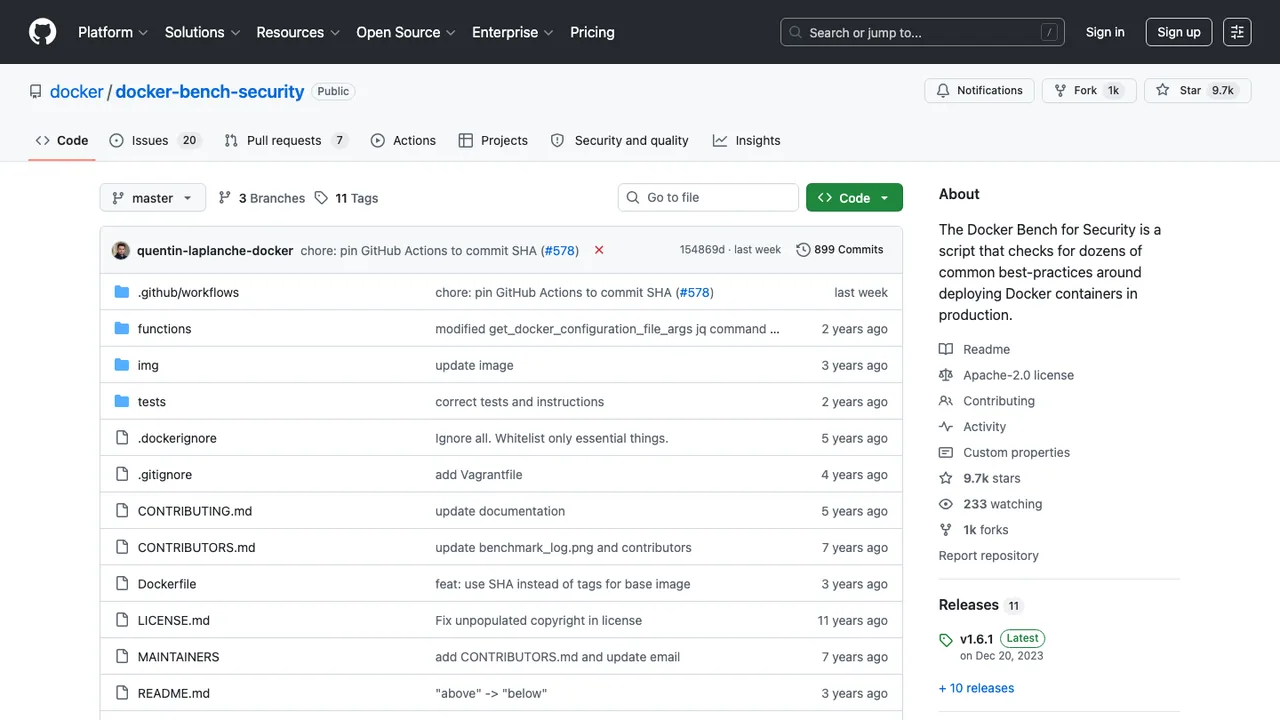
Docker Bench for Security checks Docker deployments against common best practices for running containers in production. Its automated tests follow the CIS Docker Benchmark v1.6.0, letting you self-assess hosts and containers against that baseline.
Automated CIS Docker Benchmark v1.6.0 checks
Run all checks or target specific check IDs and groups
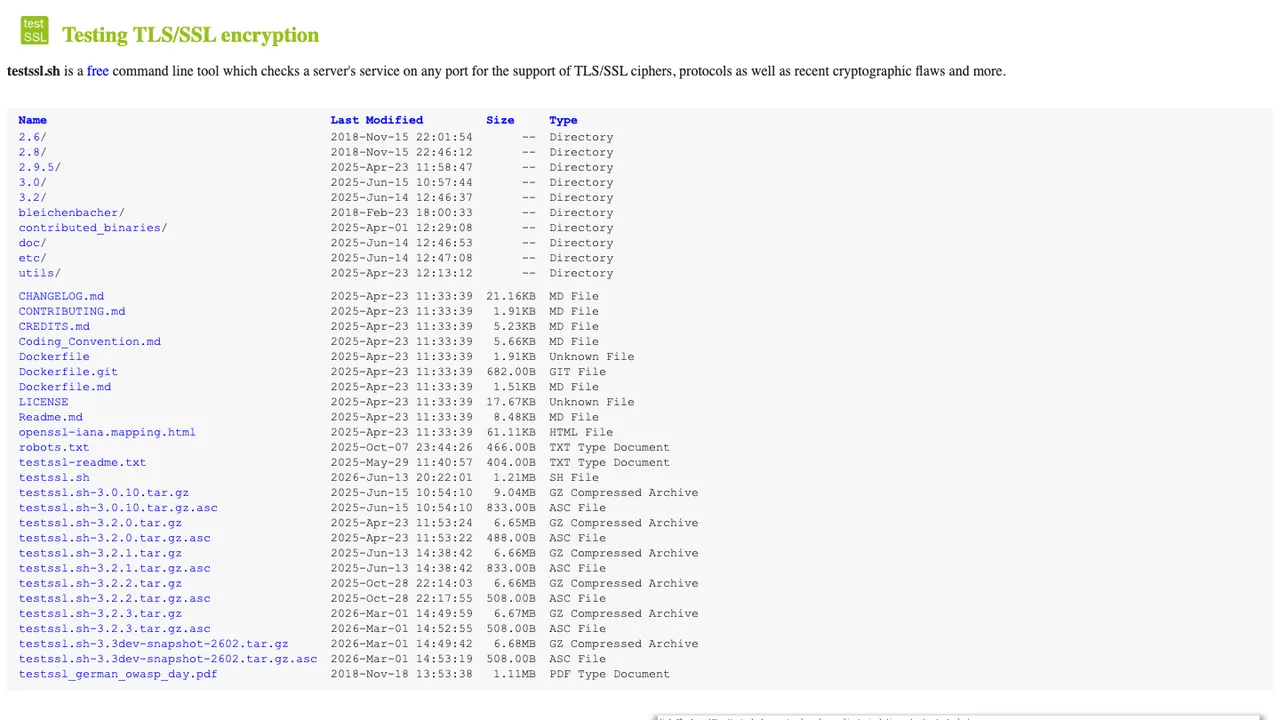
testssl.sh is a command-line tool that checks TLS and SSL support on any port. It probes the ciphers, protocols, and known cryptographic flaws a service accepts, so you can see exactly how strong its encryption is before trusting it.
Checks TLS and SSL ciphers, protocols, and some cryptographic flaws
Machine-readable output in CSV, two JSON formats, and HTML
Tests SSL/TLS-enabled and STARTTLS services on any port
Checkov is a static analysis tool for infrastructure as code, with software composition analysis layered on top for container images and open source packages. It catches security and compliance misconfigurations at build time, before flawed infrastructure ever reaches the cloud.
Scans Terraform, CloudFormation, Kubernetes, Helm, and more IaC
Software composition analysis for images and open source packages
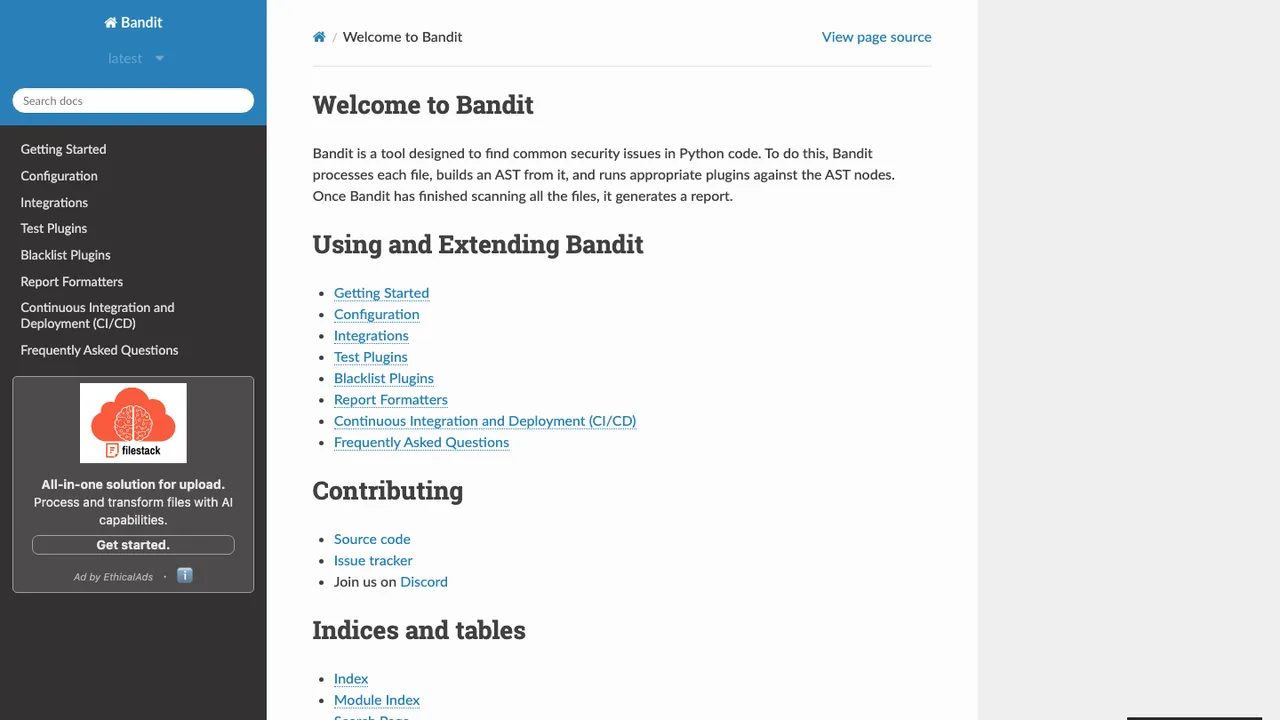
Bandit is a command line security linter for Python. It catches common security issues like hardcoded passwords, weak cryptography, and unsafe use of shell commands, making it a fit for teams that want lightweight static analysis dedicated to Python.
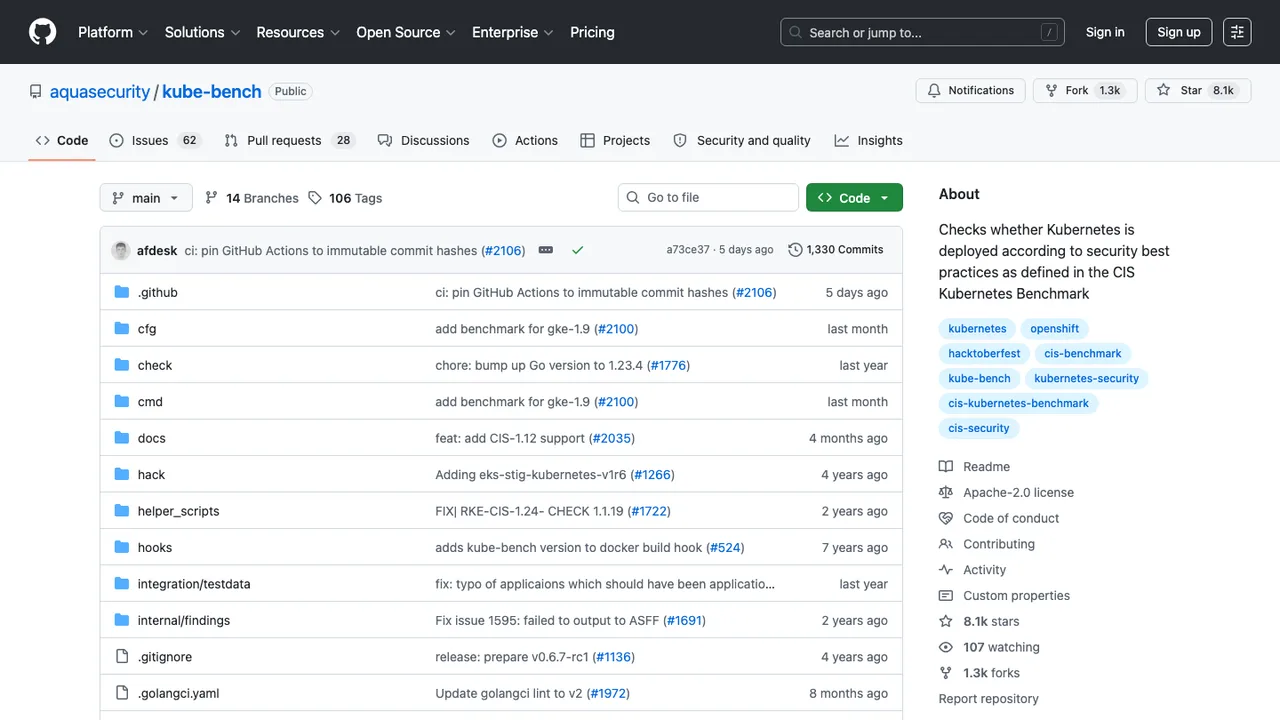
kube-bench checks whether a Kubernetes cluster is deployed securely by running the controls from the CIS Kubernetes Benchmark. It compares the cluster's actual settings against the benchmark and shows exactly where a deployment drifts from CIS guidance.
Runs CIS Kubernetes Benchmark controls against a cluster
Auto-selects the test set for the Kubernetes version
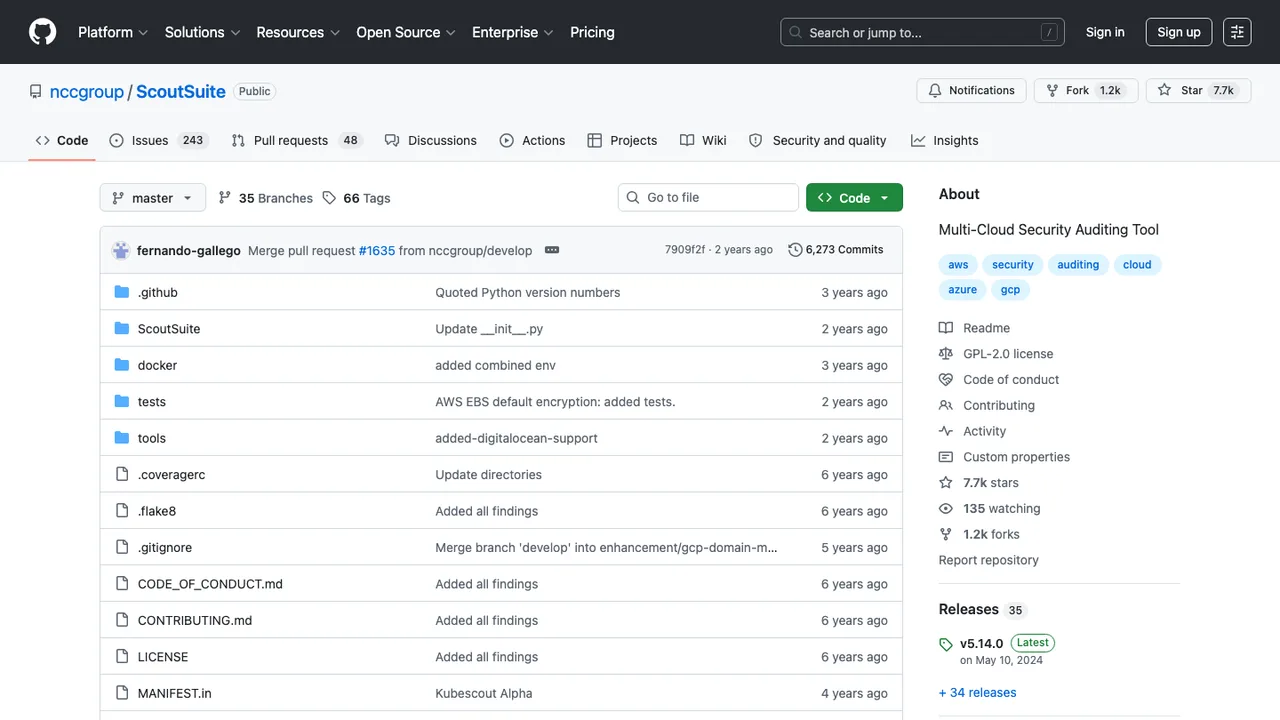
ScoutSuite is a multi-cloud security auditing tool that assesses the posture of cloud environments. Using the APIs exposed by cloud providers, it gathers configuration data and highlights risk areas, presenting a clear view of your attack surface instead of making you page through dozens of web console screens.
Collects cloud configuration data through provider APIs
Generates an HTML report with findings and account configuration
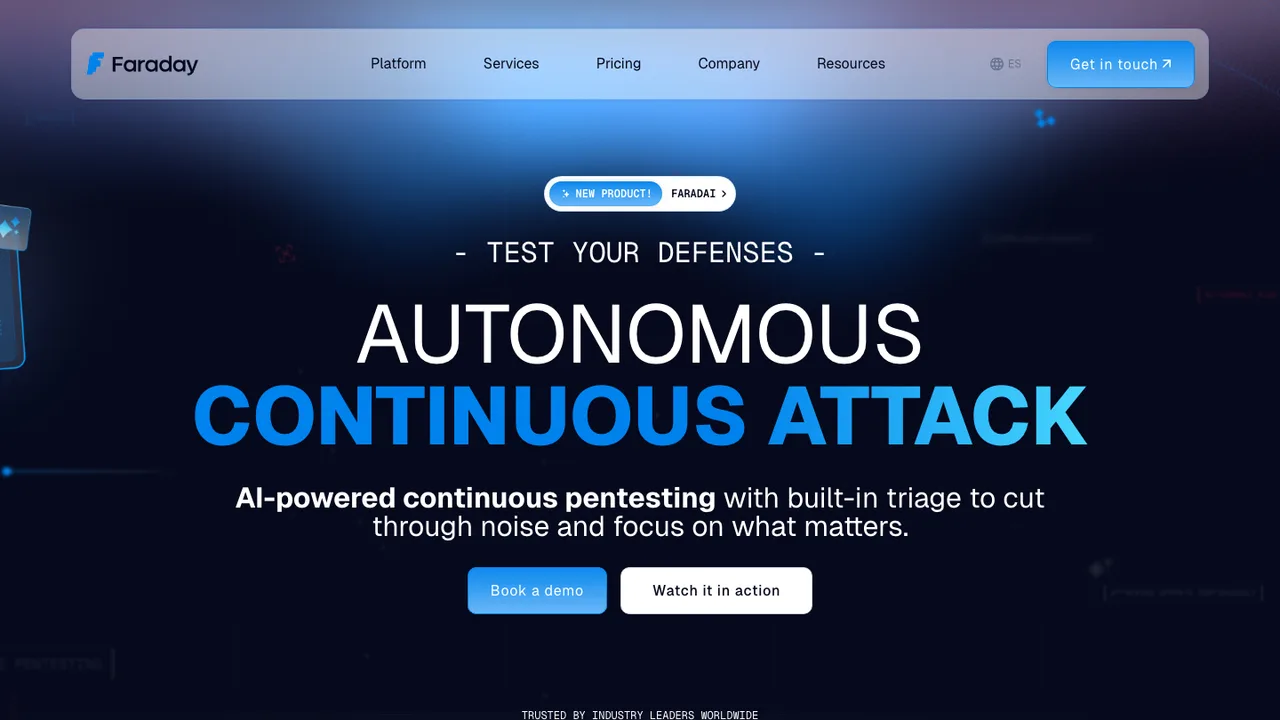
Faraday is a vulnerability manager for security teams that need to organize findings from many tools in one place. It handles the work after discovery by aggregating results, normalizing data, and keeping multiuser work organized so you can focus on finding issues.
Aggregates and normalizes findings from multiple tools
Multiuser workflow for vulnerability data
Terminal-based CLI for running tools and reporting results
Imports XML and JSON artifacts through report plugins
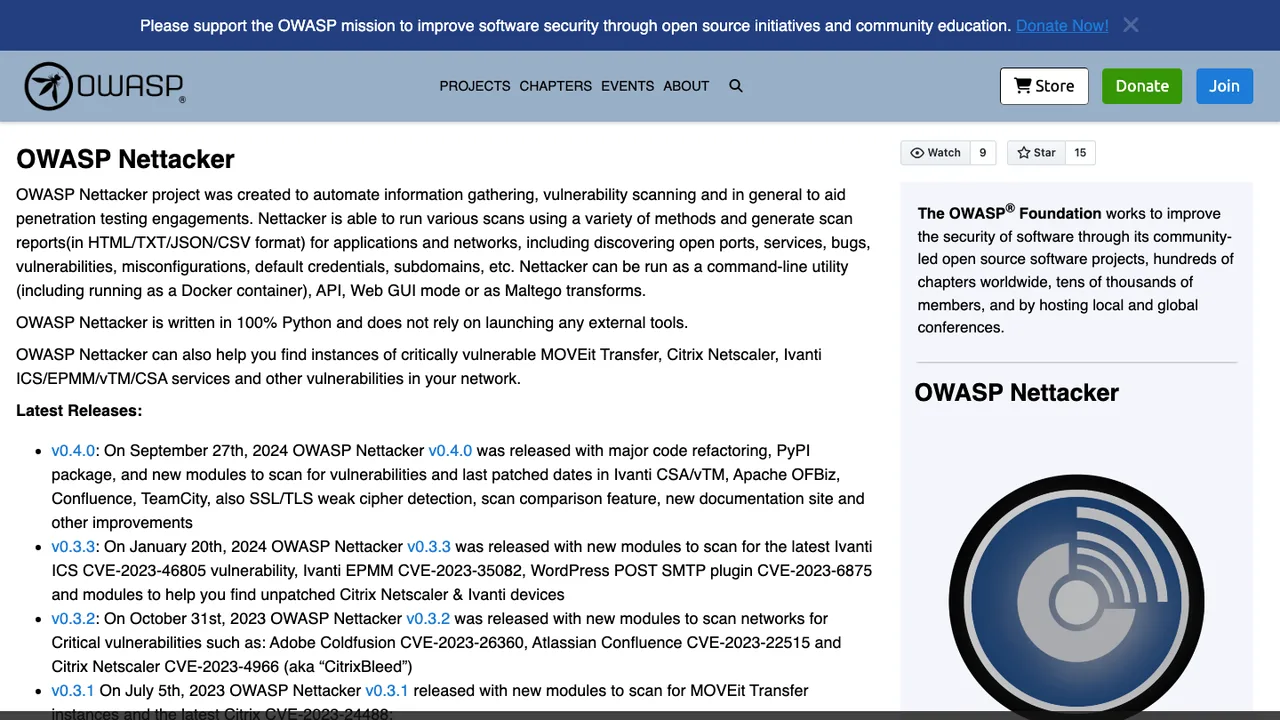
OWASP Nettacker is a Python-based framework for automated security assessment and information gathering. It helps security teams run reconnaissance, vulnerability assessments, and network security audits across networks, web applications, IoT devices, and APIs that they are responsible for.
Modular scans for ports, services, directories, subdomains, and vulnerabilities
HTTP/HTTPS, FTP, SSH, SMB, SMTP, ICMP, TELNET, and XML-RPC support
CLI, REST API, and Web UI for defining scans and viewing results
Exports reports in HTML, JSON, CSV, and plain text
OpenVAS Scanner is the full-featured scan engine of the Greenbone Community Edition. It executes vulnerability tests to find security weaknesses across IT environments and powers the Greenbone Enterprise appliances.
Executes a continuously updated feed of Vulnerability Tests
Full-featured scan engine for Greenbone Community Edition
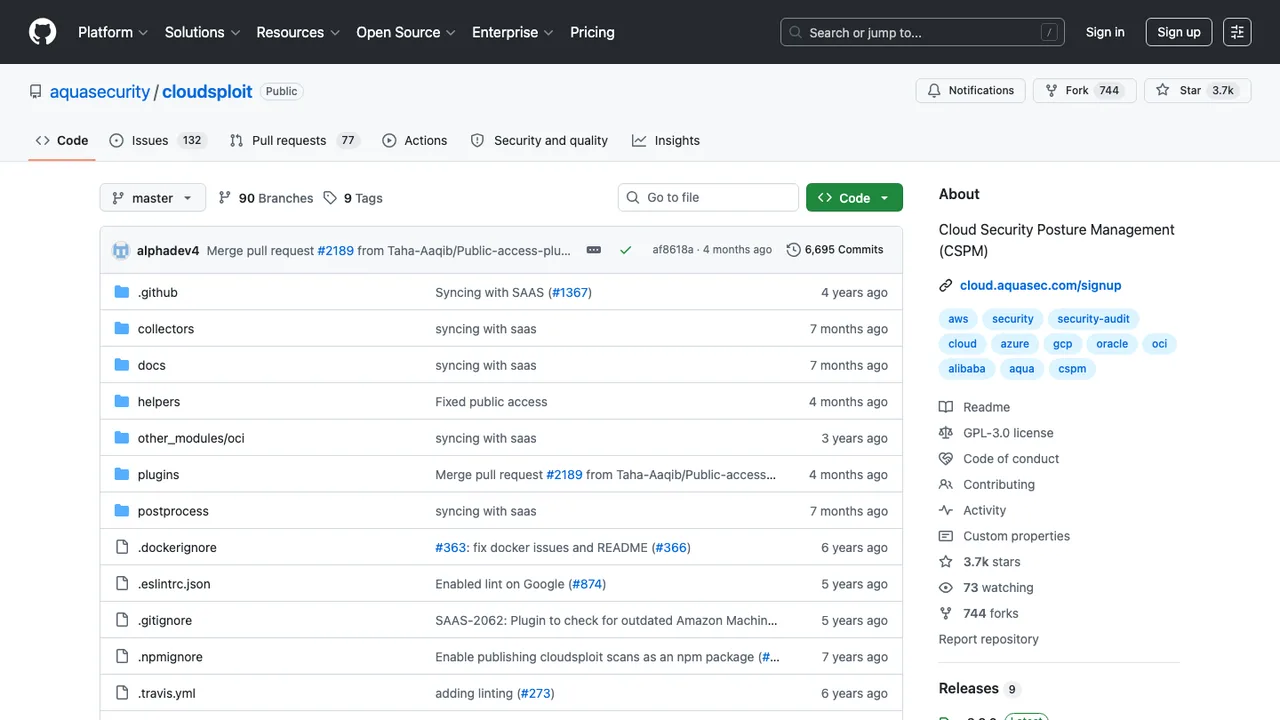
CloudSploit detects security risks in cloud infrastructure accounts across AWS, Azure, GCP, Oracle Cloud Infrastructure, and GitHub. It collects account metadata from provider APIs, then scans that data for misconfigurations, risks, and other security issues using read-only access to your accounts.
Two-phase collection and scanning workflow
Compliance mode for HIPAA, CIS, CIS1, CIS2, and PCI
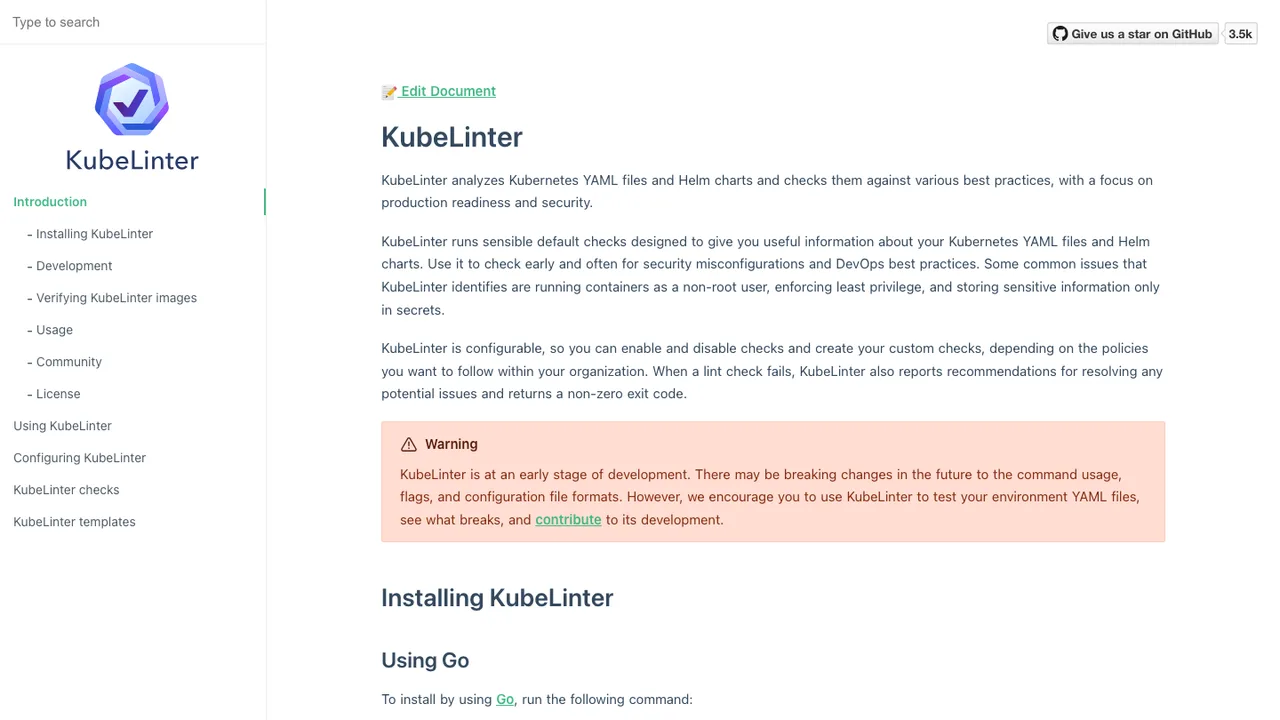
KubeLinter runs static analysis on Kubernetes YAML files, Helm charts, and Kustomize manifests, checking them against best practices with a focus on production readiness and security. It helps teams catch misconfigurations early, including running containers as non-root, enforcing least privilege, and storing sensitive data only in secrets.
Checks Kubernetes YAML, Helm charts, and Kustomize manifests
Runs default best-practice and security checks
Supports custom checks and per-policy configuration
Returns fix recommendations and non-zero exit codes on failures
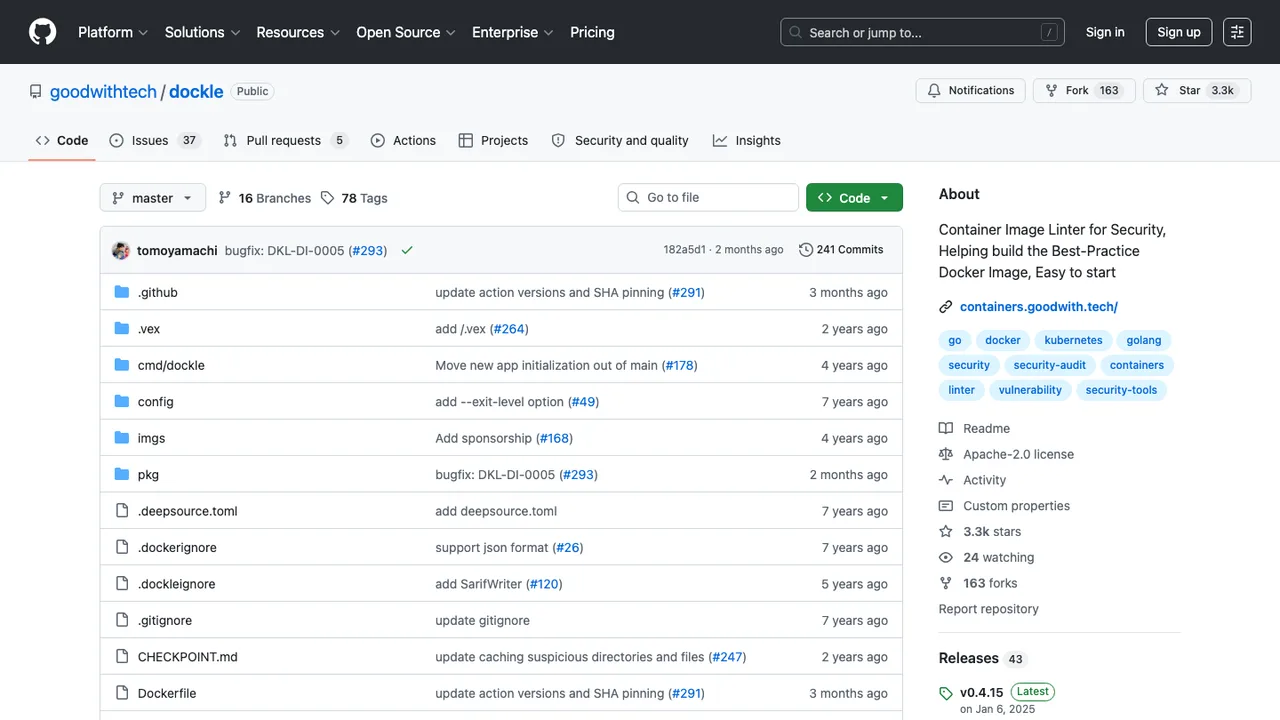
Dockle is a command-line linter for container images. It flags Dockerfile and image issues so you can build images that follow best practices and security checks, including CIS Benchmarks.
Scans images by name or from an image file
CIS Benchmark checkpoints for image hardening
SARIF output and configurable non-zero exit code
Flags suspicious environment variables, files, and extensions
KICS performs static analysis of infrastructure as code to find security vulnerabilities, compliance issues, and misconfigurations early in development, before they reach deployment. It scans Terraform, Kubernetes, Dockerfiles, Docker Compose, CloudFormation, Ansible, Helm, OpenAPI, and more.
Static analysis for infrastructure as code
Scans Terraform, Kubernetes, Dockerfiles, Helm, and more
Customizable queries and adjustable heuristics rules
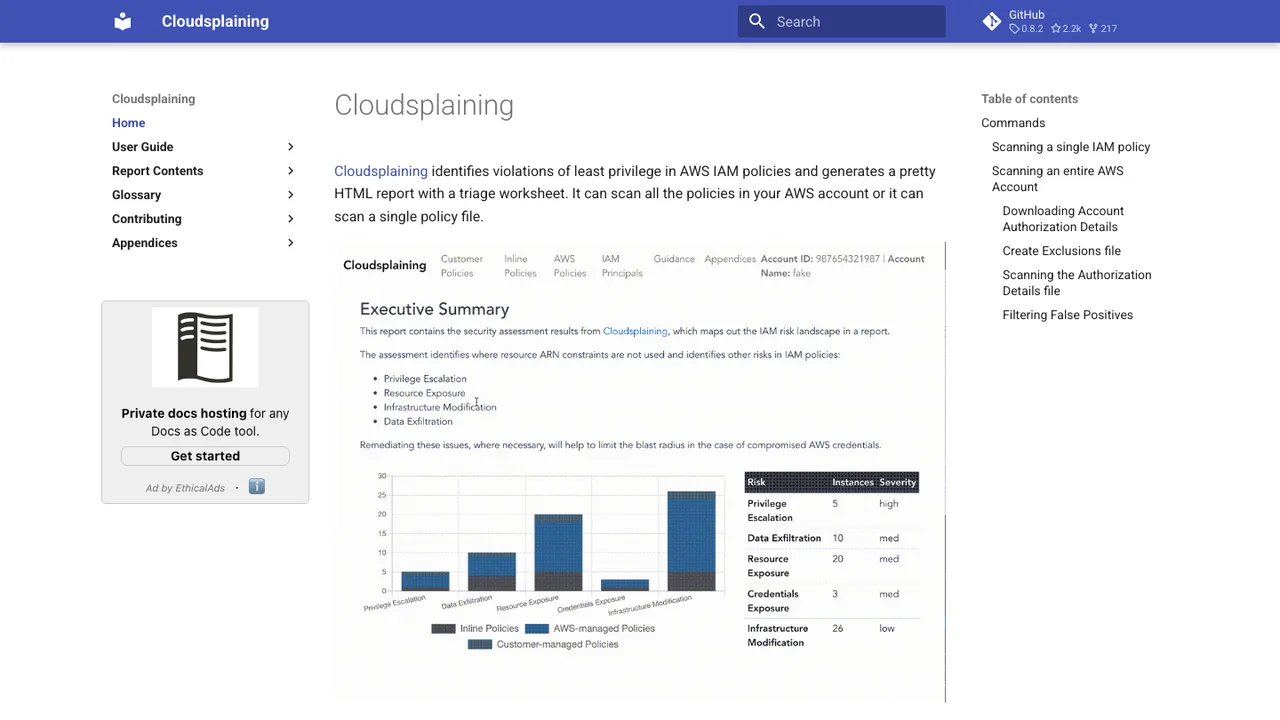
Cloudsplaining is an AWS IAM security assessment tool that finds policies violating least privilege. It scans a single policy file or every policy in an AWS account, then generates a polished HTML report with a triage worksheet to help you prioritize remediation.
Scans a single policy file or all policies in an AWS account
Generates a risk-prioritized HTML report with a triage worksheet
Flags data exfiltration, infrastructure modification, resource exposure, and privilege escalation
Identifies IAM roles assumable by EC2, ECS, EKS, and Lambda
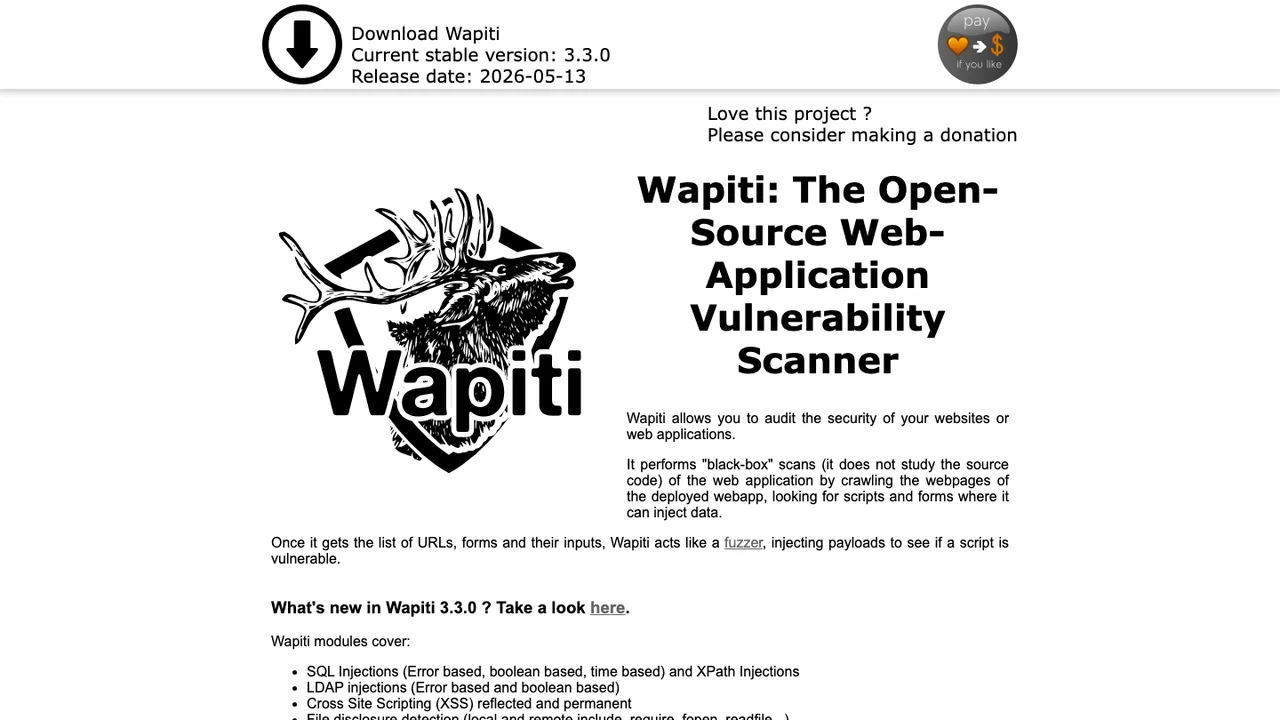
Wapiti is a web vulnerability scanner for finding security issues in deployed websites and web applications. It works as a black-box tool, crawling pages, extracting links and forms, and probing them with test requests to detect XSS, SQL and LDAP injection, file disclosure, command execution, XXE, SSRF, and more.
Black-box scanning of deployed web apps
Report output in HTML, XML, JSON, TXT, CSV, Markdown
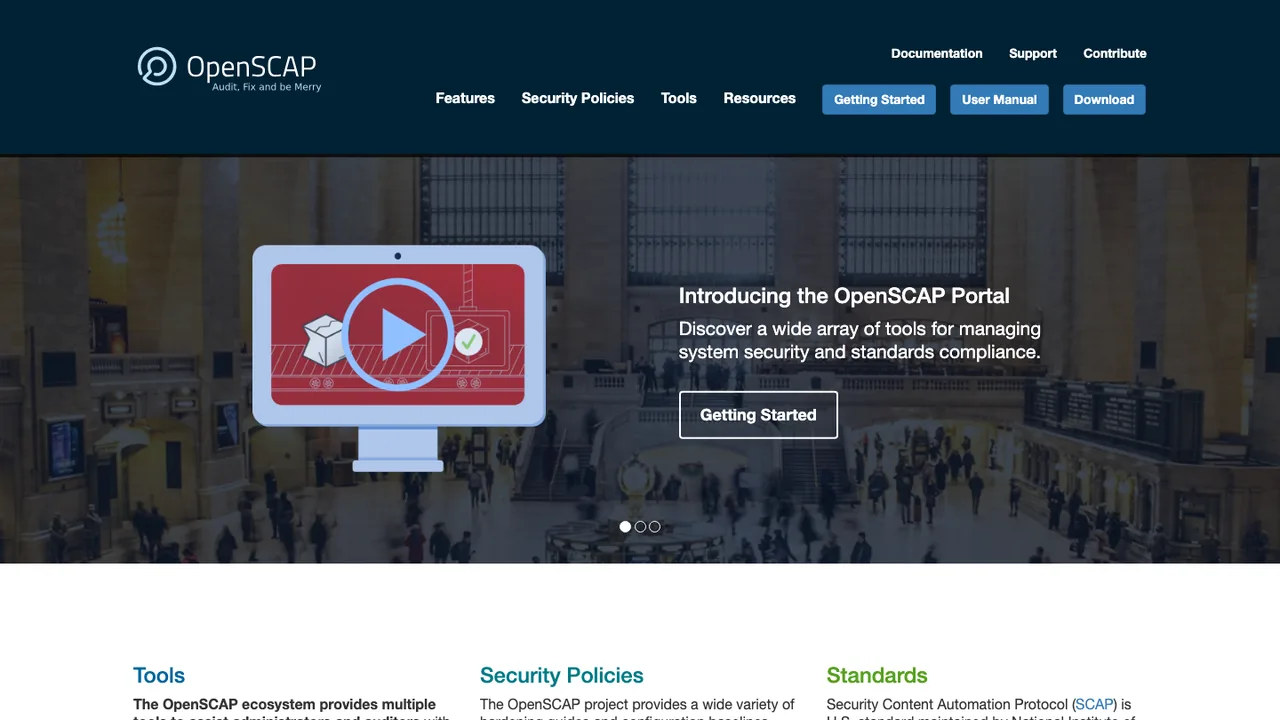
OpenSCAP is a security compliance toolkit built around the oscap command-line tool. It loads, scans, validates, edits, and exports SCAP documents, letting administrators check systems against security baselines and turn the results into auditable reports.
Load, scan, validate, edit, and export SCAP documents
Validate SCAP data streams with XCCDF, OVAL, OCIL, and CPE
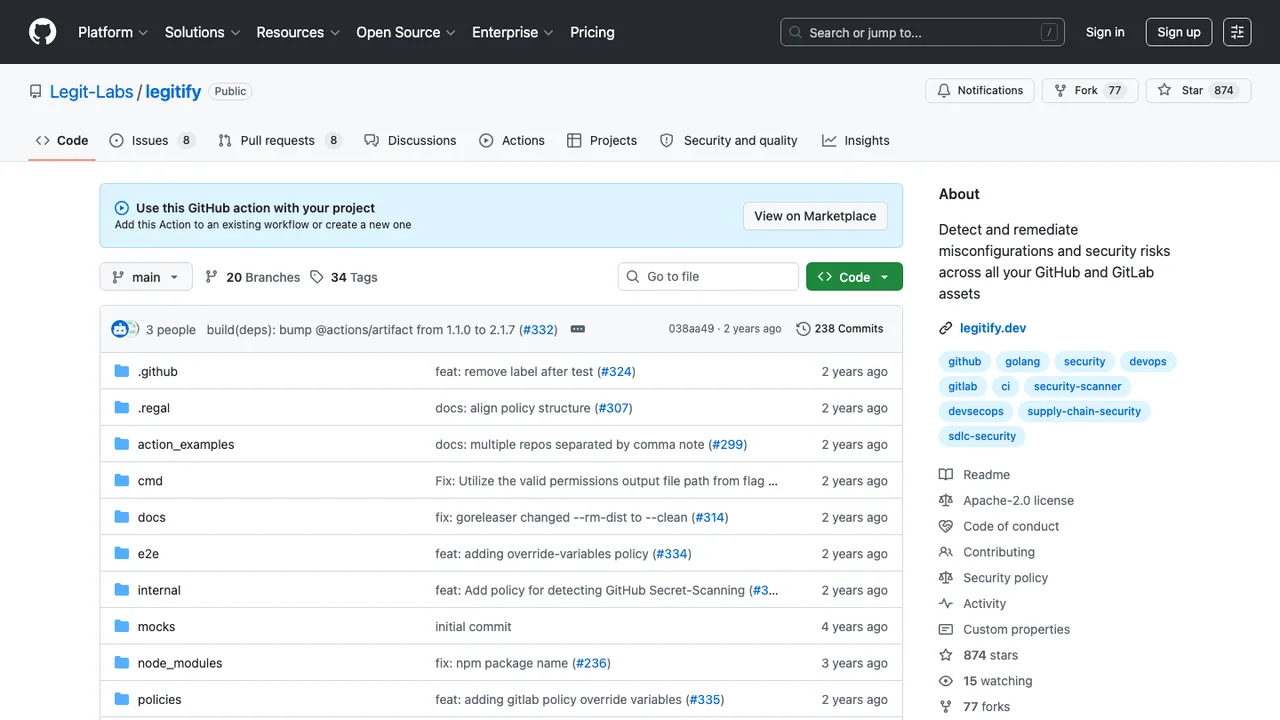
Legitify strengthens the security posture of your source-code management. It is a command-line tool that detects and remediates misconfigurations, security issues, and compliance gaps across your GitHub and GitLab assets, checking organizations, repositories, members, actions, and runner groups.
Audits GitHub and GitLab organizations, repositories, members, actions, and runner groups
Outputs human-readable text, JSON, or SARIF
Groups results by namespace, resource, or severity
Greenbone GVMD is the central management service that sits between security scanners and user clients. It stores vulnerability management configurations and scan results, providing a single backend for Greenbone Community Edition deployments.
Stores vulnerability management configurations and scan results
XML-based GMP for data access, commands, and workflows
Controls scanners through the Open Scanner Protocol (OSP)
No single tool is a Snyk clone, so most teams assemble coverage from focused scanners.
Broadest all-in-one scanner: Trivy Trivy scans container images, filesystems, Git repositories, and live Kubernetes clusters, finding CVEs, infrastructure-as-code misconfigurations, exposed secrets, and risky licenses, and can generate an SBOM. Individual scanners toggle on or off for focused runs, and it plugs into GitHub Actions and a Kubernetes operator, making it the natural core of a homegrown pipeline.
For scanning your own source code: Semgrep Semgrep handles the static-analysis piece, catching bugs and enforcing standards with rules written as source-code patterns instead of abstract syntax trees. It analyzes code locally by default, so nothing is uploaded, and supports more than thirty languages. It runs in an IDE, as a pre-commit check, or in CI, covering the developer-feedback loop Snyk emphasized.
For dependency risk and remediation: OSV-Scanner OSV-Scanner is the closest match to Snyk's dependency workflow, connecting lockfiles across many languages to advisories from the OSV.dev database. Its guided remediation recommends upgrades weighed by dependency depth, severity, and return on investment, and an offline mode scans against a local copy of the database without external calls.
For Kubernetes posture: Kubescape Kubescape checks clusters against NSA, MITRE ATT&CK, and CIS frameworks, covering workload posture, control-plane exposure, and access-control risk. Image vulnerability scanning uses Grype with an offline database option, and an in-cluster operator adds eBPF runtime threat detection and network policy generation. A CNCF project focused on the Kubernetes control point.
Building a Snyk replacement in your own pipeline
The reason one tool rarely replaces Snyk is that Snyk is several scanners behind one dashboard: software composition analysis for dependencies, static analysis for your own code, container image scanning, and infrastructure-as-code checks. Open source covers all of these, but the coverage is spread across focused tools rather than fused into one product. The broadest single option is Trivy, which scans container images, filesystems, Git repositories, and Kubernetes for CVEs, IaC misconfigurations, secrets, and licenses, and can emit an SBOM. Most teams still pair it with something else.
Fill the gaps by control point. For your own source code, Semgrep runs static analysis with rules that look like the code you already write, entirely locally so nothing is uploaded, across more than thirty languages. For dependency risk, OSV-Scanner checks lockfiles against the OSV.dev database and offers guided remediation that weighs upgrade paths, while Grype scans images, filesystems, and SBOMs with EPSS, KEV, and risk scoring to prioritize what actually matters. If your risk is concentrated in clusters, Kubescape scans against NSA, MITRE, and CIS frameworks; Clair and Vuls cover container-image and agentless server scanning respectively.
The work after choosing tools is the layer Snyk gave you for free: one policy model, deduplicated findings, and clear ownership. Decide which findings block a build and which only open a ticket, then wire scans into CI as the source of record, with dependency and IaC checks in pull requests and container scans after image build. Export your Snyk ignore rules as data, not gospel, keeping the package, advisory, reason, and owner for each, and use the cutover to delete stale exceptions. Run both systems in parallel for a few release cycles before retiring the old gates.
Can a single open source tool replace Snyk, or do I need several?+
Usually several, because Snyk bundles dependency, code, container, and infrastructure-as-code scanning behind one interface. Trivy comes closest to a single tool, covering images, filesystems, repositories, and Kubernetes for CVEs, misconfigurations, secrets, and licenses. Even so, most teams add a dedicated static-analysis tool like Semgrep for source code and a dependency specialist like OSV-Scanner, then unify the results themselves rather than expecting one scanner to do everything.
Will open source scanners find the same vulnerabilities as Snyk?+
Not exactly. Results differ because scanners draw on different advisory feeds, resolve packages differently, map severity their own way, and handle transitive dependencies distinctly. Some findings appear only in Snyk, others only in your replacement stack. During migration, compare results by package, version, and advisory identifier rather than expecting line-by-line parity, and lean on tools like Grype that add EPSS and KEV scoring to focus on genuinely exploitable issues.
Where should each scan run: pull request, CI, or the registry?+
Split the control points. Fast dependency and IaC checks belong in pull requests for early feedback, with deeper scheduled scans on the default branch. Container scans run after image build and before registry promotion, because the final image can differ from the repository manifest. If you want feedback even earlier, add pre-commit or IDE checks, but keep CI as the enforcement point and source of record for release blocking.
Is there an open source version of Snyk's automated fix pull requests?+
You can approximate it, but expect less polish. OSV-Scanner's guided remediation recommends version upgrades weighed by dependency depth, severity, and return on investment, which you can pair with a dependency-update bot and CI validation. The hard cases are major version bumps, peer dependency conflicts, and monorepo constraints. Keep security updates separate from routine version churn so reviewers can see why a change is urgent.
How do I handle Snyk's ignore rules and policy exceptions?+
Treat each Snyk ignore as migration data, not a rule to copy blindly. Preserve the package, advisory, reason, owner, expiration, and affected repository where that information exists. Open source tools use different suppression syntax, so conversion is partly manual. This is a good moment to delete stale exceptions and require review dates for accepted risk, so the replacement starts with a clean, auditable set rather than years of inherited noise.
Does dropping Snyk actually reduce cost?+
License spend can fall, but operating cost moves in-house. Budget time for tool selection, CI integration, rule tuning, exception review, report storage, and developer support. For a small team with simple repositories that is modest. For a multi-language organization with compliance reporting and many pipelines, the replacement cost is mostly engineering and process ownership rather than software fees, so weigh headcount saved against effort added.
How do I keep audit evidence without Snyk's reports?+
Define the evidence format before cutover. Store scan results, policy decisions, exception approvals, timestamps, commit SHAs, build IDs, and artifact references in a durable location. Auditors mainly care that the control ran, failures were handled, and exceptions were approved. Raw scanner logs are weak evidence on their own; tie each result to a specific release and a reviewed policy decision so the trail stands up later.