9 Best Open Source Alternatives to OneNote

9 open source alternatives100% OSI-approved licensesUpdated June 2026

OneNote is free, but it keeps your notebooks inside the Microsoft ecosystem: storage lives in OneDrive, the file format is proprietary, and getting years of notes back out is notoriously painful. The open source alternatives below store notes in open formats and sync them through services you choose - or a server you run - with no Microsoft account required.

The closest replacements keep the familiar notebooks-and-sections model with apps on every desktop and mobile platform, and several add end-to-end encrypted sync. Everything stays exportable, so the next migration is a copy, not a rescue mission.

Memos logo

1.Memos

60.8kMITGo Self-host
Memos screenshot

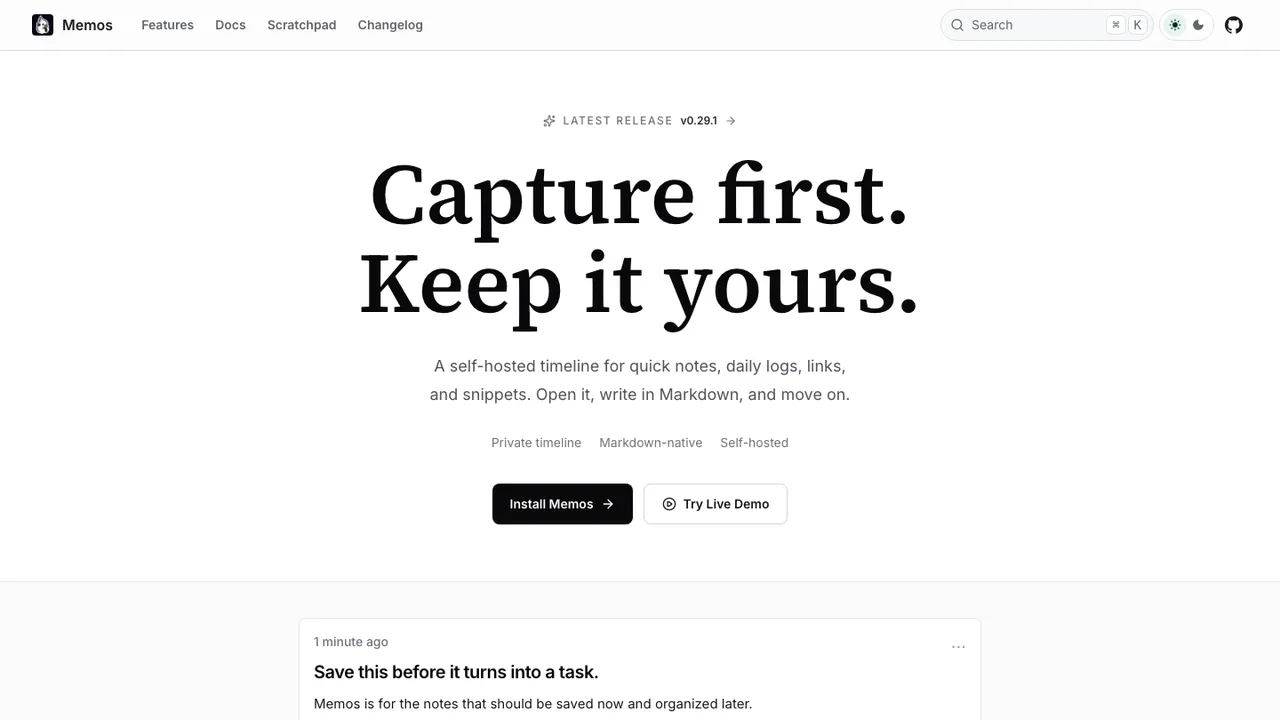
Memos is an open-source, self-hosted note-taking tool for quick capture. It provides a timeline-first interface for notes, daily logs, links, and snippets, so you can open it, write, and move on without navigating folders. Notes are stored in Markdown and kept on your infrastructure, with zero telemetry.

  • Timeline-first UI for quick capture without folders
  • Markdown-native notes for portable storage
  • Self-hosted with zero telemetry
  • Deploy with SQLite, MySQL, or PostgreSQL
Joplin logo

2.Joplin

55.2kOtherTypeScript
Joplin screenshot

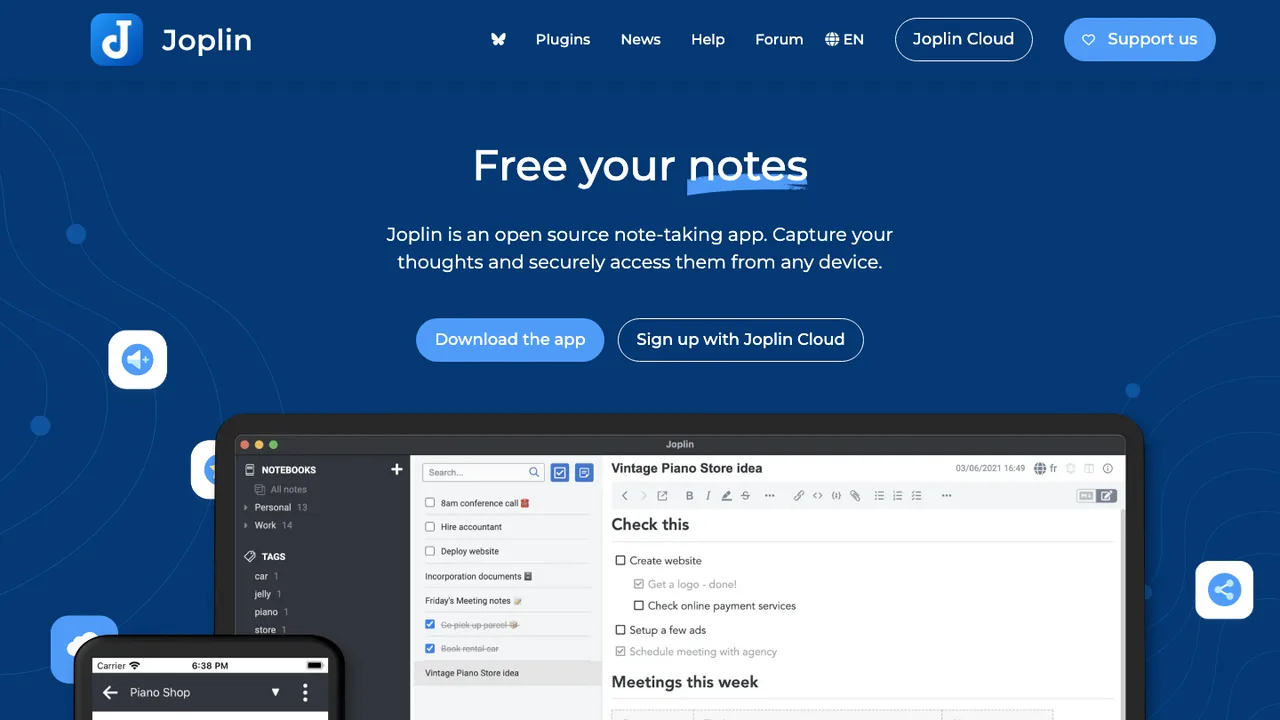
Joplin is a free, open source note taking and to-do application for Windows, macOS, Linux, Android, and iOS. It handles large note collections organized into notebooks, with searchable Markdown notes that can be copied, tagged, and edited in the apps or in your own text editor. It is offline first, so notes stay on your phone or computer and remain available without internet.

  • Markdown notes organized into notebooks
  • Offline-first access on desktop and mobile
  • End-to-end encrypted sync with multiple cloud services
  • Evernote and plain Markdown import
Xournal++ logo

3.Xournal++

14.9kGPL-2.0C++
Xournal++ screenshot

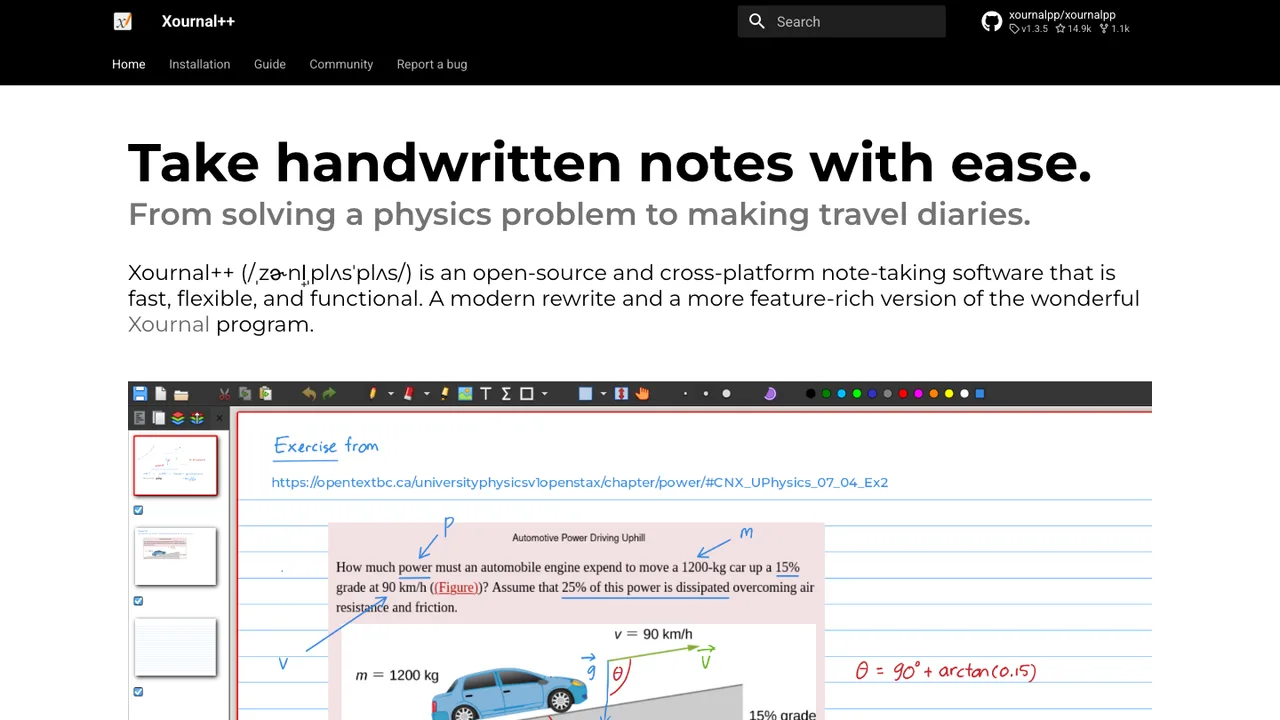
Xournal++ is handwriting note-taking software for annotating PDFs and writing on digital paper backgrounds. It is built for people who work with a stylus, letting you write, draw, and mark up documents by hand and store the results in the .xopp file format.

  • Annotate PDFs and write on paper backgrounds with a stylus
  • Pressure-sensitive pen and tablet support
  • Select, highlight, and mark up text from the underlying PDF
  • Export to SVG, PNG, and PDF from the GUI or command line
Notesnook logo

4.Notesnook

14.1kGPL-3.0TypeScript Self-host
Notesnook screenshot

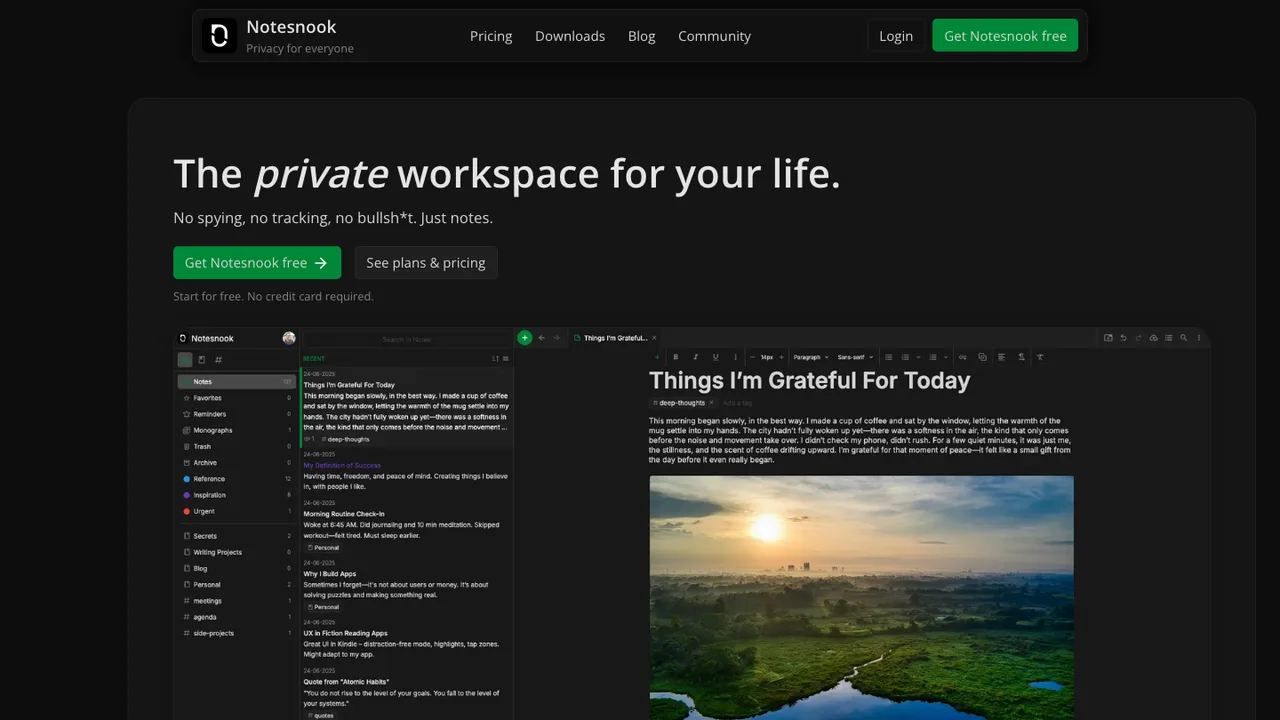
Notesnook is a free and open-source note-taking app positioned as an end-to-end encrypted alternative to Evernote. It focuses on user privacy and ease of use, with zero knowledge principles so notes are encrypted on your device before leaving it.

  • End-to-end encrypted notes with on-device encryption
  • XChaCha20-Poly1305 and Argon2 encryption stack
  • Web, desktop, and mobile clients across all platforms
  • Import existing notes from other note-taking apps
TiddlyWiki logo

5.TiddlyWiki

8.6kOtherJavaScript Self-host
TiddlyWiki screenshot

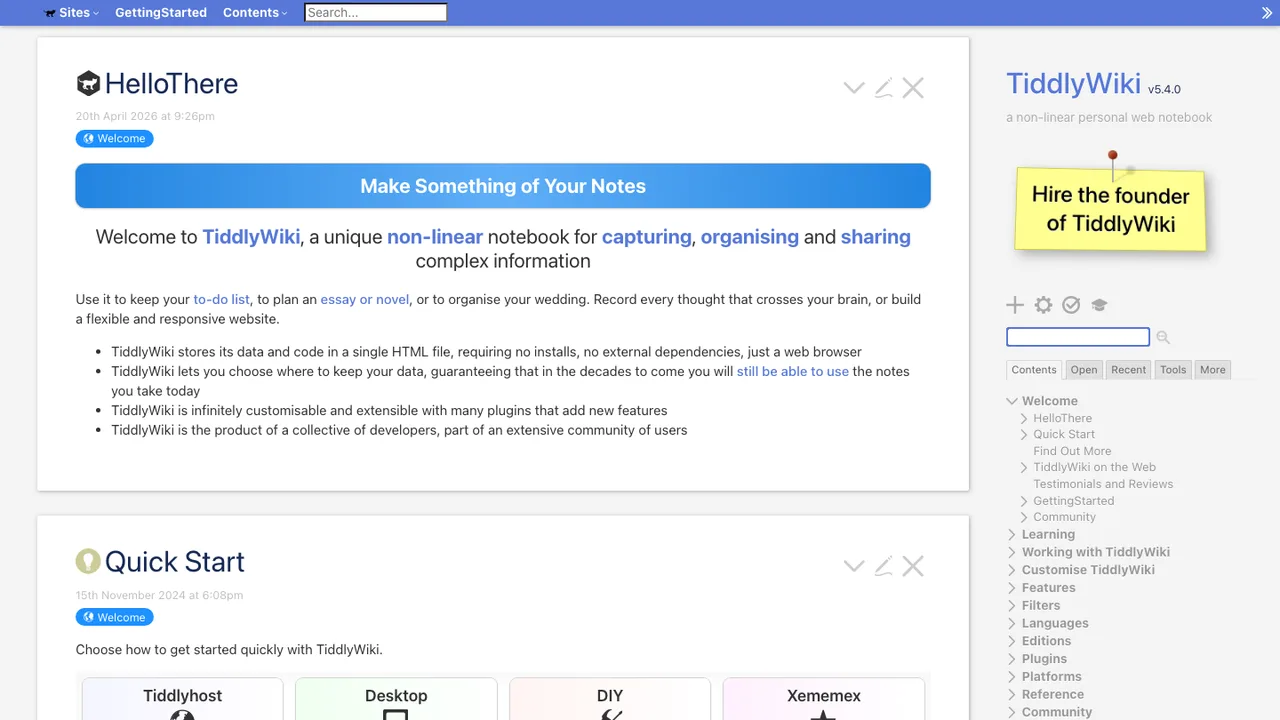
TiddlyWiki is a non-linear personal web notebook for people who want a wiki they can keep forever, independently of any corporation. It is a complete interactive wiki in JavaScript that solves note taking and linked writing in a self-contained format.

  • Single HTML file wiki in the browser
  • Node.js application and client-server setup
  • Hackable WikiText interface
  • Command-line commands for loading and rendering tiddlers
GitJournal logo

6.GitJournal

4.2kAGPL-3.0Dart Self-host
GitJournal screenshot

GitJournal is a mobile-first note taking app built around privacy and data portability. It stores notes as standardized Markdown with an optional YAML header, then keeps them in a Git repo of your choice - GitHub, GitLab, or a custom provider. That means you can self-host your notes or host them with any Git provider you trust.

  • Stores notes as Markdown with optional YAML headers
  • Keeps notes in a Git repo of your choice
  • Works with GitHub, GitLab, or custom providers
  • Supports exports from Google Keep, Day One Classic, Narrate, and Simplenote

7.Heimer

975GPL-3.0C++

Heimer is a desktop application for creating mind maps, diagrams, and note-taking layouts. It is written in Qt and targets Linux and Windows, with an easy-to-use interface for arranging nodes and labels.

  • Automatic layout optimization for mind maps and diagrams
  • Autoload and autosave with full undo and redo
  • Export maps to PNG or SVG
  • Save and load XML-based .ALZ files
RedNotebook logo

8.RedNotebook

558GPL-2.0Python
RedNotebook screenshot

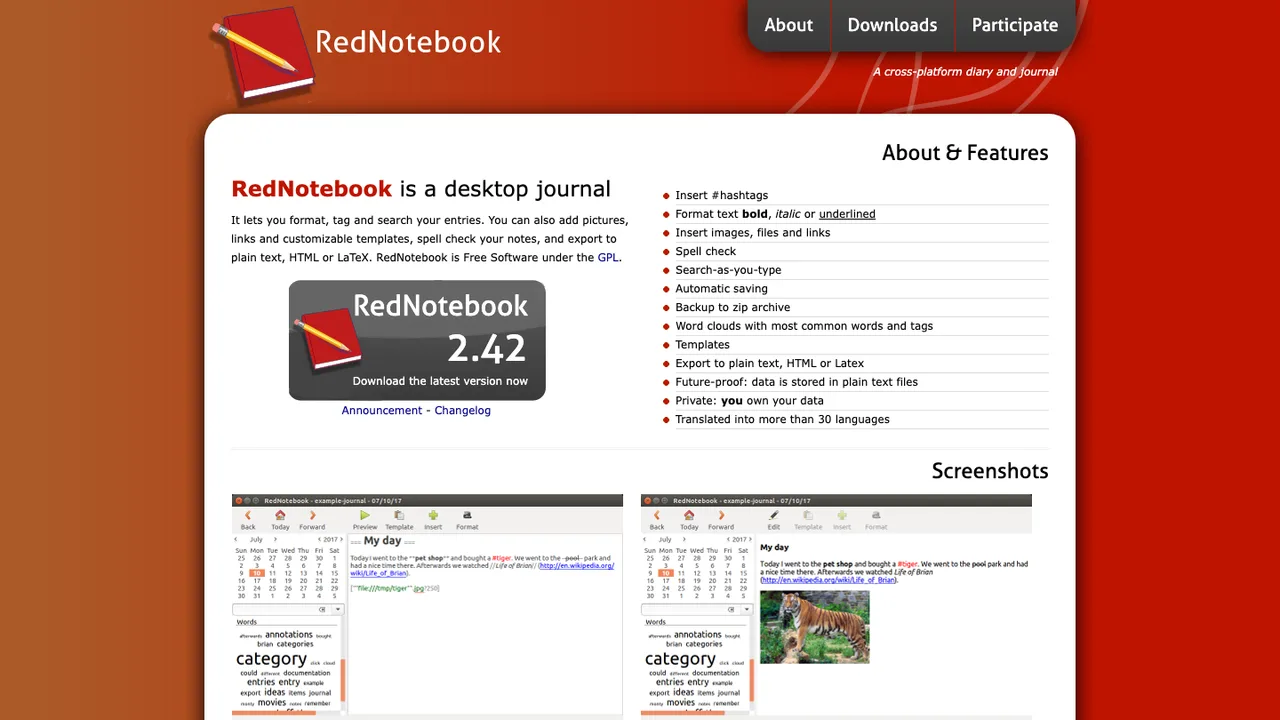
RedNotebook is a desktop journal for writing and organizing daily entries. It keeps everything offline on your own device, with tools to format, tag, and search your entries and to add pictures and links.

  • Format, tag, and search journal entries
  • Add pictures, links, and customizable templates
  • Spell check notes
  • Export to plain text, HTML, Latex, or PDF

9.Mindolph

198GPL-3.0Java

Mindolph is open source personal knowledge management software for desktop use. It keeps files in separate local workspaces, so knowledge stays in your own storage instead of a cloud service. Files are organized as a tree, and multiple tabs let you switch between open documents.

  • Local workspaces store files in your own storage
  • Mind Map, Markdown, PlantUML, CSV, and plain text support
  • AI generate and summarize content through LLM APIs
  • Mind map import from Freemind, Mindmup, XMind, Coggle, and Novamind

Related alternatives