19 open source alternatives100% OSI-approved licensesUpdated June 2026
Quicken is the long-running personal-finance app for budgeting, tracking accounts and investments, and watching net worth over time, with bank-download and auto-categorization that pull years of transactions into one place. The pain is that it moved to a subscription where your access is tied to paying - let the plan lapse and you lose the connected features that make it useful - and it stays a Windows or Mac desktop product whose data lives in a proprietary file that is awkward to move anywhere else. The open source options here put money tracking back under your control: self-hosted or local-first, with your financial history in open formats on your own machine or server, readable whether or not you ever renew anything.
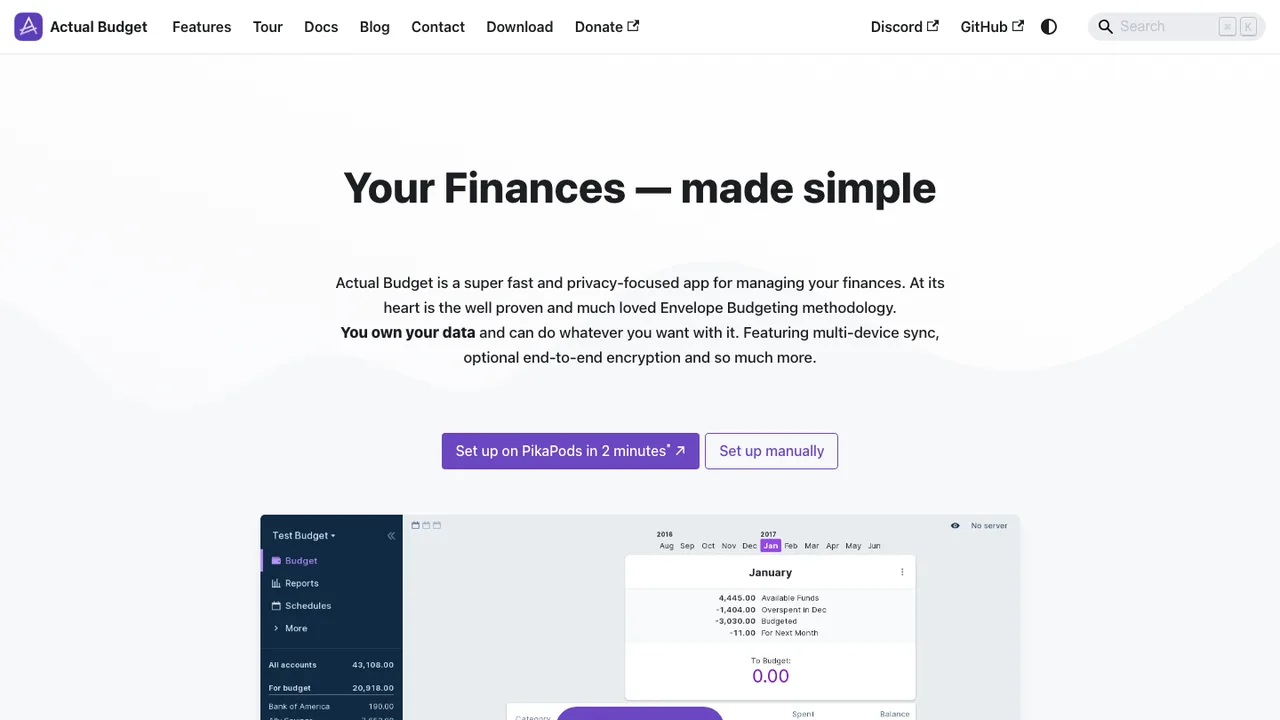
Actual Budget is a local-first personal finance app built around envelope budgeting. It runs entirely on your device, so it keeps working regardless of your network connection, and your data stays on hardware you control rather than a hosted account.
Envelope budgeting with split transactions and transfers
Multi-device sync with optional end-to-end encryption
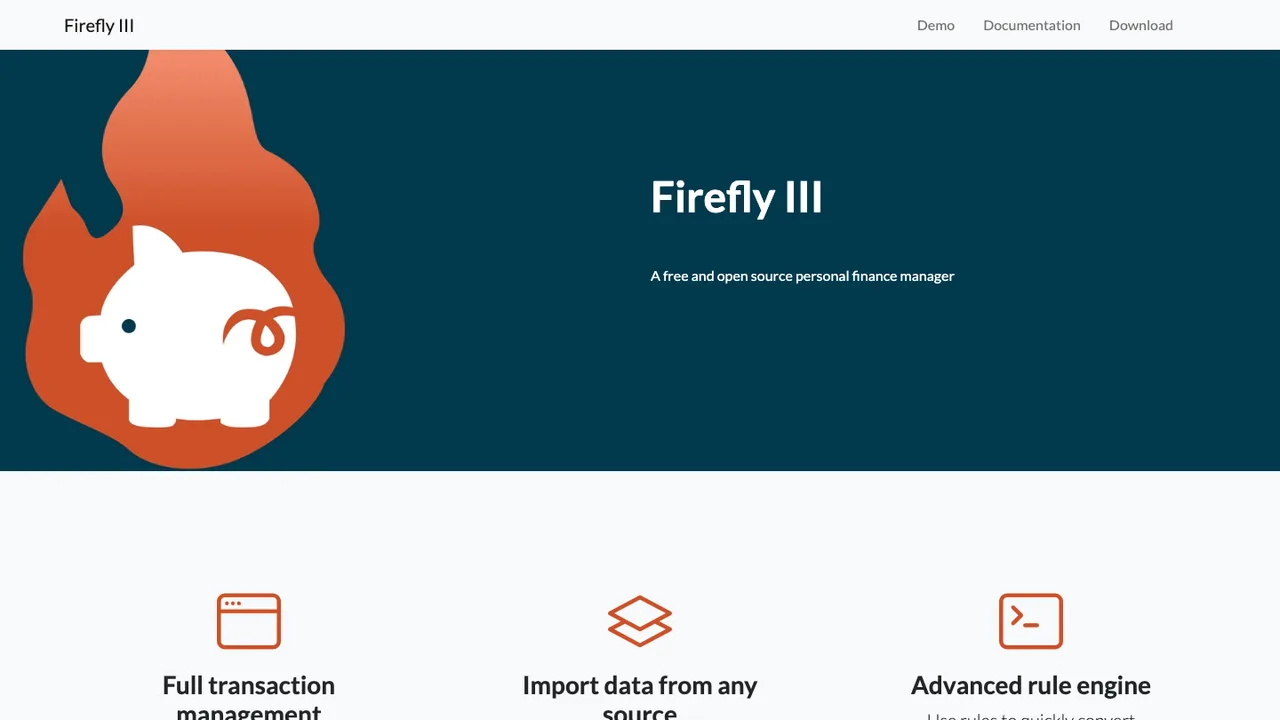
Firefly III is a free personal finance manager you run on your own server to track income and expenses. It is fully self-hosted and isolated, and it will not contact external servers until you explicitly tell it to, so your records stay off the cloud.
Double-entry bookkeeping with budgets, categories, and tags
Rule-based transaction handling
Recurring transactions and piggy bank savings goals
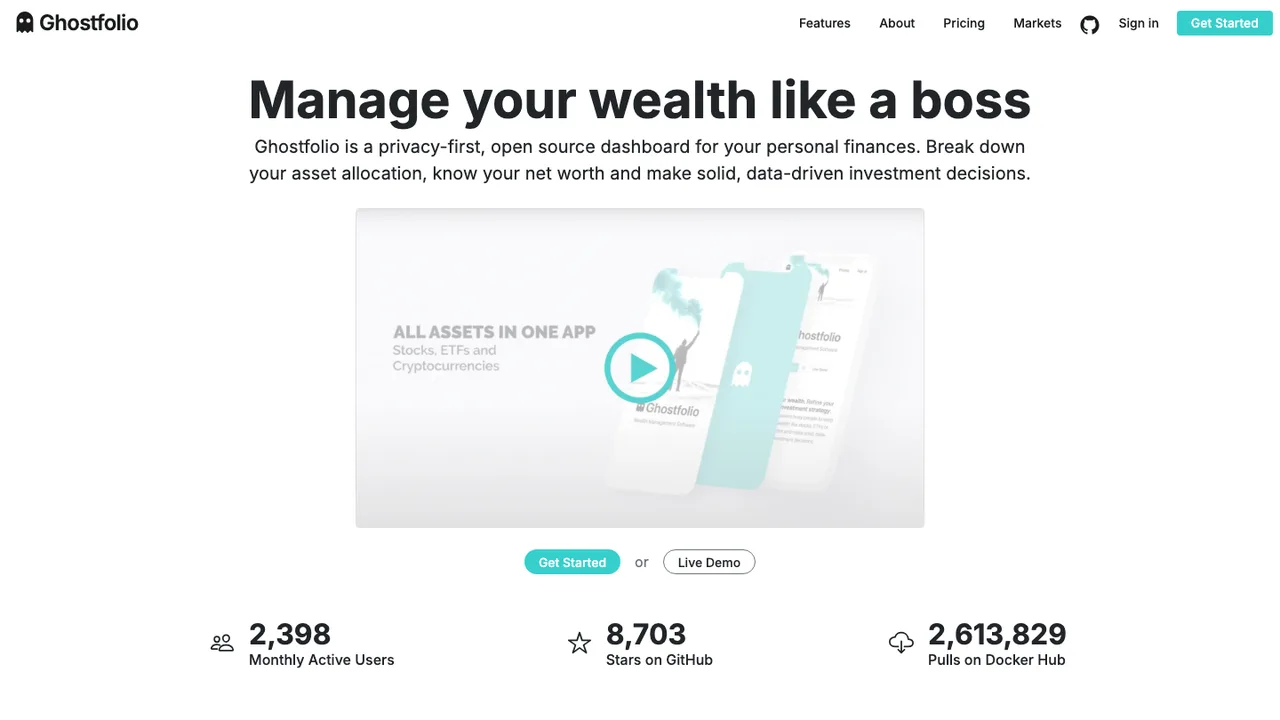
Ghostfolio is open source wealth management software for tracking net worth across cash, stocks, ETFs, and cryptocurrencies on multiple platforms. It replaces spreadsheets with a single personal finance dashboard and runs as a mobile-first progressive web app.
Track net worth across stocks, ETFs, crypto, and cash
Multi-account portfolio management
Portfolio ROAI for Today, WTD, MTD, YTD, 1Y, 5Y, and Max
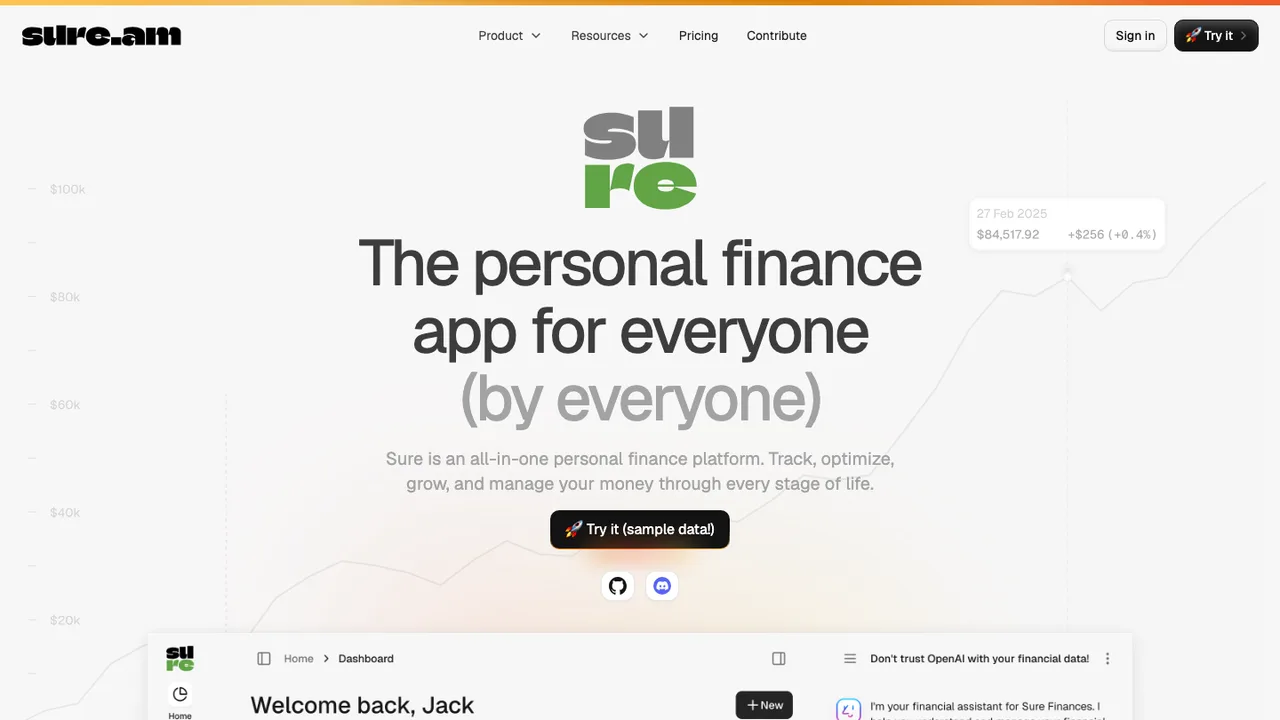
Sure is an all-in-one personal finance app for tracking, managing, and growing your money. It is a community fork of the now-abandoned Maybe Finance project, kept alive and self-hostable so the codebase stays available.
Link accounts from over 10,000 institutions plus CSV import
Net worth charts across assets and debts
Category budgets with smart allocations
Auto-categorization rules and multi-currency support
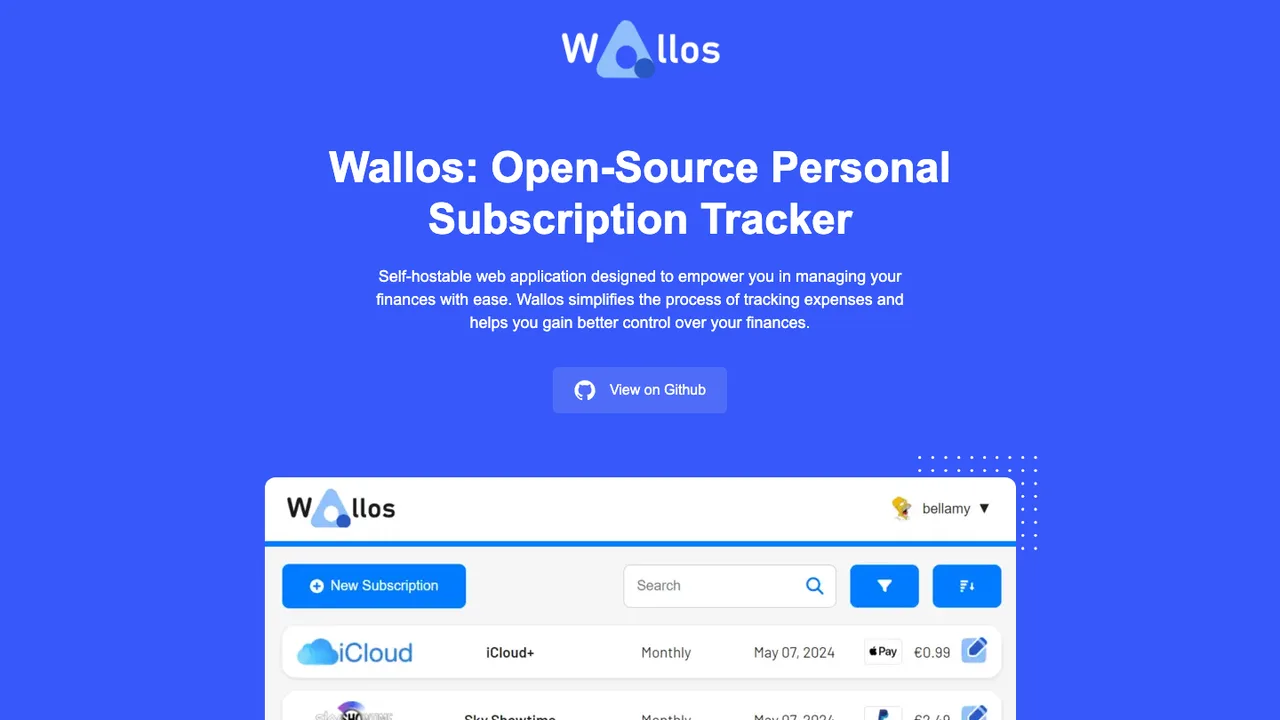
Wallos is a self-hostable web app for tracking personal subscriptions and recurring payments. It replaces spreadsheets for keeping due dates, categories, and spending visible, with financial data kept on your own server.
Track recurring subscriptions and payment due dates
Custom categories, currencies, themes, and display options
Multi-currency support with Fixer API exchange rates
Upcoming payment notifications by email, chat apps, and webhooks
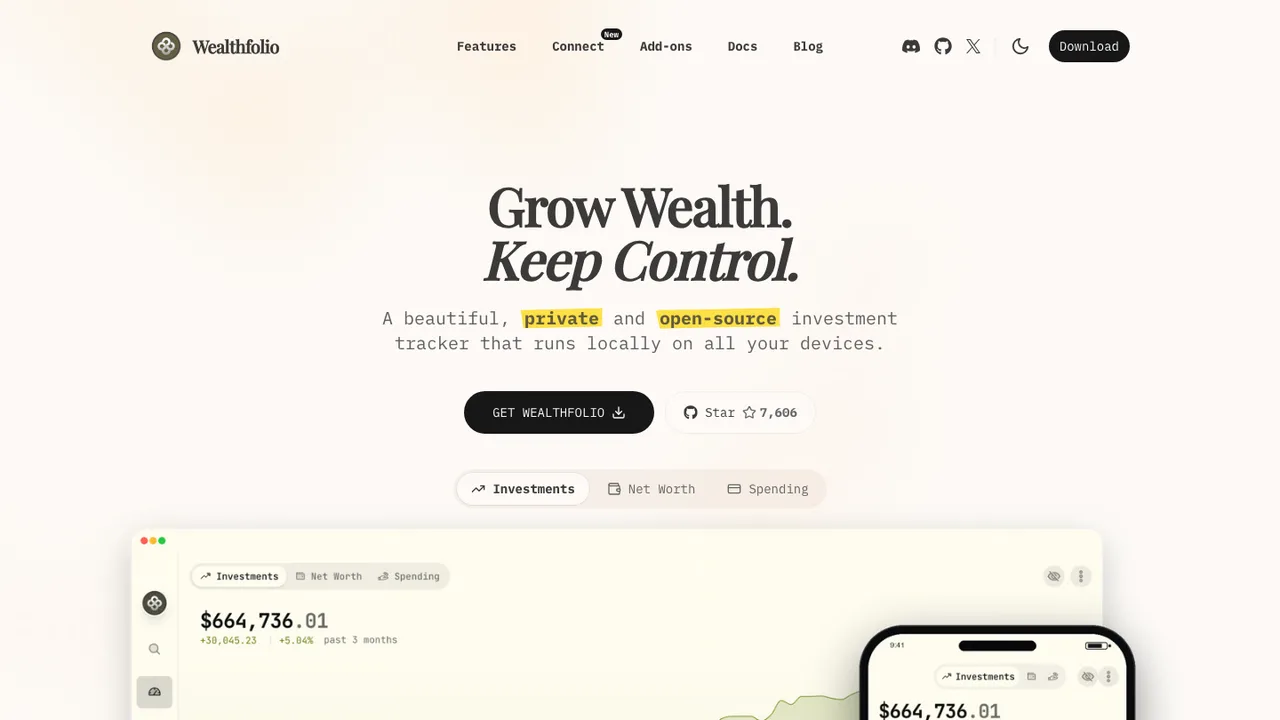
Wealthfolio is a local-first portfolio tracker for investments, net worth, spending, and simulations. Your data stays on your device with no cloud database and no account required, and manual tracking and CSV import are free forever.
Portfolio tracking across multiple accounts and asset types
Time-weighted and money-weighted return analysis
Activity import and goal planning with allocation management
Optional read-only broker sync for 30+ institutions
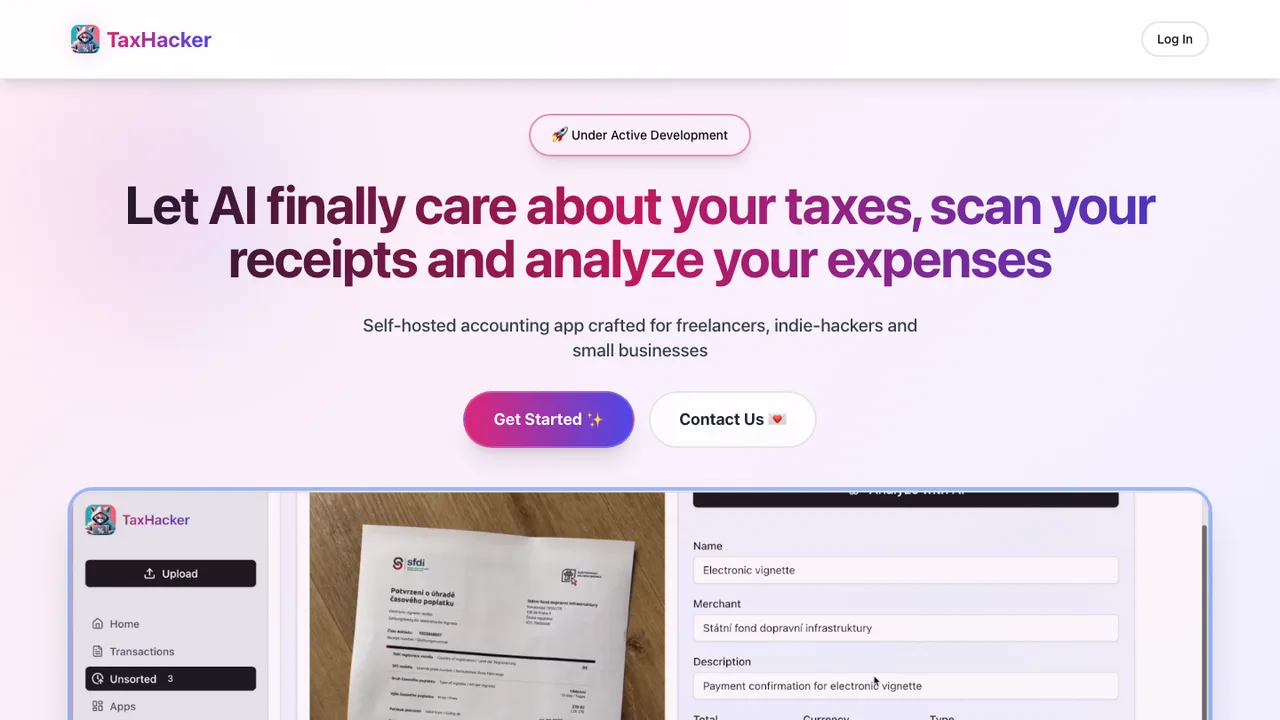
TaxHacker is a self-hosted accounting app for freelancers, indie hackers, and small businesses that want to automate expense and income tracking. Upload photos of receipts, invoices, PDFs, or bank statements and it recognizes and extracts the data you need, so documents do not have to be entered by hand.
AI extraction from receipts, invoices, PDFs, and statements
Custom fields driven by your own AI prompts
Auto-categorization, multi-project tracking, and full-text search
Historical currency conversion across 170+ currencies and crypto
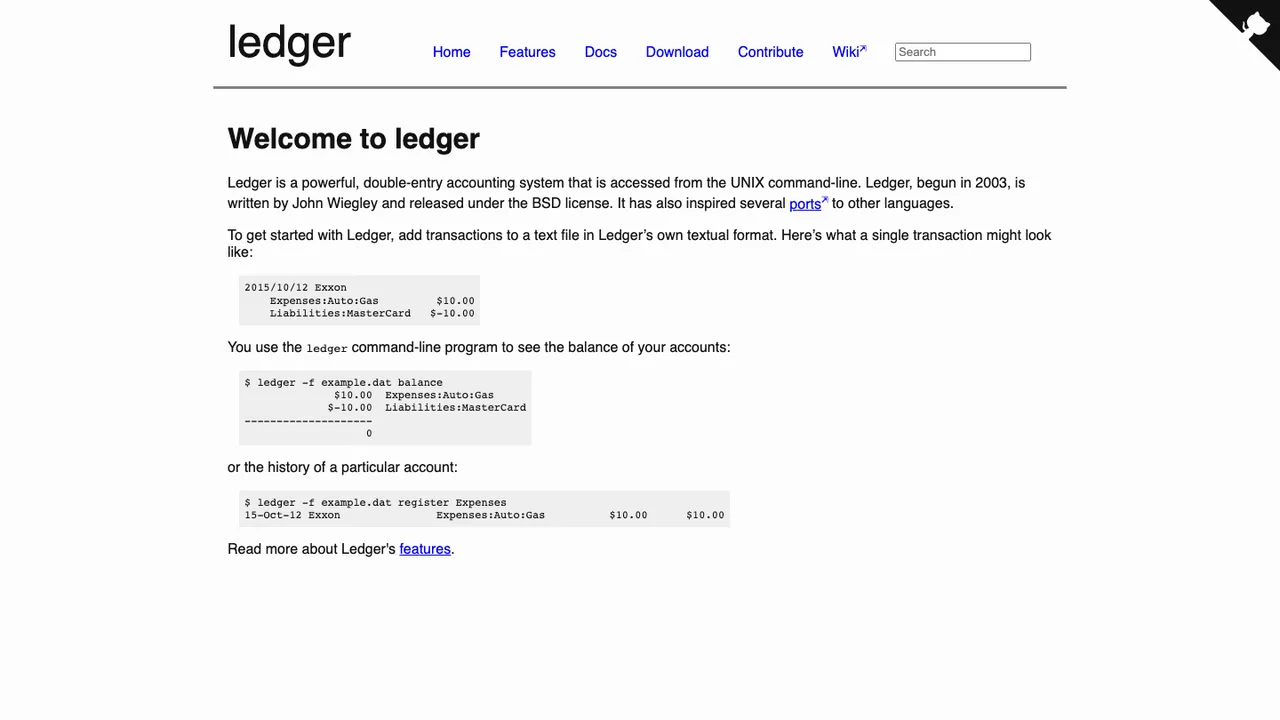
Ledger is a double-entry accounting system accessed from the UNIX command line. There is no UI: you write account names and transactions into a text file, then run Ledger with options to specify the input and the reports you want. It reads the files and generates output, with no other database or stored state.
Reads account names and transactions from text files
Beancount is a double-entry bookkeeping language for recording financial transactions in plain text files. It reads those records into memory and generates a variety of reports, so your accounting data stays in a format you can inspect, version, and manage directly rather than locked in a closed app.
Double-entry bookkeeping in plain text files
Defined grammar for accounts, postings, and prices
Direct File is the IRS service that lets taxpayers electronically file federal tax returns for free, directly with the agency. It interprets the Internal Revenue Code as plain-language interview questions, translates the answers into standard tax forms, and transmits them to the IRS Modernized e-File API. The web experience is built to work on a phone, tablet, laptop, or desktop and is offered in English and Spanish.
Plain-language interview that produces standard tax forms
Transmits returns to the IRS Modernized e-File API
English and Spanish, built for phone and desktop browsers
Exports federal return data for state or local filing
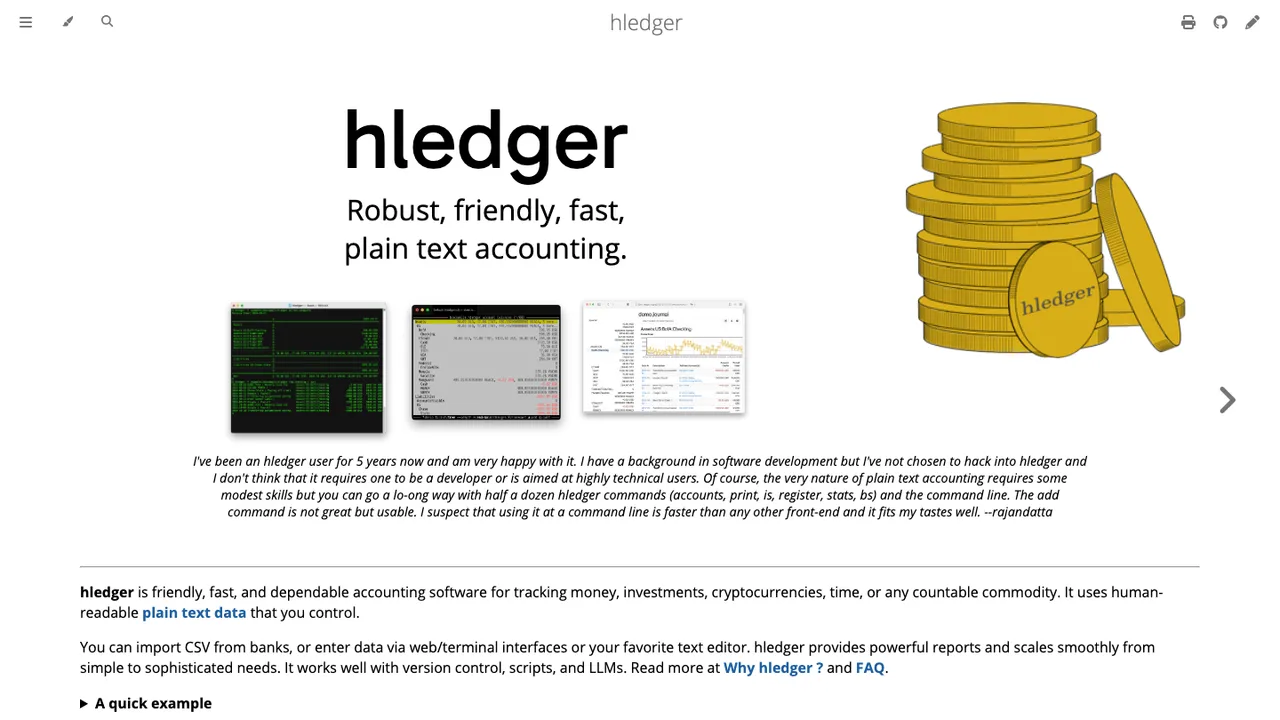
hledger is lightweight, cross-platform accounting software for tracking money, investments, cryptocurrencies, invoices, time, inventory, and more in a plain text data format. It uses double-entry bookkeeping and keeps data in a file you control, with full version control and privacy.
Plain text double-entry accounting in a file you control
Multi-currency engine accurate to 255 decimal places
Imports and exports CSV; outputs text, HTML, JSON, SQL
Cashew is a budget and expense tracking app for managing finances, purchases, and spending plans across devices. It supports custom budgets, flexible time periods, goals, categories, and multiple accounts and currencies, with tracking for upcoming, subscription, repeating, debt, and credit transactions.
Custom budgets, time periods, and spending goals
Track upcoming, subscription, repeating, debt, and credit transactions
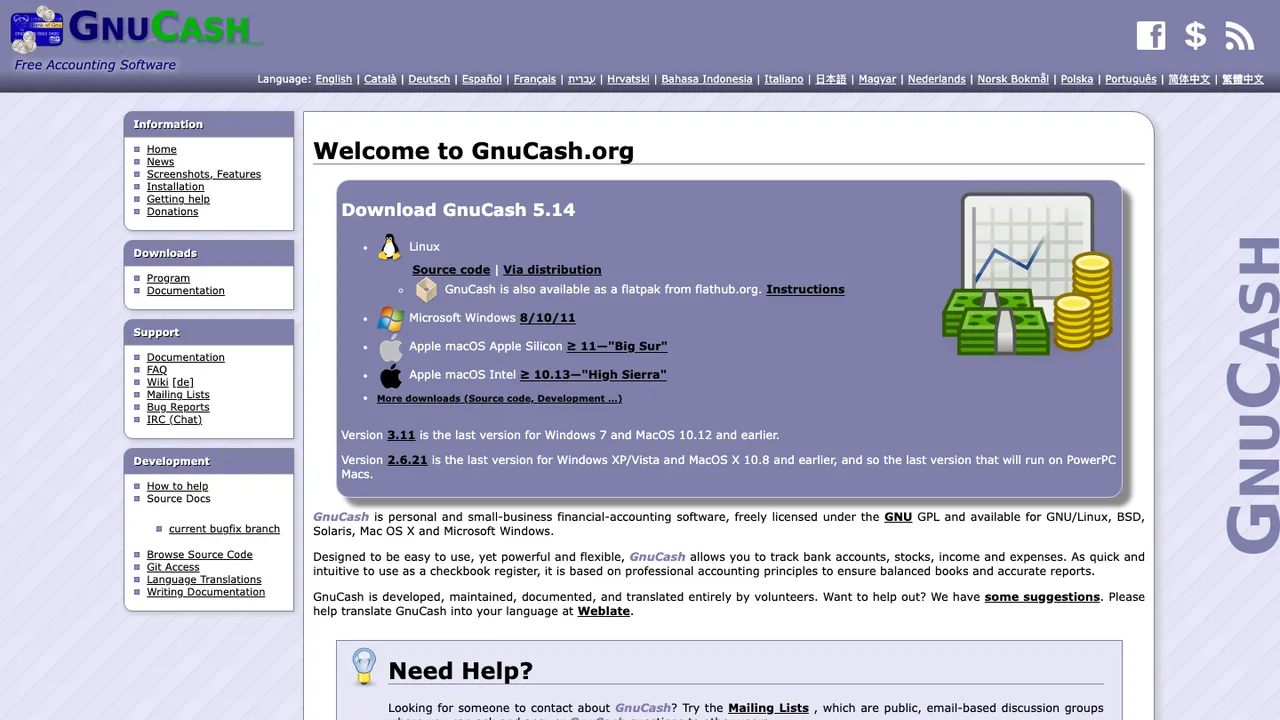
GnuCash is double-entry accounting software for personal and small business finances. It tracks accounts and transactions in a desktop application and is freely licensed under the GNU GPL. The current stable series is GnuCash 5.x.
Double-entry accounting for personal and small business
Opens .gnucash files and imports Quicken .qif files
Optional online stock and currency price retrieval
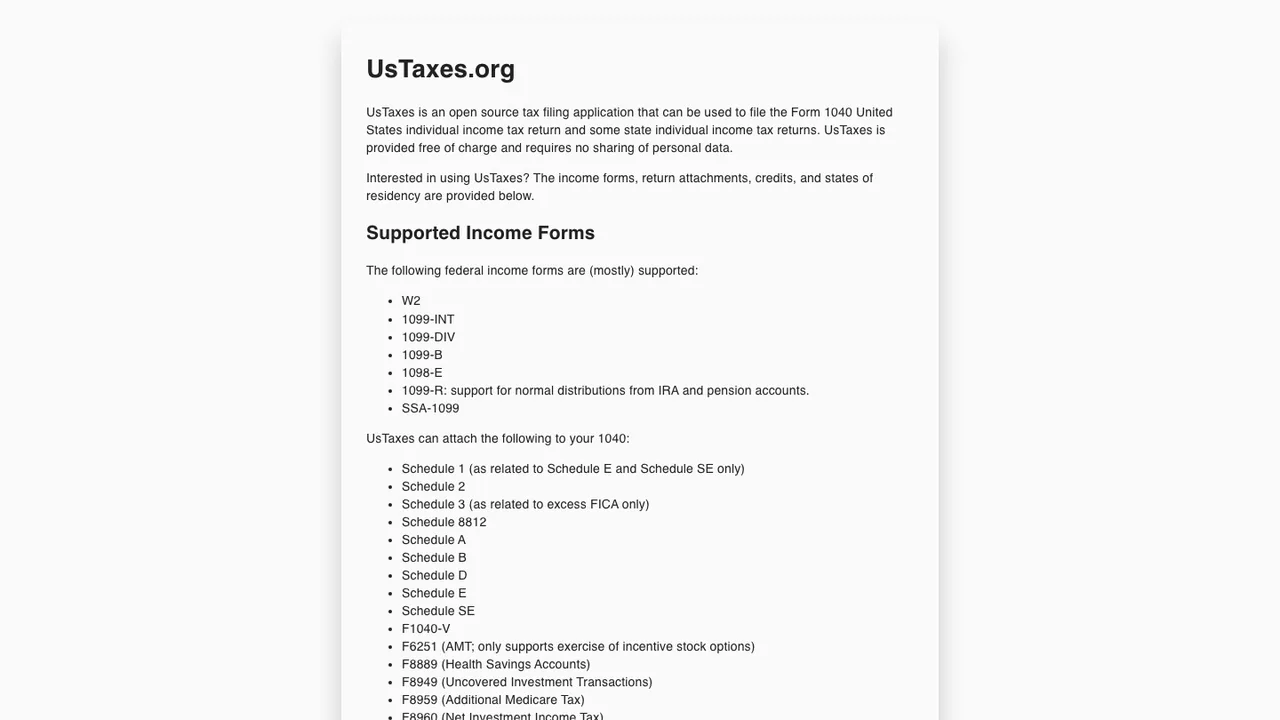
UsTaxes is a free, open-source application for filing the US federal Form 1040. It runs as a web app or a desktop app and can also be self-hosted. All tax calculations happen in the browser and data is saved to localStorage, so no personal information ever leaves your computer.
Files US federal Form 1040 with attached schedules
Calculations run in the browser, data stays in localStorage
Reads W2, 1099, 1098-E, and SSA-1099 income data
Child and dependent credit plus earned income credit
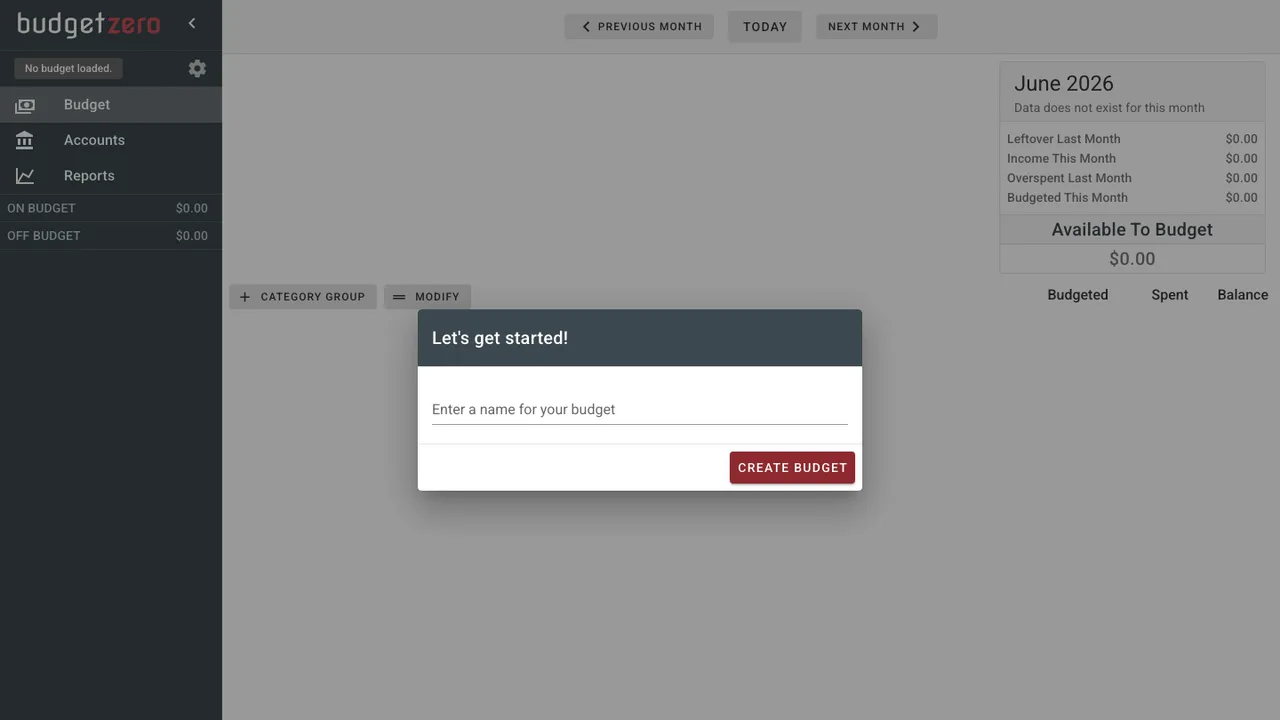
budgetzero is a free zero-based budgeting system for envelope-style planning without ads or trackers. It works offline first and stores data locally in the browser, so budgets stay on your machine and can be self-hosted on your own server.
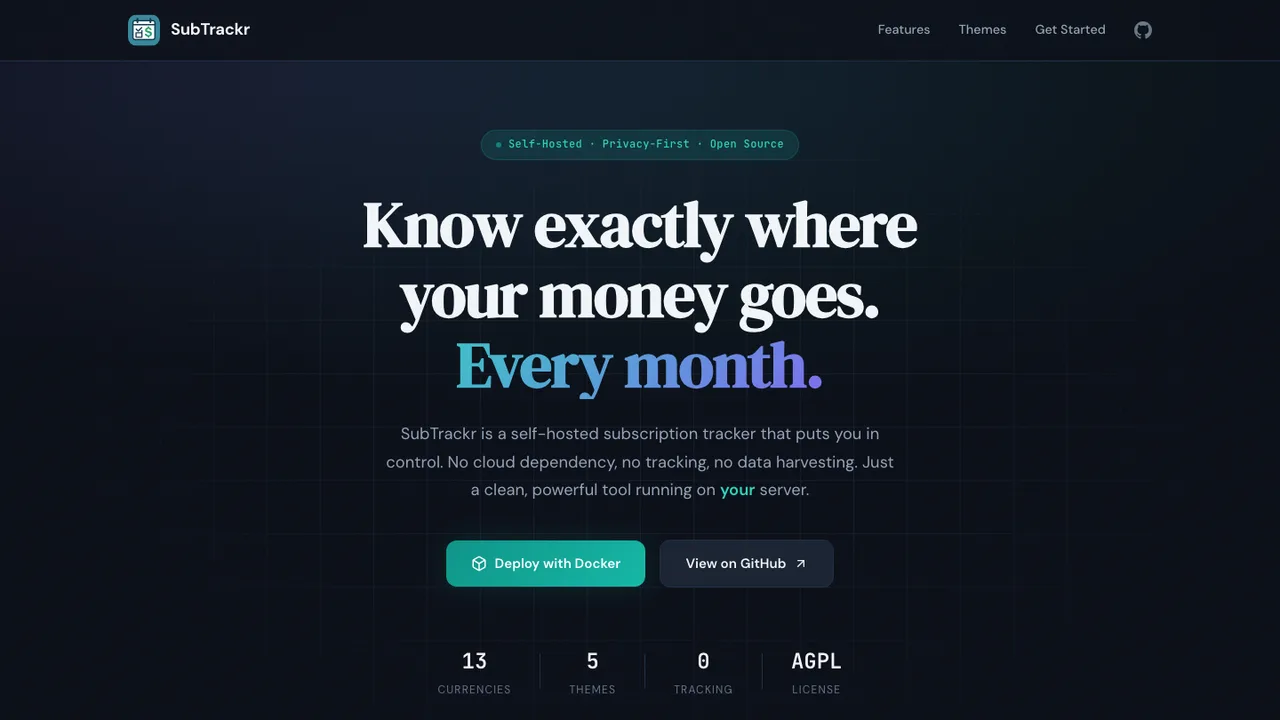
SubTrackr is a self-hosted subscription management application built with Go and HTMX. It keeps subscription tracking on your own server, with optional authentication and a privacy-first approach for people who want to manage recurring costs without handing data to a third party.
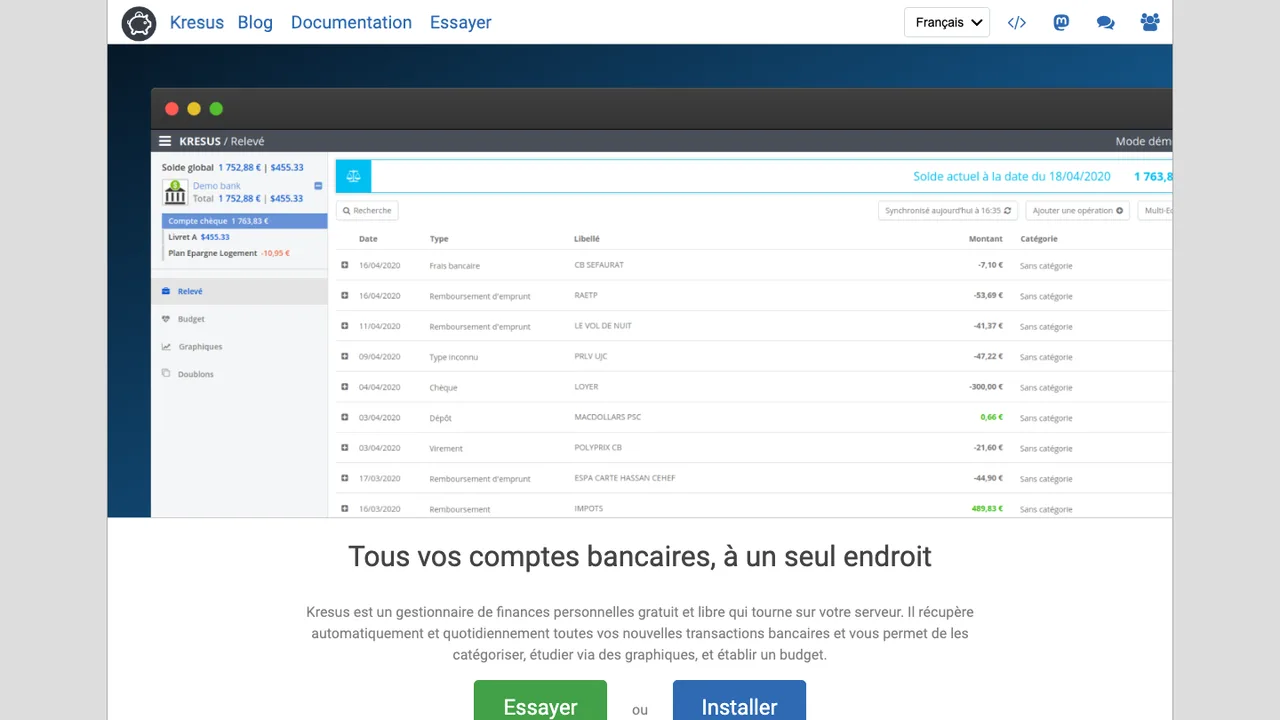
Kresus is a libre, self-hosted personal finance manager you run on your own server. It brings all your bank accounts into one interface, shows your balance at a glance, and helps you see where money goes by tagging and categorizing transactions.
All bank accounts in one interface with balance at a glance
OpenFisca-France encodes the French tax and benefit system as a model for the OpenFisca engine. It lets analysts and developers run microsimulation calculations, work with legislation as code, and query French rules without writing the model themselves. The working language of the rules is French.
Models the full French tax and benefit system
Public Web API for parameters, formulas, and situations
Swagger-documented endpoints, no install required
Run a self-hosted instance for large calculation batches
OpenFisca Core is the engine behind OpenFisca, a microsimulation framework for modeling tax and social benefit systems as code. It supplies the shared rules and computation machinery that country packages, such as OpenFisca-France, build on top of, so a national tax-benefit model does not have to be written from scratch.
Microsimulation engine for tax and benefit legislation
Vectorized calculation over large populations with NumPy
Reusable base for country-specific tax-benefit packages
Optional Web API serving rules, parameters, and calculations