13 Best Open Source Alternatives to Splunk

13 open source alternatives100% OSI-approved licensesUpdated June 2026

Splunk is still the heavyweight for machine data: throw logs, events, and metrics at it and its search language lets you slice, correlate, and alert across enormous volumes with a maturity few tools match. The catch is the model underneath it. Pricing has long tracked how much data you index per day, so the very habit good operations rewards - logging more, retaining longer, asking bigger questions - is the habit that drives the bill, and teams end up rationing what they collect to stay inside a quota.

The open source alternatives below decouple insight from ingest volume. Logs and events land in stores you run, retained on your terms instead of a daily index ceiling, and you keep the noisy, low-value streams you would otherwise drop because there is no per-gigabyte meter punishing you for keeping them. You get the search-and-correlate workflow on data that stays on your own infrastructure.

Elasticsearch logo

1.Elasticsearch

77kOtherJava Self-host
Elasticsearch screenshot

Elasticsearch is a distributed search and analytics engine, scalable data store, and vector database tuned for speed and relevance on production-scale workloads. It searches massive datasets in near real-time and underpins full-text search, logs, metrics, application performance monitoring, and security analytics.

  • Near real-time search over indexed documents
  • REST APIs and language client access
  • Bulk indexing with NDJSON
  • Vector search and RAG use cases
Grafana Loki logo

2.Grafana Loki

28.4kAGPL-3.0Go Self-host
Grafana Loki screenshot

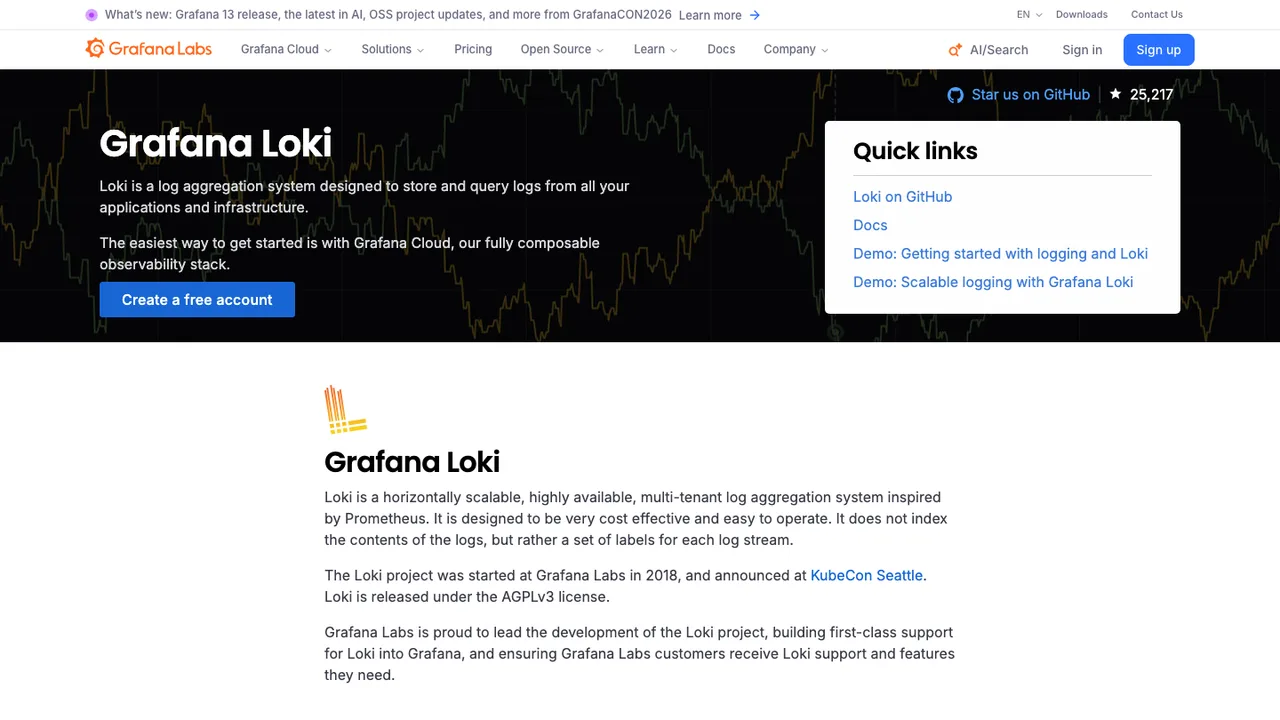
Grafana Loki is a horizontally scalable, highly available, multi-tenant log aggregation system. It stores and queries logs cost effectively by skipping full text indexing, so teams keep large volumes without the index overhead of search-engine backends.

  • Indexes log streams by labels, not full text
  • Stores compressed, unstructured logs
  • Supports Kubernetes Pod logs with scraped metadata
  • Native support in Grafana
Vector logo

3.Vector

22kMPL-2.0Rust Self-host
Vector screenshot

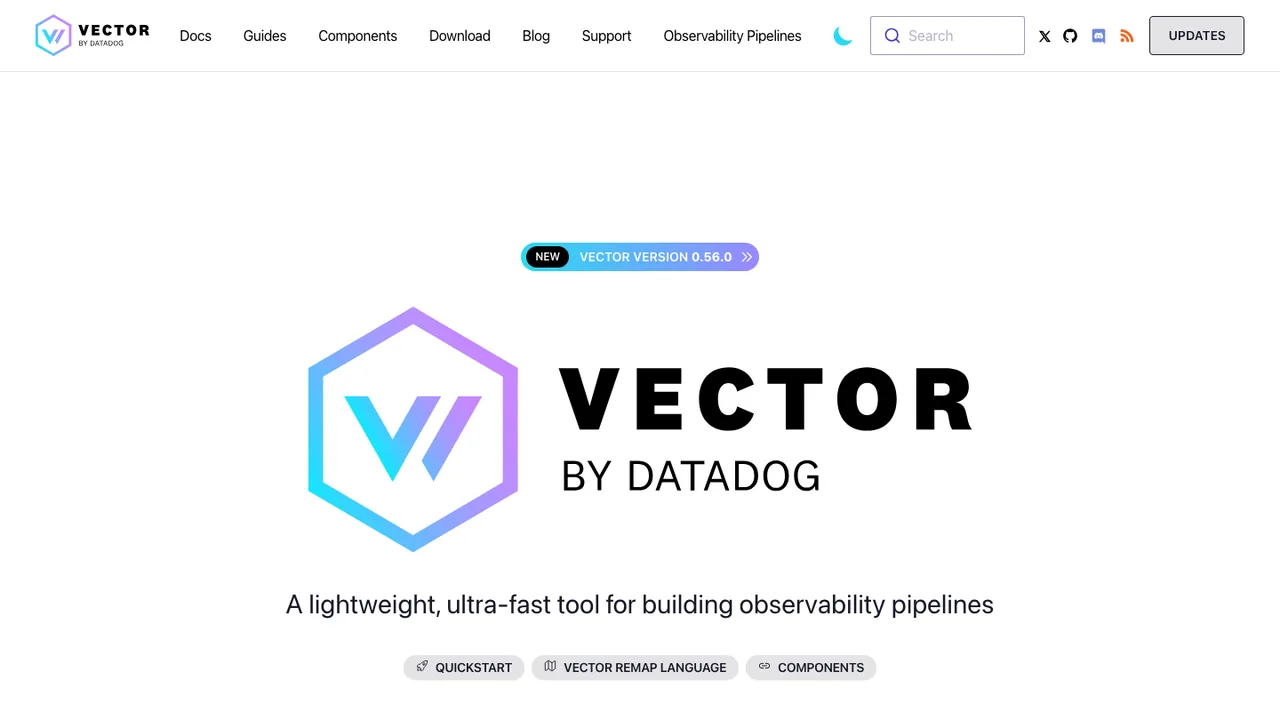
Vector is an open-source observability data pipeline for collecting, transforming, and routing logs and metrics. It runs end-to-end as an agent or aggregator, so teams can consolidate telemetry flow and send data to current or future vendors. The focus is control over observability data, including cost reduction, enrichment, and data security placement.

  • Collect, transform, and route logs and metrics
  • Deploy as an agent or aggregator
  • Sources include Docker logs, files, HTTP, journald, Kafka, and sockets
  • Transforms include dedupe, filter, remap, Lua, and log-to-metric
OpenObserve logo

4.OpenObserve

19.3kAGPL-3.0TypeScript Self-host
OpenObserve screenshot

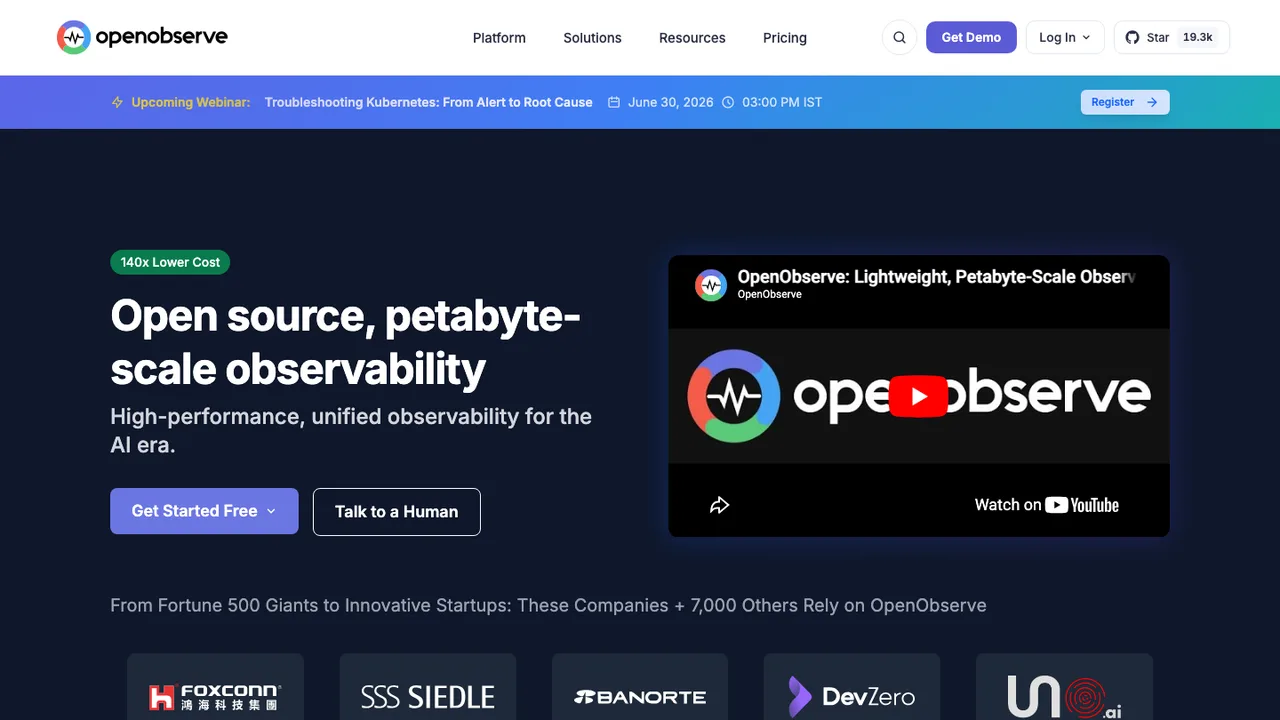
OpenObserve is a cloud-native observability tool for logs, metrics, traces, analytics, and real user monitoring. It is built for teams that want a single place to search, query, and alert on telemetry without the cost and complexity of separate tools.

  • Parquet columnar storage with S3-native design
  • Full-text log search, SQL queries, filters, and dashboards
  • Distributed tracing with OpenTelemetry
  • Metrics dashboards with SQL or PromQL
Wazuh logo

5.Wazuh

15.9kOtherC++ Self-host
Wazuh screenshot

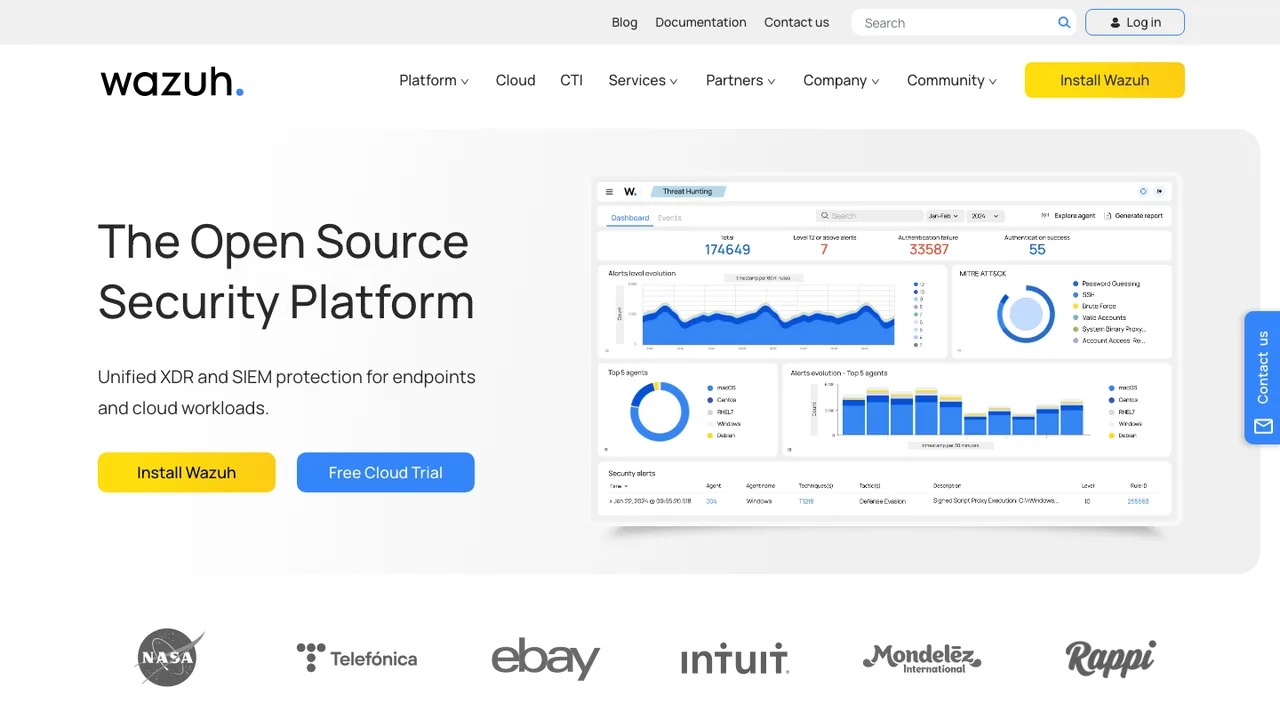
Wazuh is a free and open source platform for threat prevention, detection, and response. It protects workloads across on-premises, virtualized, containerized, and cloud-based environments, with an endpoint security agent and a management server that collects and analyzes agent data.

  • Endpoint agents and central manager
  • Log analysis with rule-based alerts
  • File integrity monitoring
  • Vulnerability detection from CVE data
Logstash logo

6.Logstash

14.9kOtherJava Self-host
Logstash screenshot

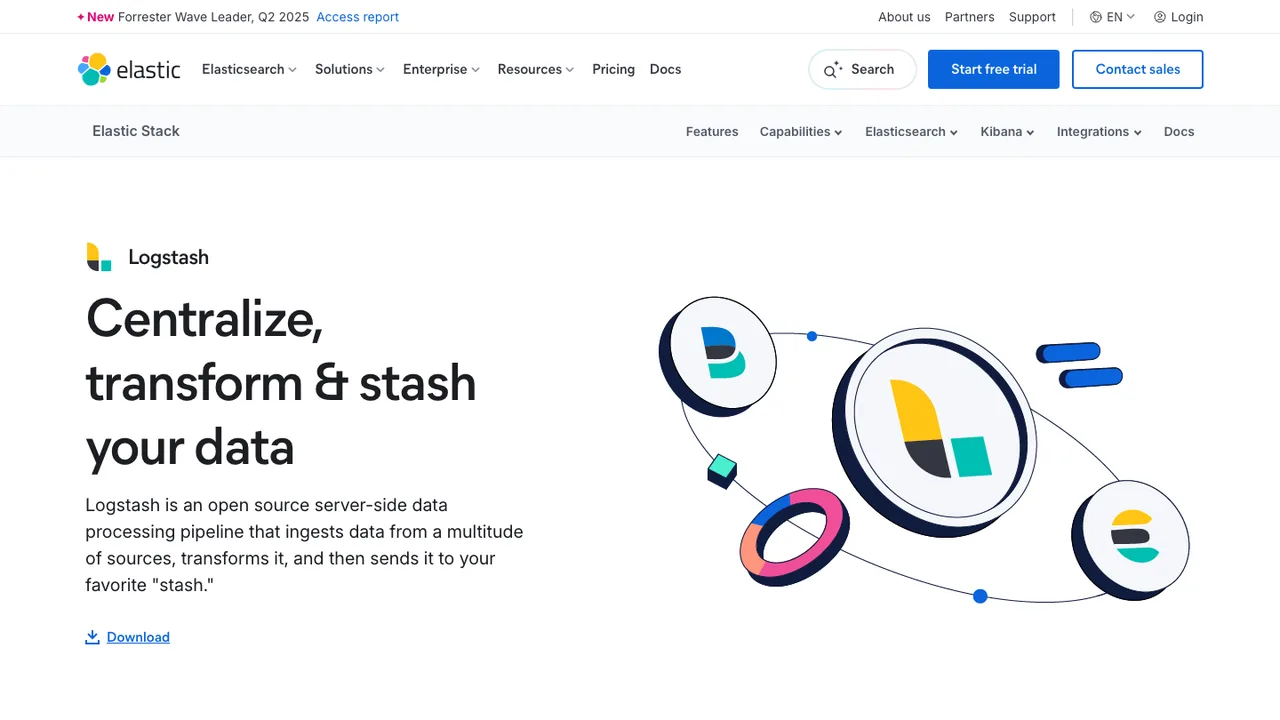
Logstash is a server-side data processing pipeline for collecting data from many sources at once, transforming it, and sending it to a destination you choose. It is part of the Elastic Stack with Beats, Elasticsearch, and Kibana, and it is built for log and event transport plus general data processing.

  • Ingests data from multiple sources simultaneously
  • Transforms and enriches logs, events, and other data
  • Over 200 plugins, plus custom plugin support
  • 80+ default plugins for common data flows
Fluentd logo

7.Fluentd

13.6kApache-2.0Ruby Self-host
Fluentd screenshot

Fluentd sits between your data sources and your backend systems as a single unified logging layer, so applications no longer need to know where their logs end up. It collects events from many sources and writes them to files, RDBMS, NoSQL, IaaS, SaaS, Hadoop, and other destinations.

  • Unified logging layer decouples sources from backends
  • 500+ plugins for inputs and outputs
  • Writes to files, RDBMS, NoSQL, IaaS, SaaS, and Hadoop
  • Structured JSON events with fluent.conf routing
OpenSearch logo

8.OpenSearch

13.2kApache-2.0Java Self-host
OpenSearch screenshot

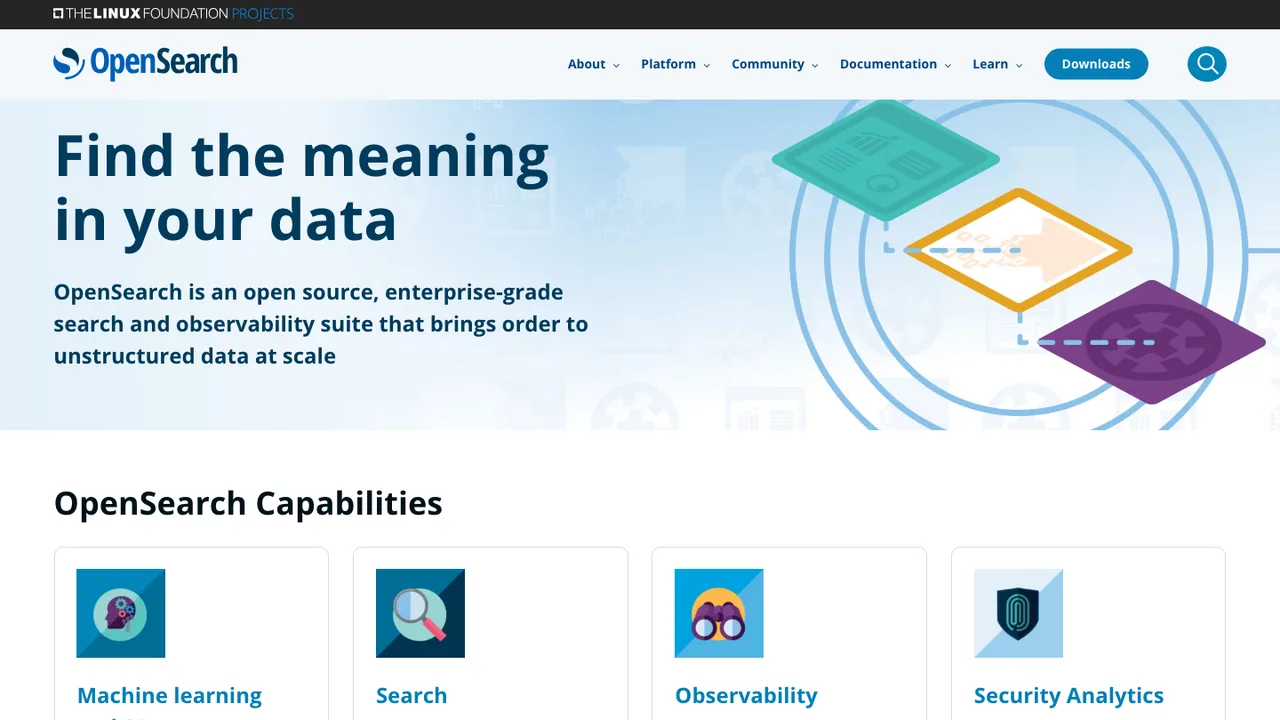
OpenSearch is an enterprise-grade search and observability suite that brings order to unstructured data at scale. A distributed, RESTful search engine sits at its core, letting you ingest, search, visualize, and analyze data in one stack.

  • Distributed RESTful full-text search engine
  • Vector search for semantic and similarity queries
  • Dashboards for visualizing and exploring data
  • Observability for logs, metrics, and traces
Quickwit logo

9.Quickwit

11.3kApache-2.0Rust Self-host
Quickwit screenshot

Quickwit is a cloud-native search engine for observability data, focused on logs and distributed traces, with metrics support on the roadmap. It is an open-source alternative to Datadog, Elasticsearch, Loki, and Tempo for teams that need full-text search and analytics over large event data.

  • Full-text search and aggregation queries
  • Elasticsearch/OpenSearch-compatible ingest and search APIs
  • OTEL-native logs and traces with Jaeger-native tracing
  • Schemaless or strict schema indexing with schemaless analytics
Graylog logo

10.Graylog

8.1kOtherJava Self-host
Graylog screenshot

Graylog pulls logs from across your stack into one place to collect, store, search, and analyze them, so lean teams get a central view instead of checking systems separately. It ingests data over GELF, Syslog, AMQP, and Kafka, and turns raw events into searches, dashboards, and alerts.

  • Central log management for collection, storage, and analysis
  • Log viewing and log analysis
  • Supports GELF, Syslog, AMQP, and Kafka
  • Security and SIEM use cases
Fluent Bit logo

11.Fluent Bit

7.9kApache-2.0C Self-host
Fluent Bit screenshot

Fluent Bit is a lightweight telemetry agent for collecting, processing, and forwarding logs, metrics, and traces from any source to any destination. It is built for Linux, Windows, macOS, BSD, and embedded environments, and is designed to use minimal CPU and memory.

  • 70+ built-in plugins for inputs, filters, and outputs
  • SQL stream processing for analytics and transformations
  • Built-in TLS and SSL support with async I/O
  • Internal metrics exposed over HTTP and Prometheus
OSSEC logo

12.OSSEC

5kGPL-2.0C Self-host
OSSEC screenshot

OSSEC is a host-based intrusion detection system that watches the servers it runs on. It combines HIDS, log monitoring, and SIM/SIEM-style correlation in one agent to surface attacks and policy violations across a fleet.

  • Log analysis and log monitoring
  • File integrity checking and monitoring
  • Policy monitoring and rootkit detection
  • Real-time alerting and active response
Sagan logo

13.Sagan

197GPL-2.0C Self-host
Sagan screenshot

Sagan is a real-time log analysis and correlation engine for security events. Written in C with a multi-threaded architecture, it inspects log data rather than network packets, and mirrors Suricata and Snort so existing rule management and IDS/IPS workflows carry straight over.

  • Multi-threaded real-time log processing
  • Snort and Suricata-style rule syntax
  • Unified2 and Suricata JSON output
  • liblognorm parsing and GeoIP detection

Related alternatives