9 Best Open Source Alternatives to PRTG

9 open source alternatives100% OSI-approved licensesUpdated June 2026

PRTG is a polished all-in-one monitor: point it at a network and its sensors discover devices, poll SNMP, watch bandwidth, and surface clean dashboards and alerts with very little setup. The friction is structural. You license by the sensor, so every interface, service, and metric you genuinely want to watch counts against your tier - and the closer you get to full coverage, the more the next sensor costs. The core also runs on Windows, which quietly decides where your monitoring server has to live.

The open source alternatives below put that polling engine on infrastructure you run, usually Linux, with no sensor count metering what you are allowed to observe. You instrument every host, link, and service you care about because the cost is storage and a little config, not a license tier - and the data behind your alerts sits in stores you control rather than a vendor's appliance.

Uptime Kuma logo

1.Uptime Kuma

88kMITJavaScript Self-host
Uptime Kuma screenshot

Uptime Kuma is an easy-to-use, self-hosted monitoring tool for checking whether your services stay online and respond as expected. It is for people who want to track uptime without relying on a hosted service like Uptime Robot, keeping all data on infrastructure they run themselves.

  • Monitors HTTP(s), TCP, Ping, DNS, Push, and Docker Containers
  • Multiple status pages with domain mapping
  • Notifications via Telegram, Discord, Gotify, Slack, Pushover, Email (SMTP)
  • Ping charts and certificate info
Zeek logo

2.Zeek

7.7kOtherC++ Self-host

Zeek is a network traffic analysis and security monitoring framework. It gives defenders application-layer visibility and a high-level record of everything happening on a network, rather than locking them into a fixed set of detection signatures.

  • Turns live traffic into structured, high-level logs
  • Protocol analyzers for application-layer visibility
  • Domain-specific scripting for custom monitoring policies
  • Keeps rich connection and application-layer state
LibreNMS logo

3.LibreNMS

4.8kOtherPHP Self-host
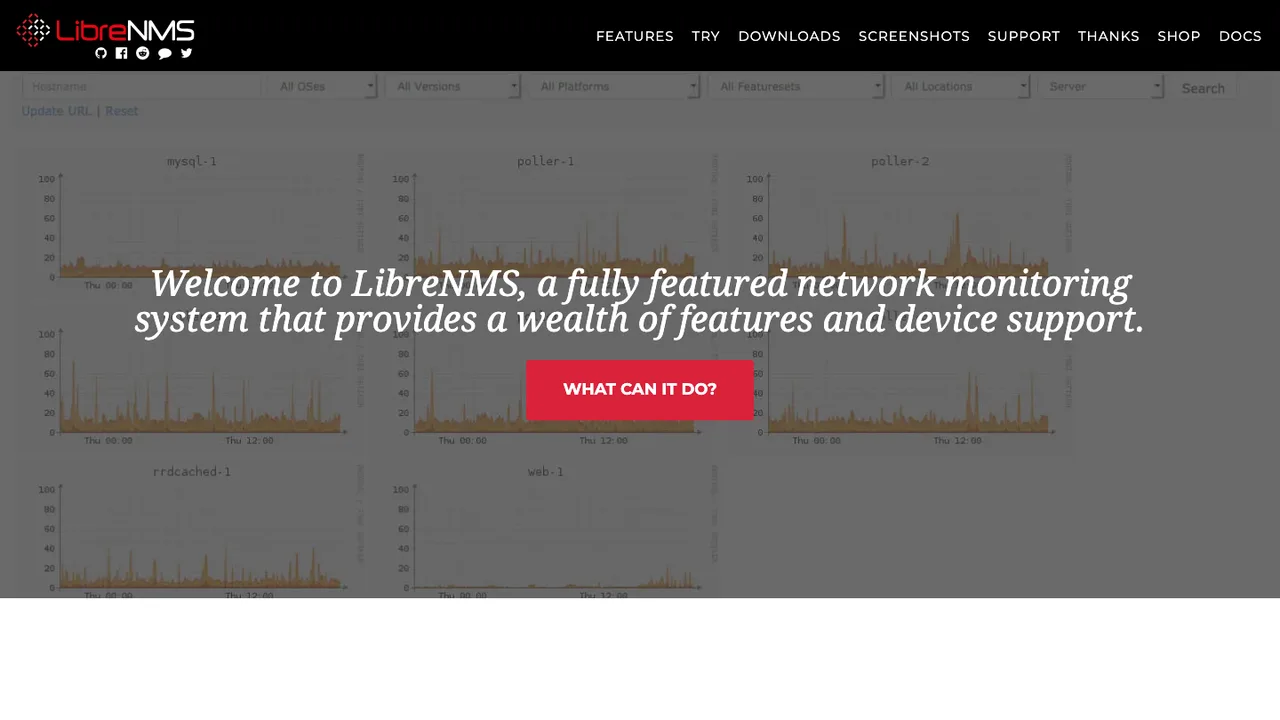
LibreNMS screenshot

LibreNMS finds what to monitor on its own. Give it SNMP access to a network and it walks the devices, identifies the hardware and operating system, and starts collecting without per-device setup. That autodiscovery spans a broad vendor list, including Cisco, Linux, FreeBSD, Juniper, Brocade, Foundry, and HP.

  • Autodiscovers and fingerprints devices over SNMP
  • Stores metrics in RRD and renders graphs
  • Alerting on collected metrics
  • Broad vendor support: Cisco, Juniper, Linux, HP, and more
OPNsense logo

4.OPNsense

4.5kBSD-2-ClausePHP Self-host
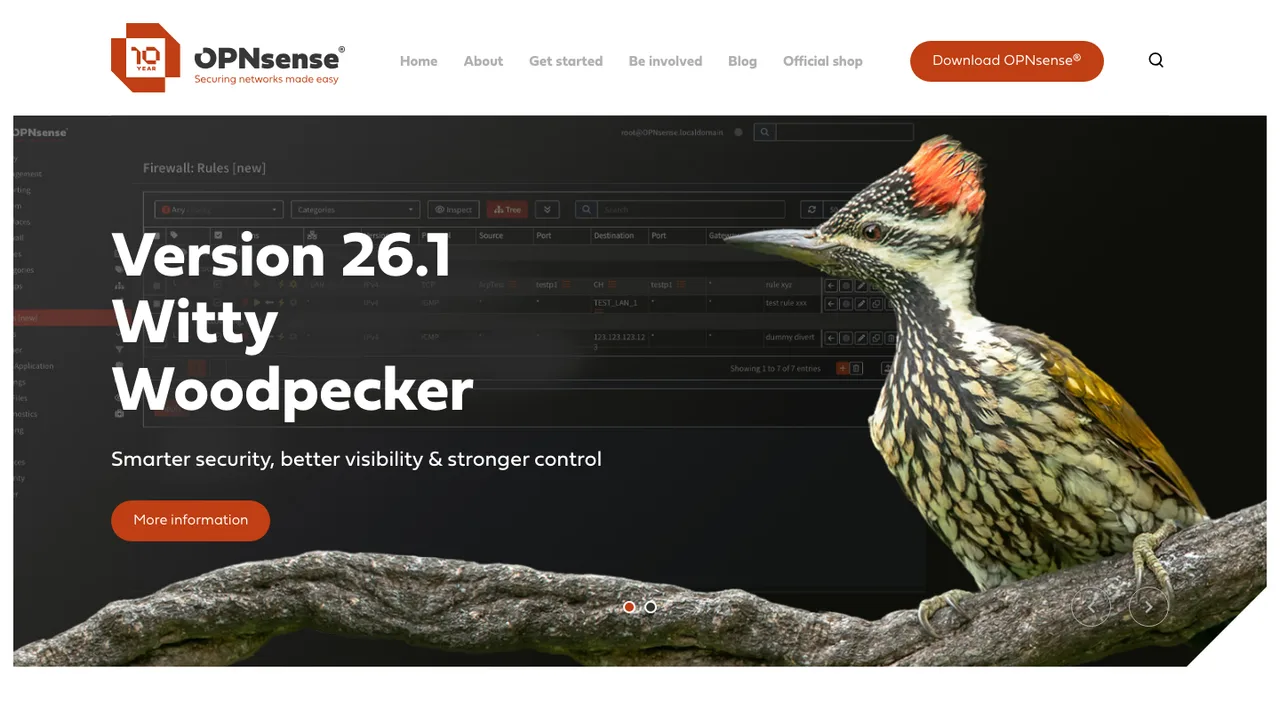
OPNsense screenshot

OPNsense is an open source firewall and routing platform built on FreeBSD. It runs as a network appliance with a web interface and an API, giving home and business networks stateful packet filtering for IPv4 and IPv6 along with a live view of passed and blocked traffic.

  • Stateful IPv4 and IPv6 packet filtering
  • Multi-WAN load balancing and failover
  • IPsec, OpenVPN, and WireGuard VPN
  • Suricata inline intrusion detection and prevention
Checkmk logo

5.Checkmk

2.3kGPL-2.0Python Self-host
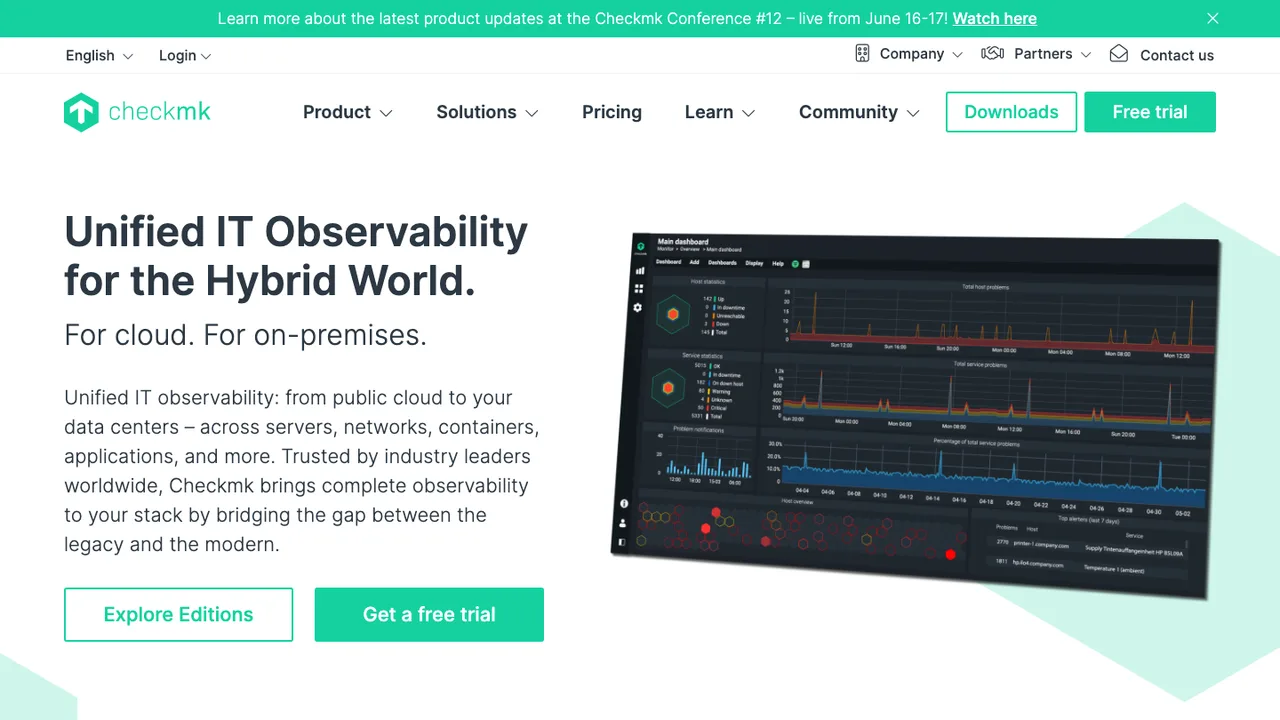
Checkmk screenshot

Checkmk leans on a large library of built-in plugins to monitor physical, virtual, containerized, and cloud environments. Rather than asking you to script every check, it ships hundreds of official and community plugins that already know how to read common services, so onboarding a host means installing an agent or pointing at an endpoint. It is built to scale with low resource use.

  • Agent-based and agentless monitoring
  • Web-based UI with dashboards
  • Distributed monitoring and automated agent management
  • OpenTelemetry metrics and push agents in Ultimate
Icinga logo

6.Icinga

2.2kGPL-3.0C++ Self-host
Icinga screenshot

Icinga 2 is the monitoring engine at the center of the Icinga stack. It watches the availability of network resources and servers, raises notifications the moment something goes down, and emits performance data that downstream tools turn into graphs and reports. Its own configuration language describes what to check and when.

  • Checks availability of network resources
  • Notifies users of outages
  • Generates performance data for reporting
  • Distributed monitoring across multiple locations
Nagios Core logo

7.Nagios Core

2kGPL-2.0C Self-host
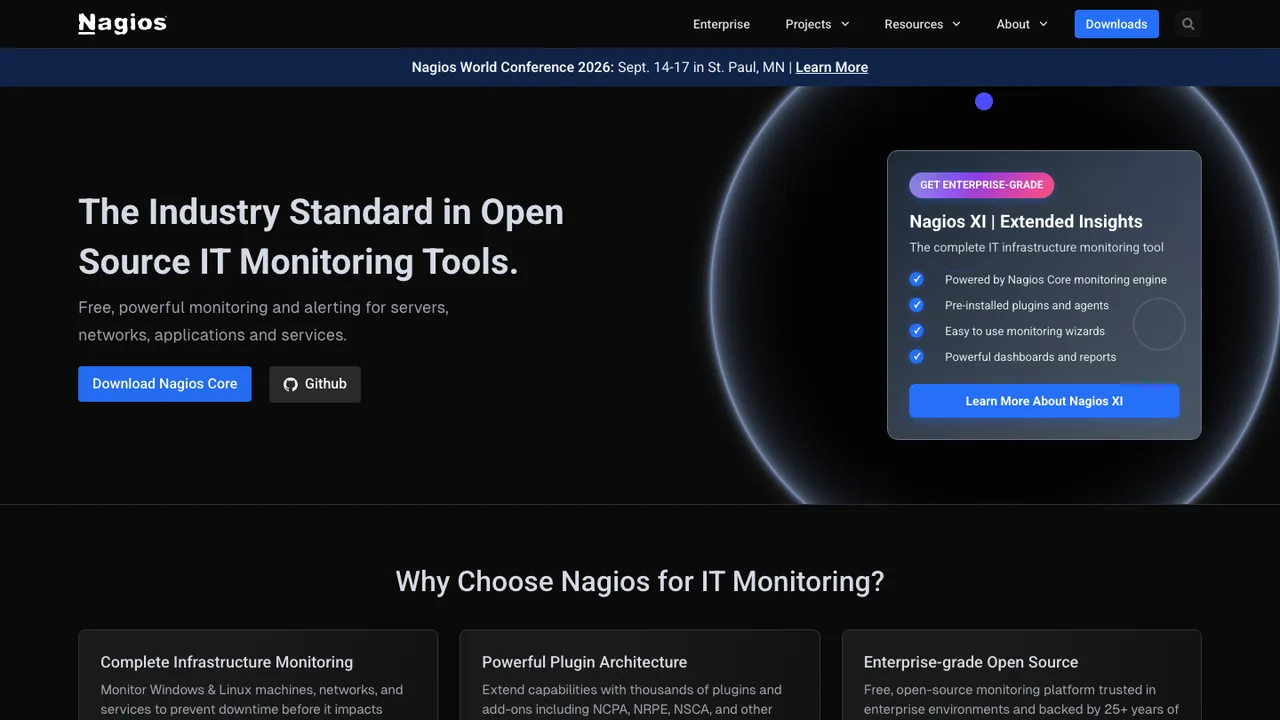
Nagios Core screenshot

Nagios Core is the long-running engine that schedules checks against hosts and services and tells you when something breaks. Its defining idea is the plugin interface: the core handles scheduling, state, and notifications, while the actual probing is delegated to small plugins, so anything you can test from a command line becomes a check. It notifies on problems and again on recovery, and flags hosts that go down or unreachable.

  • Monitors services such as SMTP, POP3, HTTP, and PING
  • Monitors host resources like load and disk usage
  • Plugin interface for custom monitoring methods
  • Notifications by email, pager, or user-defined method
Cacti logo

8.Cacti

1.8kGPL-2.0PHP Self-host
Cacti screenshot

Cacti wraps RRDtool in a web interface, so the time-series math and round-robin storage happen under the hood while you work with graphs, data sources, and templates. Point it at network gear, servers, or applications and it polls them on a schedule, keeping a fixed-size history of every metric.

  • Automated device discovery
  • Local and remote data collection
  • Graph, data source, and RRA templating
  • SNMP polling v1-v3 with IPv6 support
OpenNMS logo

9.OpenNMS

1.2kOtherJava Self-host
OpenNMS screenshot

OpenNMS is a network management platform aimed at large, distributed estates rather than a single rack. It pulls fault, performance, and traffic monitoring into one place, generating alarms, tracking inventory, and measuring service latency and availability across networks that span sites.

  • Fault, performance, and traffic monitoring with alarm generation
  • Inventory management with flexible provisioning
  • SNMP, JSON, WinRM, XML, SQL, JMX, HTTP, VMware, and Prometheus collection
  • NetFlow v5/v9, IPFIX, sFlow, and OpenBMP-based BGP monitoring

Related alternatives