Open Source Games
An open source game can outlive the studio that made it: no server gets switched off, no store revokes your copy, and a community can keep patching it for hardware that did not exist at launch. The catch is that a game is two things stacked together - the engine code and the art, music, and levels - and only the first is reliably free. Some projects here reimplement a beloved engine but still need the original game's data files; others ship everything open. What open source buys you is a playable classic that cannot be delisted, a modding path with documented formats, and, for online titles, the ability to run your own server when the public one goes dark.
Mindustry
Automation tower defense RTS with sandbox building and multiplayer play

OpenRA
Libre real-time strategy game engine for classic Westwood games, with modernized play and mod support
Luanti
Open source voxel game engine for easy modding and game creation

OpenTTD
Open source transport simulation game with multiplayer, add-ons, and cross-platform support
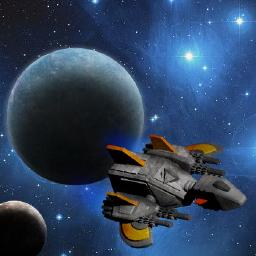
Endless Sky
Open source space trading and combat game with exploration, missions, and ship upgrades

Veloren
Open source voxel RPG with multiplayer, procedural terrain, and official builds for desktop platforms
Battle for Wesnoth
Open source turn-based tactical strategy game with campaigns, multiplayer, and a map editor

OpenMW
Open-source engine reimplementation that runs your copy of Morrowind on modern systems
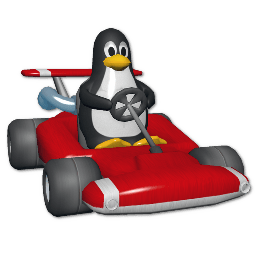
SuperTuxKart
Free kart racing game for fun-focused play on desktop and Android
Our picks
Picks span the genres here, from base-building to RPGs and engine revivals.
Best base-building strategy: Mindustry Mindustry blends tower defense and RTS: you mine resources, automate factories with conveyor belts, and route output into turrets that hold off escalating waves. It plays solo or online and ships dedicated server builds with each release. Free under GPL v3 on desktop and Android.
Best for building and modding your own game: Luanti Luanti, formerly Minetest, is a voxel game engine rather than a single game: whole games are scripted in Lua and loaded as self-contained packages, so players remix content and creators publish their own worlds. Worlds are plain folders you can back up or move, and a dedicated server hosts online play directly or via Docker.
Best way to replay a classic RPG: OpenMW OpenMW reimplements the engine behind The Elder Scrolls III: Morrowind on modern systems, running Morrowind, Tribunal, and Bloodmoon to completion with improved graphics and interfaces. It is a free engine, not a free game, so you supply your own Morrowind data files. It also ships OpenMW-CS for editing and building new content.
Best long-haul simulation: OpenTTD OpenTTD is a sandbox transport sim based on Transport Tycoon Deluxe, tasking you with building road, rail, sea, and air networks for profit. It plays solo or in cooperative and competitive multiplayer, pulls new vehicles and scenarios from in-game online content, and bundles free base graphics, sound, and music.
Where open source games differ from open source apps
Screenshots sell a game, but the build you can actually run decides whether you play it. A title that compiles from source may still need a specific engine version, graphics API, or controller layer, so confirm a release exists for your platform and that saves survive upgrades. Mindustry and SuperTuxKart ship desktop and Android builds; OpenMW and OpenRA are engine reimplementations that run on Windows, macOS, and Linux. For retro-style games, frame timing, audio latency, and controller mapping matter more than raw specs, because small technical gaps change how a game feels.
Separate the code license from the asset license, because a game is only fully reusable when its art, music, and levels are redistributable too. Endless Sky pairs GPL code with public-domain and Creative Commons artwork, and OpenTTD bundles free graphics, sound, and music sets so the original Transport Tycoon files are optional. Engine reimplementations sit at the other end: OpenMW and OpenRA are free engines that still require data files you legally own. If you plan to stream, fork, or teach with a game, read the asset terms closely.
Finally, decide how much online play and modding matter. Single-player games with local saves keep working for years, while online titles depend on server software you can host yourself - Mindustry, OpenRA, and Luanti all ship dedicated server builds, and Veloren runs on community servers. For modding, prefer documented content formats and a clean boundary between user content and core logic; Luanti and Battle for Wesnoth expose exactly that. A private-server or LAN path is the exit that keeps a community alive when public servers close.
Related categories
Frequently asked questions
Why do some open source games make me supply the original game files?+
Because some of them are engines, not complete games. OpenMW reimplements the Morrowind engine on modern systems but needs your legally owned Morrowind data files to run, and OpenRA reimagines the Westwood classics as distributed mods. The open code modernizes graphics, input, and multiplayer, while the original art, maps, and audio stay under their old commercial licenses. Fully free titles like Endless Sky and Veloren ship all their own assets, so no purchase is required.
How do I tell whether a game is truly free to reuse, not just free to download?+
Look at two licenses separately. The code license governs the engine and binaries; the asset license governs art, music, maps, and writing, and it is usually the limiting factor for forks, mod packs, or classroom bundles. Endless Sky releases its artwork as public domain or Creative Commons, and Battle for Wesnoth keeps most art and music under GPL with new contributions under CC BY-SA. Trademarks and names can be protected even when the code is free, so check those too.
Can I host my own multiplayer server for these games?+
Often, yes. Mindustry, OpenRA, and Luanti ship dedicated server builds you can run yourself, and Battle for Wesnoth supports self-hosted play. Veloren is built around online multiplayer on community-run servers. Before committing to an online game, confirm whether a headless server mode exists, whether LAN play works, and how player data is stored, so your community is not stranded if a public server shuts down.
Will these games run and play well on my computer?+
Check the supported operating systems, graphics backend, and controller support before assuming it will run. Performance in games depends on frame timing, GPU drivers, and input latency, not just CPU speed, so test a current release rather than only reading build instructions. Most titles here target Windows, macOS, and Linux; SuperTuxKart is deliberately light enough for older machines. Source access helps you patch problems, but it does not guarantee a polished port on every platform.
How portable are my saves and progress between machines?+
It depends on the save format. Plain files in documented locations are easy to back up and move between machines, while binary saves may or may not stay compatible across releases. Online games such as Veloren keep progress on a server, which changes the backup question entirely. For long campaigns like those in Battle for Wesnoth or Endless Sky, test a restore before investing dozens of hours, and keep copies of your save directory.
Are mods safe to install in an open source game?+
Not automatically. Mods can run scripts, load native code, or overwrite assets, so a data-only mod is safer than one that executes code. The safer designs document the mod format and separate user content from core logic - Luanti loads games and mods as self-contained Lua packages, and Endless Sky and OpenTTD use openly moddable data files. Treat unknown mod downloads with the same caution as any third-party software, especially on a shared multiplayer server.
Which of these games work on mobile?+
Some do, but mobile support is usually narrower than desktop. Mindustry, SuperTuxKart, and Battle for Wesnoth offer Android builds, and Wesnoth also has an iOS port, but many titles here are desktop-only. Touch controls, screen scaling, and app-store packaging all take work beyond compiling the code, so a game designed for keyboard, mouse, or gamepad may feel awkward on a phone even when it launches. Look for an official mobile build before assuming it is practical.