
Canonical's manager for running full Linux systems as system containers or VMs, from one host to a cluster
- Stars4.8k
- Forks1k
- Open Issues425

AGPL-3.0
- Go
- Shell
- C
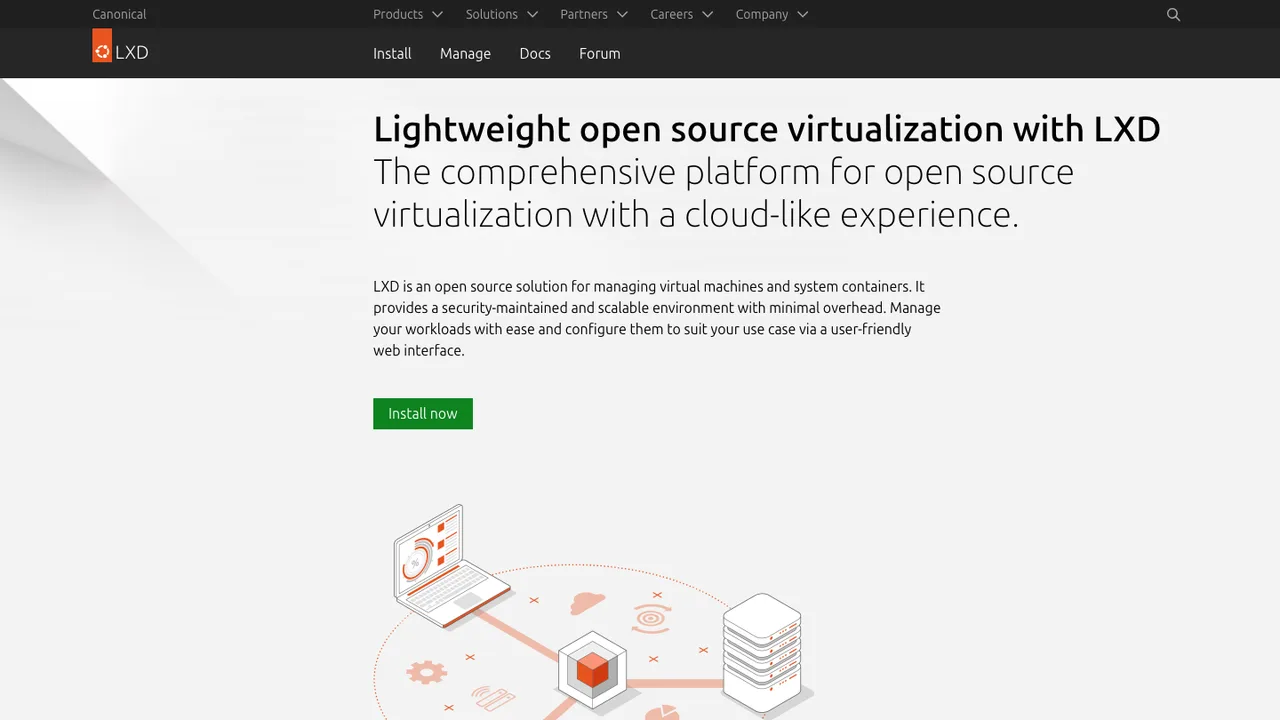
About LXD
LXD runs full Linux systems as either lightweight system containers or virtual machines, managed the same way through one daemon and REST API. It scales from a single instance on a laptop to a clustered datacenter rack, for development or production workloads, giving low-touch virtual infrastructure without a heavy management stack.
It boots images for many Linux distributions, including official Ubuntu and community images. The lxc client runs on Linux, Windows, and macOS, and SDK client packages are published for Go and Python so deployments can be scripted.
The LXD daemon runs on Linux; the client is cross-platform. LTS releases get five years of support, with commercial support through Ubuntu Pro. LXD is a Canonical product, AGPL-3.0 licensed, with release tarballs and source on GitHub.
Key features
- Runs full Linux systems in containers or virtual machines
- REST API for managing instances and clusters
- Supports official Ubuntu images and community images
- lxc client on Linux, Windows, and macOS
- SDK client packages for Go and Python
Details
- First released
- 2014
- Platforms
- Linux · Windows · macOS
- Deployment
- Self-hostable
- API
- REST
- Support
- LTS releases get 5 years
- Governance
- Maintained by Canonical