
Self-hosted PaaS for deploying containers or source code to Kubernetes without Helm charts
- Stars4.4k
- Forks211
- Open Issues122
GPL-3.0
- TypeScript
- Vue
- JavaScript
About Kubero
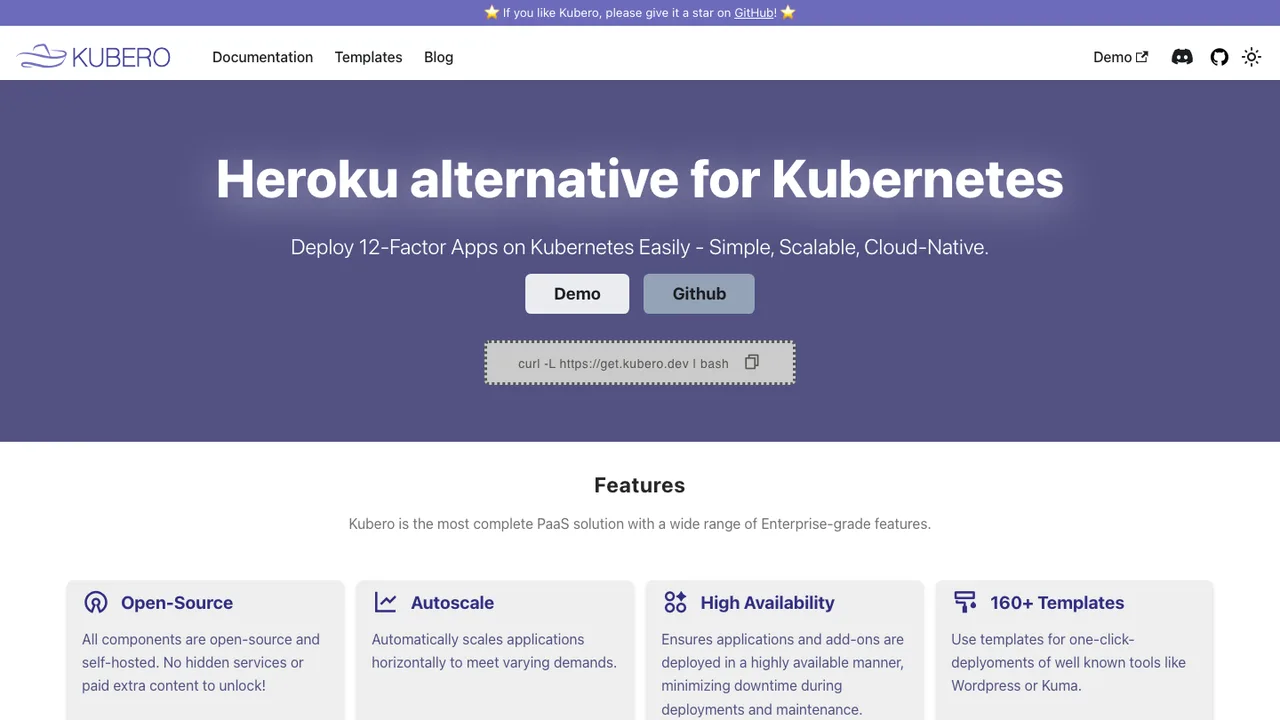
Kubero is a free, open-source, self-hosted PaaS for deploying applications on Kubernetes without specialized Kubernetes knowledge. It follows 12-factor app principles and runs apps from existing containers or source code, giving developers a Heroku-style workflow on a cluster they operate.
It provides Docker deployments without Helm charts, CI/CD pipelines with up to 4 staging environments, automatic redeployments on branch or tag pushes, and GitOps review apps for pull requests. Capabilities include 164+ app templates, PostgreSQL and Redis add-ons, metrics, logs, web console access, cronjobs, notifications, SSO, Basic Auth, and vulnerability scans.
Kubero runs as kubero-ui and an Operator on any Kubernetes instance, with data stored in Kubernetes etcd and no extra database. The CLI installs components on an existing cluster or can create one on GKE, Scaleway, DigitalOcean, Linode, or local Kind. Git providers include Gitea, Forgejo, Gogs, GitHub, GitLab, and Bitbucket.
Key features
- Deploy containers or source code apps to Kubernetes
- Docker deployments without Helm charts
- CI/CD pipelines with up to 4 staging environments
- GitOps review apps for pull requests
- Metrics, logs, web console, cronjobs, and vulnerability scans
Details
- First released
- 2022
- Self-hosting
- Runs on any Kubernetes instance
- Storage
- Kubernetes etcd, no extra database
- Install
- Kubero CLI
- Templates
- 164+ application templates
- Git providers
- Gitea · Forgejo · Gogs · GitHub · GitLab